Never start from a blank prompt
Find free, ready-to-use prompts for the image you have in mind—no sign-up required.
 Playyy
Find free, ready-to-use prompts for the image you have in mind—no sign-up required.
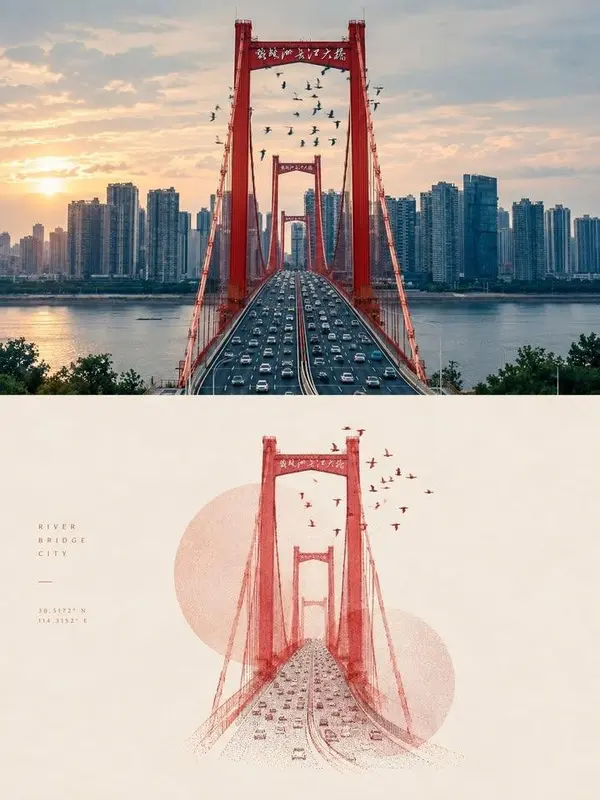
A minimalist artistic graphic illustration based on the provided photograph, split or standalone style, featuring a muted cream and off-white textured paper background. The primary subject from the source image is redrawn in a refined, minimalist line-art and stippled dot-work etching style using a rich brick-red and burnt-orange color palette. Soft, semi-transparent overlapping geometric circles create a gentle layered backdrop behind the subject. Elegant minimalist typography blocks are placed neatly on the left side with clean sans-serif layout (including placeholder location coordinates and descriptive text labels). Clean composition, high editorial design aesthetic, vector illustration blend with delicate halftone texture, professional graphic arts poster style.
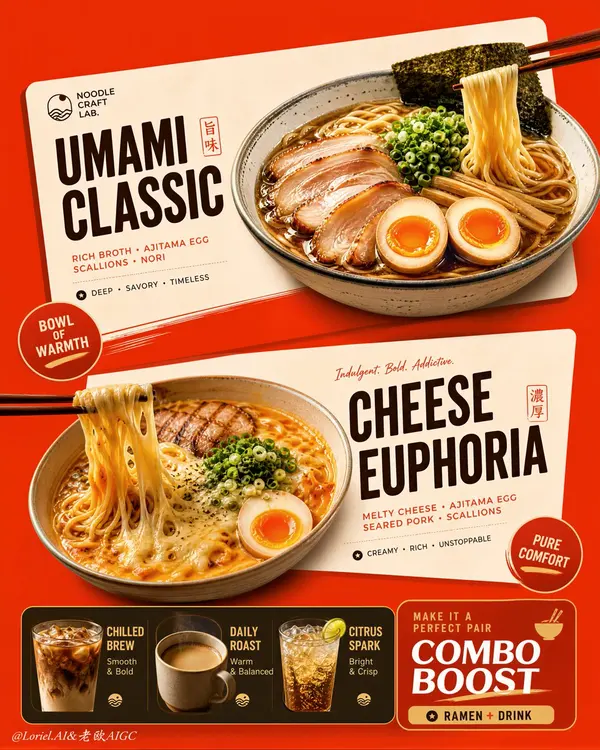
Create an ultra-premium vertical restaurant advertising poster that merges Orbit-style compositional force with Transit-style international polish, preserving the exact logic of a bold ramen combo menu while refining it into a cleaner, sharper, more globally premium flagship campaign. Use one dominant saturated orange-red background field and build the poster around two large cream-toned angled menu-card blocks floating through the center, each framing one ramen hero dish, with a compact drink-combo strip anchored along the bottom. The final image must feel graphic, hot, craveable, modern, and commercially irresistible, with the food and color-block geometry fused into one exact system. Do not copy any original text, logo, price, or wording. Core composition: Use a strict vertical poster architecture with three main beats: 1. a bold upper hero card featuring one ramen bowl, 2. a second slightly offset lower hero card featuring another ramen bowl, 3. a compact bottom combo strip featuring three drinks and one combo-offer zone. The orange-red field must act as the dominant visual stage, while the cream menu-card blocks slice across it with more deliberate angled placement. The whole poster must read instantly as a strong graphic food composition. Orbit enhancement: Push the card geometry harder. The two large cream cards should feel more decisively slanted and more dynamically offset, as if they are thrusting the food forward through the page. The bowls, price badges, and chopstick directions should align with these card angles so the entire poster feels driven by one aggressive compositional motion. The upper and lower ramen heroes should feel like two strong visual hits in a diagonal rhythm. Transit enhancement: Refine the whole image into a more international flagship restaurant-advertising language. Make the orange-red field cleaner and more premium, the cream cards softer and more elegant, the typography more disciplined, and the supporting elements more restrained. Reduce unnecessary icon clutter and decorative noise. The result should feel like a global fast-casual or modern Asian dining brand campaign with polished international art direction. Upper ramen hero: Show one premium ajitsuke tamago-style ramen bowl with rich glossy broth, springy noodles, a halved jammy egg, chopped scallions, and dark nori. The bowl should feel warm, comforting, and immediately craveable. Place it confidently within the upper cream card so the bowl, title zone, and price badge feel locked together. Lower ramen hero: Show one indulgent cheese-and-egg ramen variation with melted cheese stretching from lifted noodles, glossy broth, sliced meat or chashu, chopped scallions, and halved egg. The cheese pull should be clean, appetizing, and visually dramatic. Place the bowl so it balances the lower card while still feeling contained by its geometry. Drink combo strip: At the bottom, include a narrow premium combo strip with three compact drink modules: - iced coffee, - hot coffee, - cold soda or sparkling drink. These should feel like clean supporting products, each inside simple rounded or capsule-like graphic areas. Add one strong combo-value block to anchor the strip, but keep the entire bottom section tight, clean, and secondary to the two ramen heroes. Typography system: Use bold modern display typography with strong hierarchy and clean scanning logic. Dish names should be large and high-contrast. Price elements should sit in compact circular or capsule badges. Supporting lines should be short and minimal. All wording must be fully original and fictional. The typography must align tightly with the cream card structures and feel globally polished. Color-block integration: This is the most important feature. The food must feel inseparable from the color blocks. The orange-red background and cream cards must not behave like passive backgrounds; they must actively shape the poster, frame the dishes, direct the eye, and create rhythm. Bowls, chopsticks, price tags, and text must all appear intentionally positioned according to the card angles and color boundaries. Lighting: Use bright premium food-commercial lighting with warm directional clarity. Broths must glow with rich sheen, noodles must feel elastic, eggs must show soft yolk richness, and cheese must feel molten and luxurious. The drinks should show clean reflections and believable temperature cues. Keep lighting appetizing but controlled so the graphic structure remains dominant. Material rendering: Render ceramic bowls with subtle glaze reflections, broths with translucent depth, noodles with moist sheen, meats with caramelized texture, cheese with smooth melt physics, eggs with creamy yolks, and drinks with realistic ice, crema, or bubbles. The cream cards should feel matte and graphic, contrasting with the realism of the food. Background and cleanliness: Keep the poster tightly controlled and free of clutter. If any subtle texture appears in the orange-red field, keep it minimal and premium. Avoid unnecessary environmental storytelling. This must remain a graphic menu-poster composition first. Color system: Use a disciplined premium restaurant palette of orange-red, cream, warm beige, deep brown, black, noodle gold, broth mahogany, egg orange, scallion green, and coffee tones. The overall effect should be vivid, hot, and globally polished. Image finish: The final poster must feel like a world-class flagship ramen combo campaign: bold, graphic, product-led, appetizing, and commercially exact. Preserve sharp food detail, strong card geometry, clear typographic hierarchy, and immaculate commercial retouching. 8k, premium restaurant advertising quality. Negative prompt: copied brand names, copied pricing, copied slogan, cluttered menu text, weak card angles, weak color-block structure, muddy broth, limp noodles, fake cheese pull, greasy mess, random props, poor hierarchy, dirty background, black blotches, low-resolution food detail
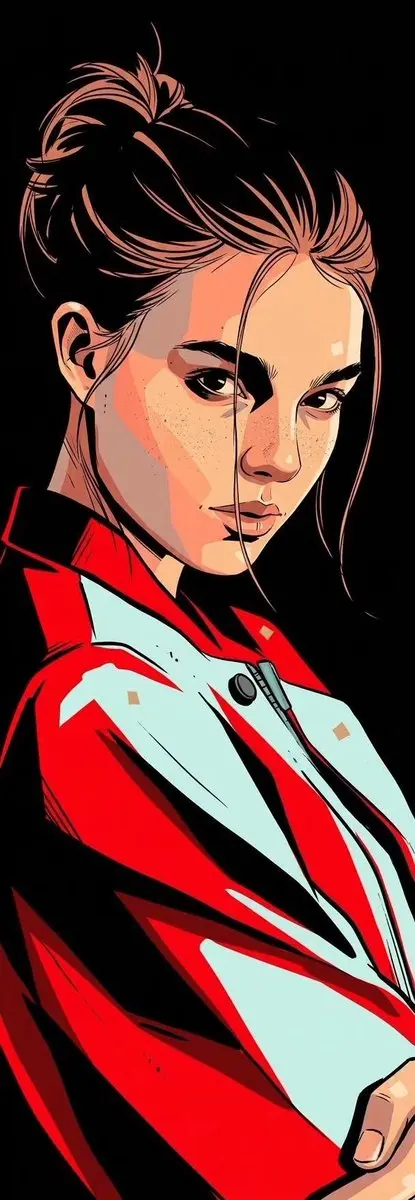
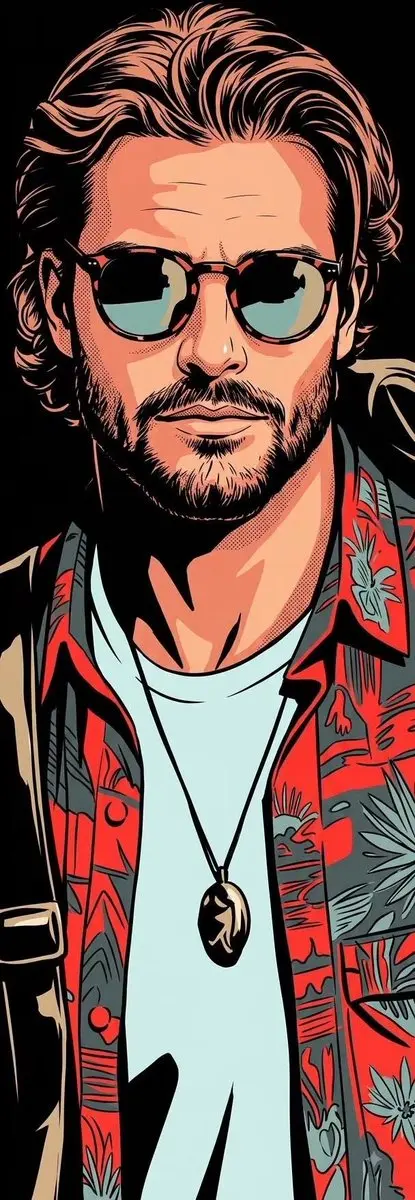
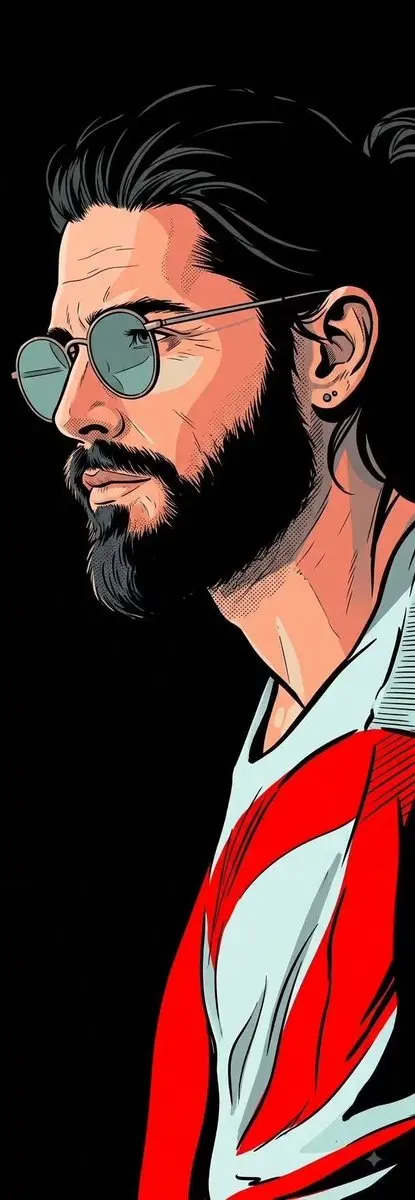
Bold contemporary graphic portrait illustration with a striking high-contrast comic-book / editorial ink aesthetic. Combine clean vector-like color blocking, expressive hand-drawn ink contours, sharp cel-shading, selective stippling, and subtle engraved line textures. The artwork should feel like a premium modern graphic-novel portrait rather than a photorealistic painting. Use an extremely dominant pure deep black background, creating a dramatic silhouette around the subject. The black background should merge naturally with the deepest shadow areas of the artwork. Exact color language Preserve this restrained, high-contrast palette: deep pure black — background, sunglasses, deepest shadows, outlines, clothing shadows warm peach / light salmon skin — primary skin tone soft coral-peach — illuminated skin planes muted dusty peach — secondary facial modeling intense vivid red / scarlet red — dominant clothing accents pale desaturated cyan / mint blue — shirt and selected cool accents muted turquoise-gray — subtle reflective details dark charcoal gray — secondary linework and transitional shading tiny amounts of warm beige for restrained highlights Keep the colors solid, flat, and highly controlled, with minimal tonal variation. No rainbow palette, no neon multicolor effect, and no glossy photorealistic color grading. Rendering technique Construct the subject primarily from large, clean, sharply separated color planes. Use bold black areas to define dramatic facial shadows, neck shadows, eye sockets, beard/stubble regions, clothing interiors, and silhouettes. Employ hard-edged cel shading rather than soft airbrushed gradients. Shadows should appear as deliberate graphic shapes with strong angular boundaries. Add subtle fine stippling and tiny dot textures selectively across skin, facial hair, and transitional areas to create tactile printed-illustration character. Linework Use precise black ink outlines with variable thickness: bold contour lines around the main silhouette medium-weight structural facial lines extremely fine lines for wrinkles, stubble, tattoos, fabric seams, and small details occasional slightly rough hand-inked marks The linework should remain crisp and confident, with controlled imperfections that preserve a handmade comic-illustration feeling. Facial rendering Faces should retain recognizable anatomical structure while being transformed into stylized graphic planes. Model the nose, cheekbones, jaw, lips, forehead, and neck using combinations of warm peach planes and sharply contrasting black shadow masses. Highlights should be small, flat, opaque shapes, not soft photographic reflections. Clothing and accessories Clothing should use large saturated red graphic shapes contrasted against deep black shadows and pale muted cyan elements. Fabric folds are suggested through angular black lines, restrained darker-red shapes, and selective highlight strokes. Metallic or reflective accessories should remain simplified into black, gray, muted turquoise, and tiny pale highlights. Overall aesthetic High-contrast graphic portrait + modern comic-book illustration + premium editorial poster art + bold ink drawing + flat color blocking + cel shading + subtle stippling + sophisticated limited palette. The final result should feel powerful, masculine/fashion-editorial, dramatic, clean, rebellious, and visually iconic, with the subject emerging sharply from the black background. No watercolor, no soft painterly rendering, no realistic photographic texture, no 3D rendering, no smooth gradients, no excessive colors, no glow effects, no text, no logo, no watermark. Aspect ratio: 9:26 — extremely tall vertical composition. Background: solid deep black.
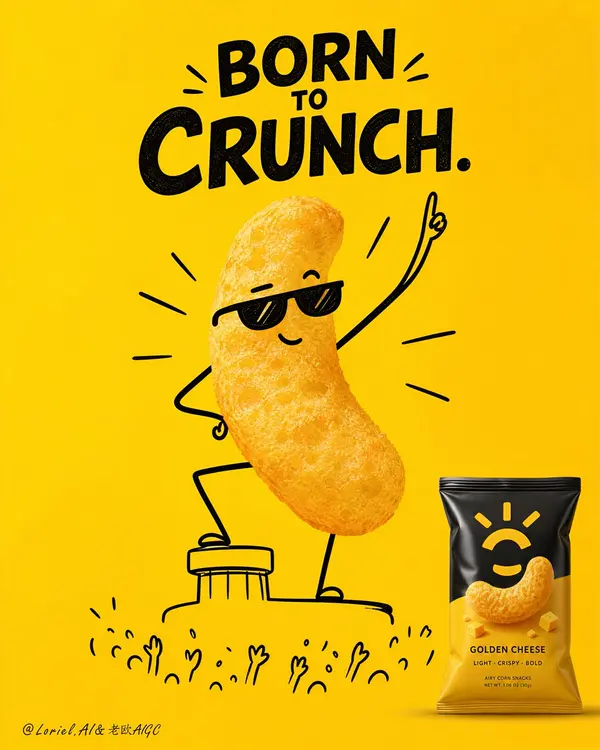
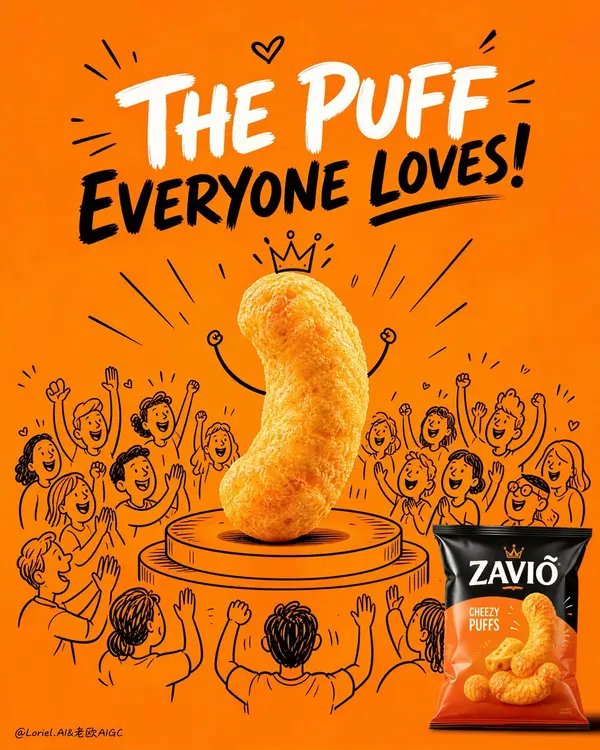
Create an ultra-premium snack advertising poster that merges Orbit-style impact with Port-style symbolic clarity, built around one unforgettable three-part super-symbol: one real crunchy snack hero, one hand-drawn cheering crowd world, and one original product bag in the corner. Use a tall vertical composition on a pure bold saturated background, with the real snack piece placed at the exact center on a simple illustrated stage platform, visually elevated like a star performer. Around it, draw a clean semi-circle of hand-drawn cheering audience characters with raised hands, smiling faces, applause marks, and celebratory motion lines, while keeping all illustrated elements secondary to the real snack. In the lower-right corner, place one original premium snack bag as the commercial anchor. The final image must feel witty, iconic, joyful, minimal, highly brandable, and Cannes-level clever. Do not copy any real brand name, logo, slogan, or packaging text. Core super-symbol composition: Build the entire poster around one instantly legible symbolic structure: 1. one photoreal snack as the superstar, 2. one illustrated cheering crowd as the personality amplifier, 3. one retail-ready product bag as the sales anchor. The central snack must dominate the frame and carry almost all visual power. The doodle crowd should frame and celebrate it without competing for attention. The lower-right package must be small but unmistakably present, clearly linking the emotional hero back to the actual product. The whole image must read immediately from far away like a flagship FMCG poster. Orbit enhancement: Push the “on-stage” energy harder. The snack should feel more triumphant, more central, and more elevated, as if it has just stepped onto a spotlighted podium and the whole illustrated crowd is erupting around it. Make the circular stage slightly more pronounced and the surrounding cheering lines more focused toward the center. Keep the audience gestures more unified and upward-facing so the visual force converges on the snack hero. The impact must feel stronger, but the layout must remain clean. Port enhancement: Distill the image into a sharper brand symbol. Remove any unnecessary decorative clutter and preserve only the most essential components: the real snack hero, the minimal stage, the cheering doodle crowd, and the lower-right product bag. The composition should feel like one complete advertising emblem rather than a busy illustration. Every element must reinforce the snack’s “big personality” and crowd-favorite identity. Product and doodle fusion: This is the most important feature. The snack itself must remain fully photoreal, crunchy, airy, porous, and edible-looking. The stage, crowd, and performance cues must be hand-drawn in clean black line art with confident, premium simplicity. The real snack and the illustrated world must combine effortlessly so the product feels alive, celebrated, and full of character without losing food realism. Hero snack design: Use one real puffed corn snack, popcorn cluster, cheese puff, or airy crispy bite with rich porous texture, light toasted variation, natural irregularity, and obvious edible crunch. The snack must read first as a delicious product, then as a charismatic star. If minimal facial or limb doodles are added, keep them extremely restrained so the snack body remains dominant. Illustrated crowd logic: Draw a semi-circle of hand-drawn audience characters around and behind the snack using simple black line art only. Their expressions must be joyful, supportive, and celebratory. Include raised arms, happy faces, clapping gestures, cheering marks, and small radiating lines, but keep the style graphic, premium, and controlled. The crowd should feel like the snack’s fan club. Packaging design: Create one original premium snack bag in the lower-right corner with elegant fictional branding, clean flavor-color hierarchy, appetizing product photography, and modern FMCG print design. The bag must feel globally marketable, polished, and visually connected to the hero snack. Use realistic flexible-pack film, sealed edges, subtle creases, and refined highlights. Lighting: Use bright polished studio lighting with soft frontal clarity and refined top highlights. The snack texture must be razor-sharp and crunchy. The package should show controlled laminate reflections. The illustrated elements should remain flat, crisp, and graphic against the saturated background. Keep the whole image clean and high-contrast. Background: Use a single strong flagship background color such as vivid premium orange or golden-orange, with a perfectly smooth flat fill and no clutter. The background must function as a pure graphic stage that makes the snack, crowd, and bag pop instantly. Typography space: Reserve a clean upper area for original fictional campaign typography in bold contrasting lettering. The headline should support the product’s beloved, crowd-pleasing personality, but all wording must be newly created and original. Image finish: The final poster must feel like a world-class snack campaign: minimal, cheerful, bold, product-led, graphically memorable, and highly sellable. Preserve razor-sharp snack detail, clean doodle precision, immaculate background flatness, and premium packshot rendering. 8k, flagship advertising quality. Negative prompt: real brand names, copied logo, copied slogan, messy doodles, cluttered layout, childish low-quality illustration, dirty background, fake snack texture, low-detail packaging, muddy colors, black blotches, warped bag shape, weak contrast, low-resolution product render
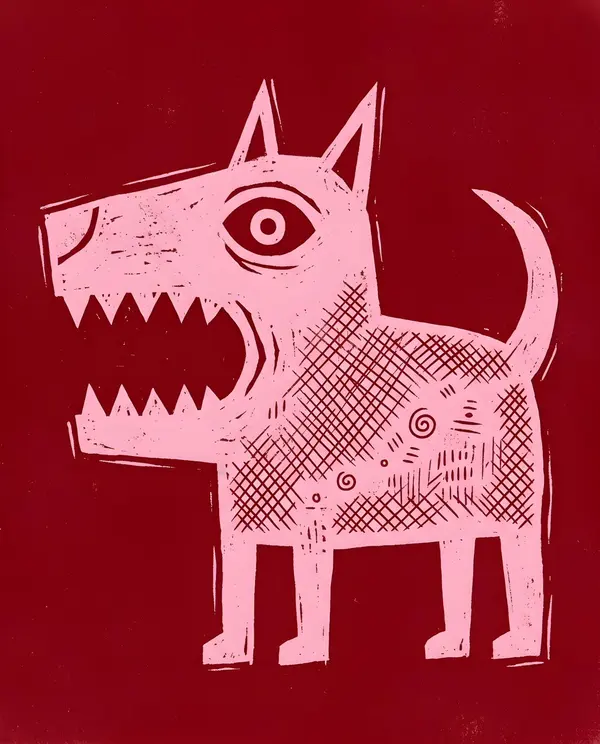
A stylized, primitive illustration of a dog is rendered in a light pink against a dark red background. The dog is depicted in a side profile, with a large, angular head featuring a single, circular eye with a smaller circle in its center, and two pointed ears. Its mouth is open, revealing a row of sharp, triangular teeth and a dark, cavernous interior. A curved tail extends from its rear. The body of the dog appears to be filled with hand drawn crosshatching and symbols. Its four legs are depicted as simple, rectangular shapes. The overall aesthetic is reminiscent of a stencil or woodcut print, with a rough, textured quality.
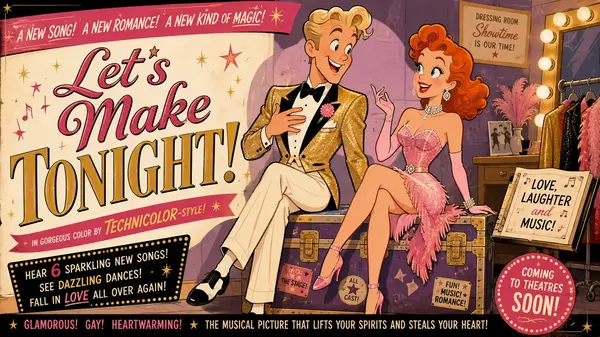
Mid-century theatrical cartoon still promotional Hollywood movie trailer banner featuring a energetic song-and-dance man with wavy blond hair and a bright grin, wearing a sparkling stage jacket and bow tie, and a lively leading lady with vibrant red curls and joyful eyes, wearing a glittery pink performance dress, seated on a prop trunk backstage. Stage them in a lighthearted, musical, good-humored interaction, with both characters fully visible, relaxed, and clearly reacting to each other as if ready to burst into song. Design the figures with exaggerated early-1950s animation caricature: clean black contour lines, sharply simplified anatomy, elegant angular silhouettes, expressive eyebrows, stylized facial shapes, graceful hand gestures, and cheerful readable expressions. Render the entire image in a unified traditional cel-animation aesthetic, with the background following the same stylized visual language as the characters, using flat opaque colors, minimal hard-edged shading, simplified furniture and décor, subtle hand-painted texture, controlled perspective, and crisp theatrical staging. Use a vibrant showbiz palette of hot pink, gold, cream, and soft purple and maintain a witty, charming, visually snappy mood.
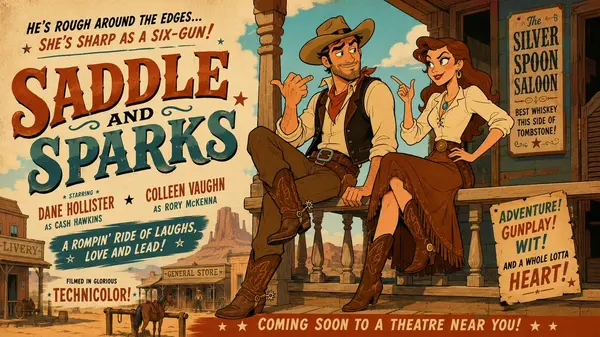
Mid-century theatrical cartoon still promotional Hollywood movie trailer banner featuring a rugged cowboy with a short beard and steady gaze, wearing a classic western shirt, vest and cowboy hat, and a bold frontier woman with long chestnut hair and a determined smile, wearing a practical blouse and riding skirt, seated on a wooden porch railing outside a dusty saloon. Stage them in a lighthearted, spirited, good-humored interaction, with both characters fully visible, relaxed, and clearly reacting to each other with playful tension. Design the figures with exaggerated early-1950s animation caricature: clean black contour lines, sharply simplified anatomy, elegant angular silhouettes, expressive eyebrows, stylized facial shapes, graceful hand gestures, and cheerful readable expressions. Render the entire image in a unified traditional cel-animation aesthetic, with the background following the same stylized visual language as the characters, using flat opaque colors, minimal hard-edged shading, simplified furniture and décor, subtle hand-painted texture, controlled perspective, and crisp theatrical staging. Use a dusty western palette of warm sand, deep brown, soft turquoise, and cream and maintain a witty, charming, visually snappy mood.
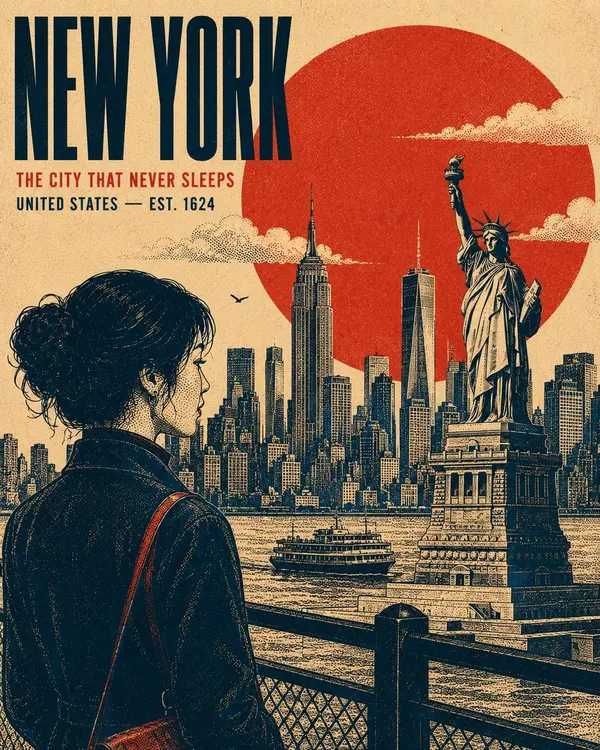
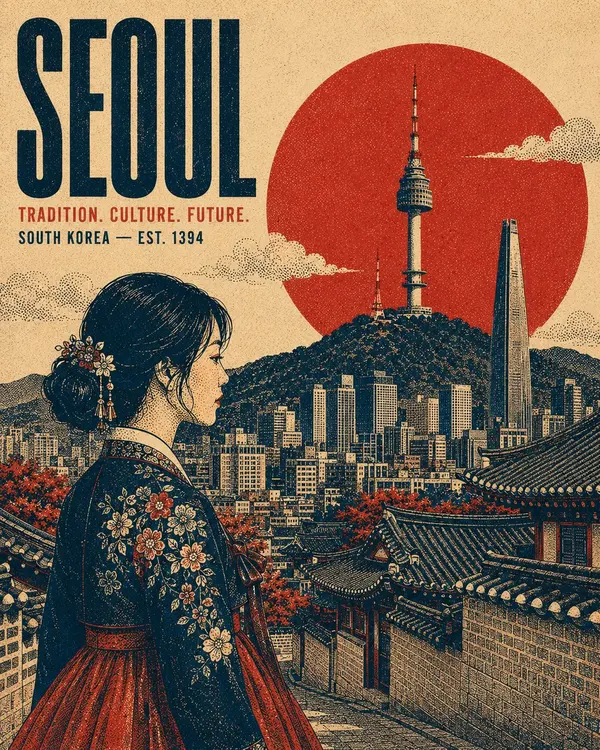
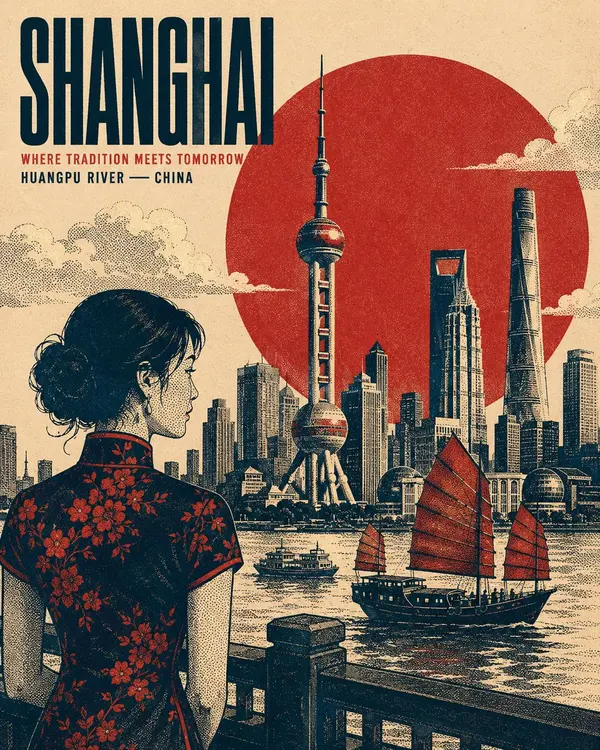
Create a premium 4:5 vertical retro screen-print poster illustration centered on [SUBJECT / LANDMARK / CITY / ERA]. The composition should feel like a refined vintage travel or cultural print, while remaining adaptable to any location, historical period, landmark, or subject. TYPOGRAPHY: Place the primary title "[MAIN TITLE]" in a bold, condensed uppercase sans-serif, positioned within a balanced area of negative space. Add a smaller supporting line "[SECONDARY HEADLINE / LOCATION / DATE]" beneath it. Maintain strong typographic hierarchy, restrained spacing, and an authentic archival-poster character. MAIN SUBJECT: Feature [PRIMARY SUBJECT] as the dominant visual element, positioned within the lower or side third of the composition. Use a distinctive pose, silhouette, or profile that communicates the character of the subject. Include carefully rendered defining details, natural contours, expressive features, clothing or architectural details, and subtle highlights without making the artwork photorealistic. GEOMETRIC ANCHOR: Introduce one bold, simple geometric shape behind or around the main subject to create visual separation and establish a strong graphic focal point. BACKGROUND: Construct the environment as several flat, layered graphic planes rather than a conventional realistic scene. Use recognizable elements associated with [LOCATION / SUBJECT] — distant silhouettes, architectural forms, structural details, vegetation, terrain, atmospheric elements, or cultural motifs. Avoid a strong vanishing point. Build depth through overlapping shapes, scale, linework, and tonal density. Render clouds, smoke, mist, foliage, or atmospheric details as controlled stippled clusters where appropriate. RENDERING STYLE: Authentic vintage screen-print / silkscreen poster aesthetic. Create all tonal modeling exclusively through stippling, halftone patterns, and varying dot density — concentrated dots for shadows and sparse dots for highlights. No smooth gradients, airbrushing, photorealistic shading, or digital 3D rendering. Use crisp contour lines with consistent visual weight, subtle riso-style registration shifts, imperfect ink edges, natural paper grain, and faint woven-print texture. The result should feel physically printed rather than digitally rendered. COLOR SYSTEM: Use exactly four carefully selected high-contrast colors appropriate to the subject: [COLOR 1], [COLOR 2], [COLOR 3], [COLOR 4]. Do not introduce additional hues. Generate intermediate tonal values exclusively through stipple density, halftone overlap, and ink coverage, never by adding new colors. COMPOSITION: Strong editorial balance, clear focal hierarchy, generous negative space, layered depth, bold silhouette design, authentic vintage graphic-design proportions, and carefully controlled visual density. Keep the artwork sophisticated, collectible, and suitable for a premium travel or cultural poster. OUTPUT: 4:5 vertical aspect ratio, edge-to-edge poster composition, high detail, crisp print-ready appearance, cohesive screen-print texture, no modern photographic elements.
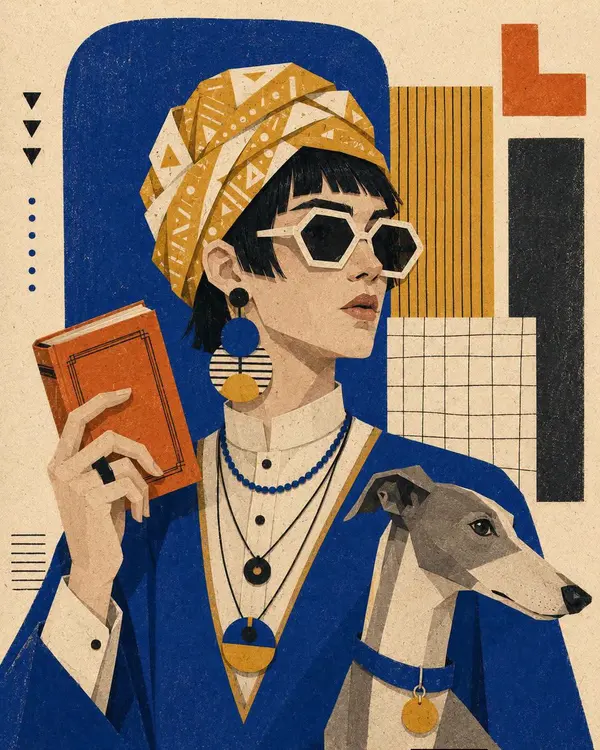
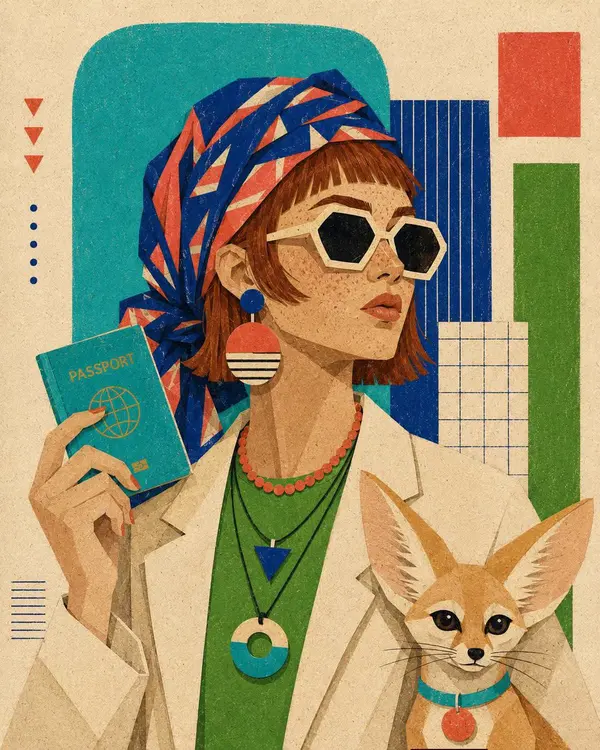
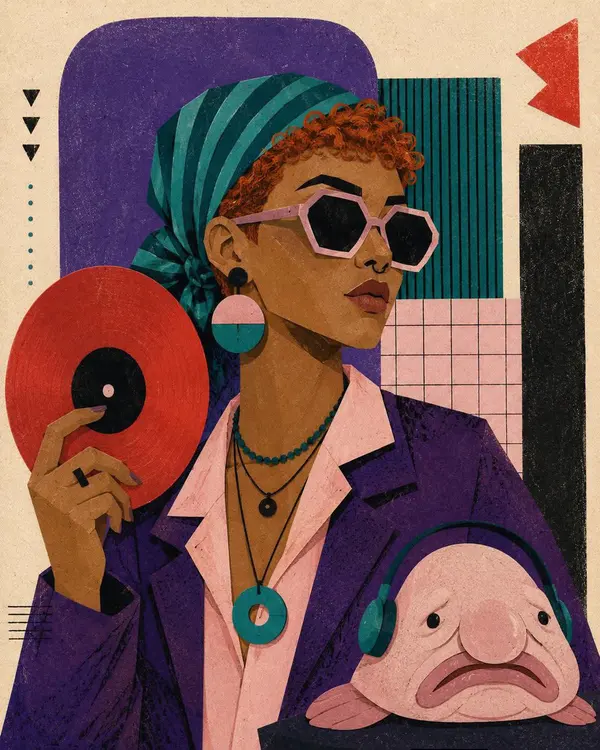
Waist-up editorial portrait of [CHARACTER] in a calm three-quarter pose, with [HAIR], wearing [CLOTHING], oversized geometric sunglasses, bold circular earrings, layered necklaces, and holding [OBJECT] near the shoulder. Stylized [ANIMAL] beside the figure, constructed from the same flat cut-paper shapes and simplified graphic anatomy. Hand-cut paper collage with angular facial planes, minimal features, sharp silhouette edges, flat opaque color blocks, visible paper fibers, subtle screen-print grain, slight color misregistration, dry crayon-like marks, and no dimensional modeling. Controlled [COLOR] palette. Background made from [ELEMENTS], arranged as overlapping rectangles, rounded panels, striped inserts, hand-drawn grids, and small geometric accents on warm speckled off-white paper. Maintain a balanced modern editorial composition, strong negative space, crisp color separation, and tactile handmade print aesthetics.
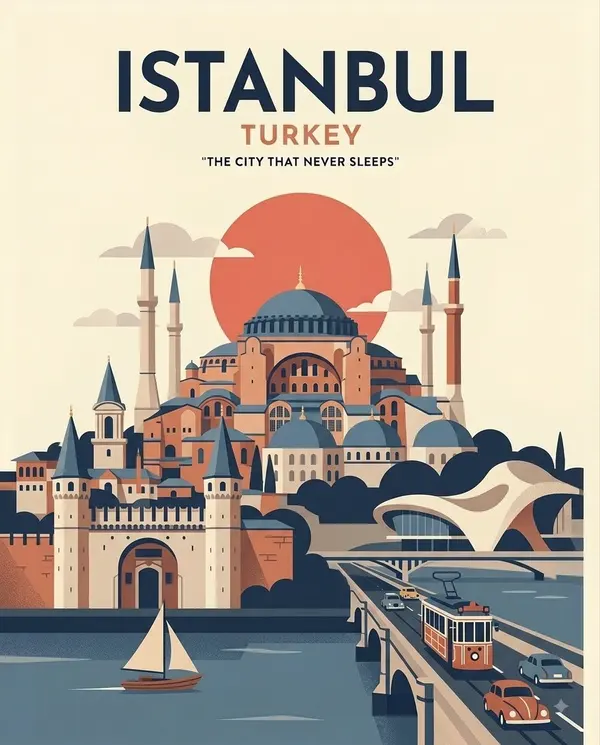
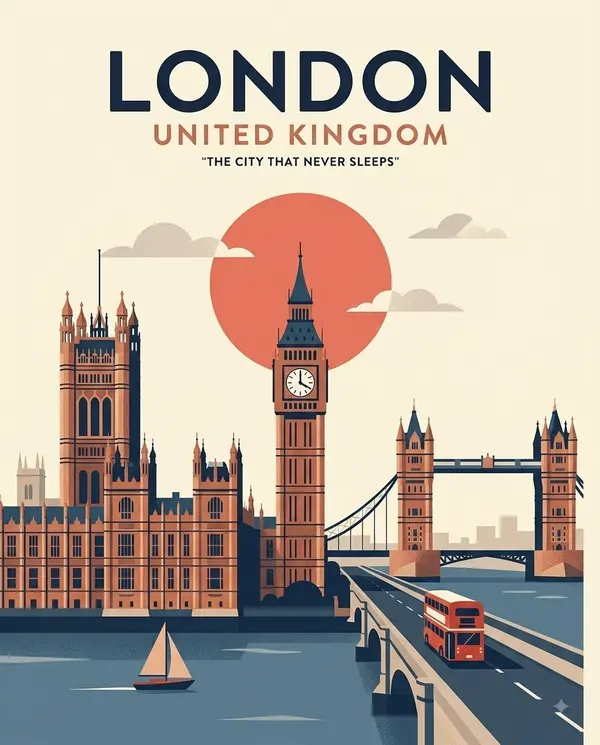
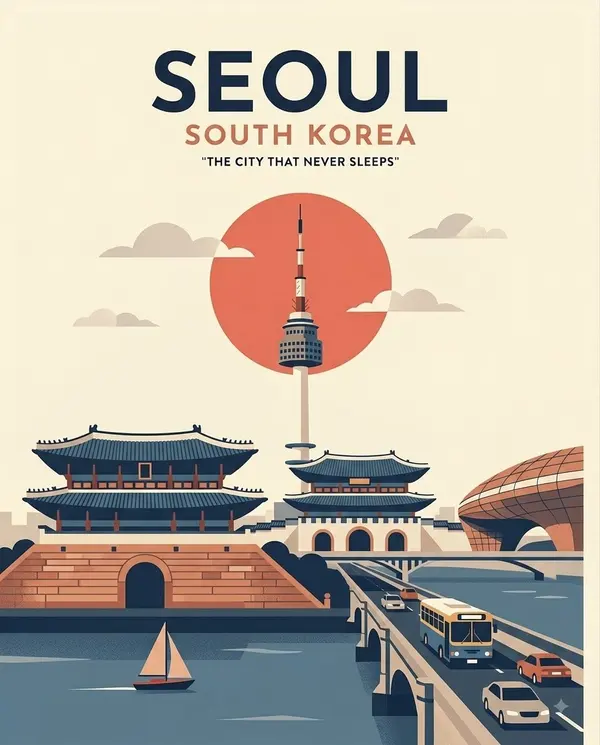
Create a minimalist, premium vintage-style travel poster for [DESTINATION / CITY, COUNTRY], inspired by the visual language of a classic mid-century travel print. Use a clean, sophisticated composition with a limited, harmonious color palette, subtle aged-paper texture, and a refined screen-printed / paper-cutout aesthetic. The overall artwork should feel like a collectible vintage travel poster rather than a modern digital illustration. At the top, add elegant serif-style typography reading: “[CITY]” in a deep, sophisticated color. Directly underneath, add: “[COUNTRY]” in a smaller complementary accent color. Main Illustration Create an instantly recognizable but highly stylized representation of [CITY], featuring [LANDMARK 1], [LANDMARK 2], [LANDMARK 3], and [ICONIC LOCAL ELEMENT / VEHICLE / CULTURAL SYMBOL]. Arrange the elements naturally within a simplified landscape featuring [RIVER / COASTLINE / MOUNTAINS / STREETS / CITY SKYLINE]. Add one or two subtle atmospheric details such as [SMALL BOAT / PEOPLE / BIRDS / TREES / VEHICLE], keeping the composition uncluttered. Include a simple circular sun or moon positioned behind the skyline, with soft paper-cutout clouds or minimal atmospheric shapes. Visual Style Mid-century vintage travel poster aesthetic Minimalist editorial composition Flat geometric shapes Clean, confident linework Simplified architectural forms Limited 4–6 color palette Muted vintage tones with one strong accent color Subtle paper grain and screen-print texture Slightly imperfect ink registration Layered paper-cutout appearance Elegant art-deco influence Strong visual hierarchy Sophisticated, premium collectible-poster feeling No photorealism No excessive detail No gradients or glossy digital effects No modern 3D rendering The final composition should feel timeless, artistic, elegant, nostalgic, and instantly identifiable as [CITY], while maintaining a restrained and sophisticated vintage travel-poster aesthetic. Poster format: vertical 4:5, centered composition, generous negative space, high-end print quality.
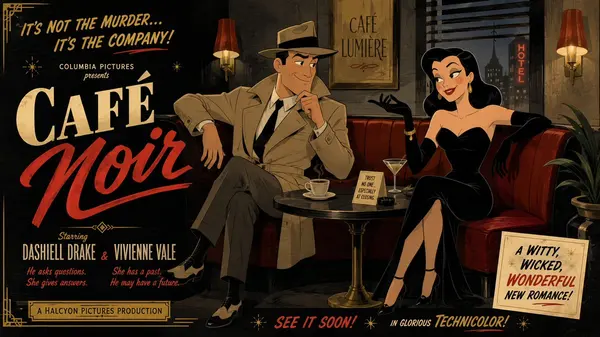
Mid-century theatrical cartoon still promotional Hollywood movie trailer banner featuring a cool detective with neatly combed black hair and a raised eyebrow, wearing a classic trench coat and fedora, and a mysterious femme fatale with sleek dark waves and a knowing smile, wearing a form-fitting black evening dress and long gloves, seated in a dimly lit café booth. Stage them in a lighthearted, intriguing, good-humored interaction, with both characters fully visible, relaxed, and clearly reacting to each other with playful suspicion. Design the figures with exaggerated early-1950s animation caricature: clean black contour lines, sharply simplified anatomy, elegant angular silhouettes, expressive eyebrows, stylized facial shapes, graceful hand gestures, and cheerful readable expressions. Render the entire image in a unified traditional cel-animation aesthetic, with the background following the same stylized visual language as the characters, using flat opaque colors, minimal hard-edged shading, simplified furniture and décor, subtle hand-painted texture, controlled perspective, and crisp theatrical staging. Use a classic noir palette of deep charcoal, soft red, cream, and muted gold and maintain a witty, charming, visually snappy mood.
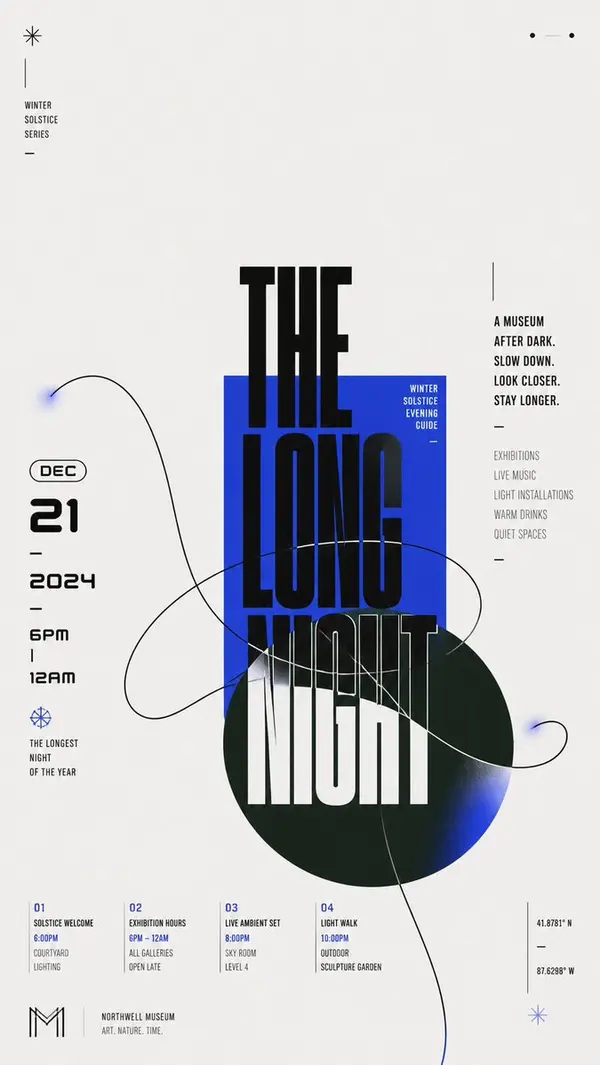
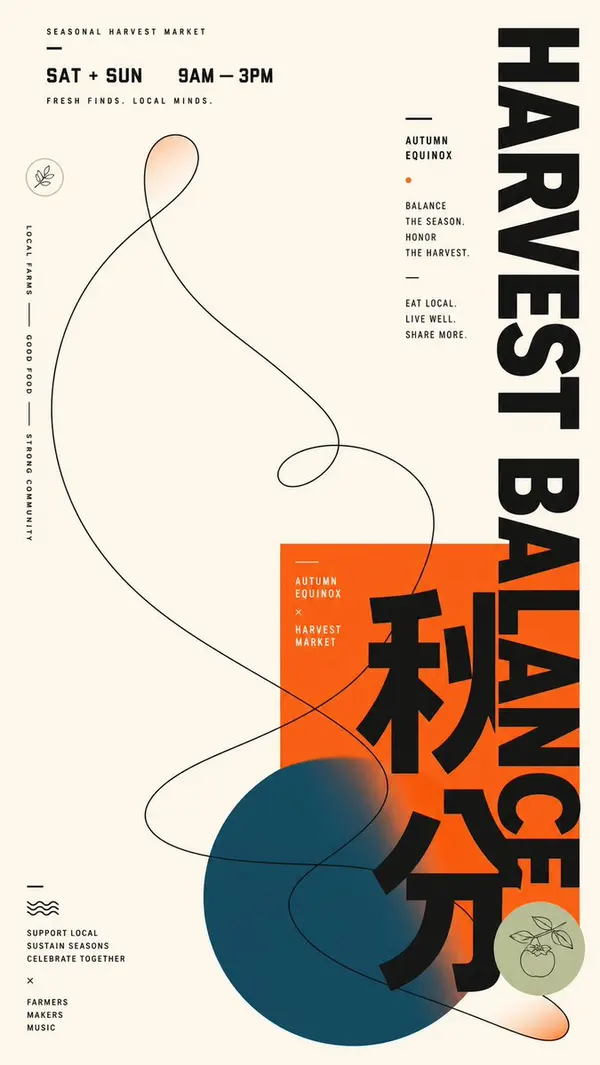
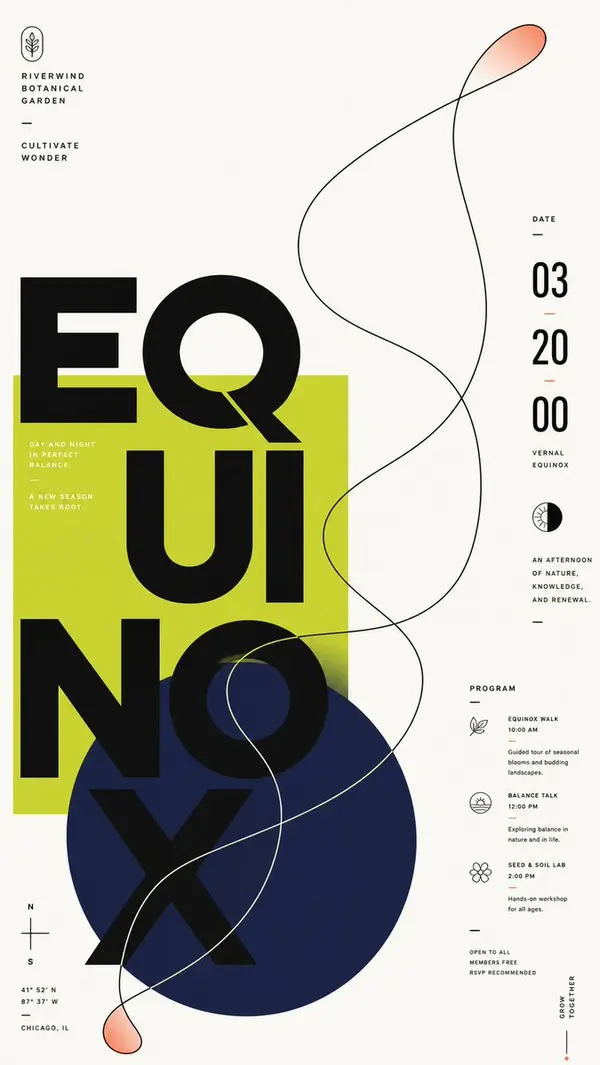
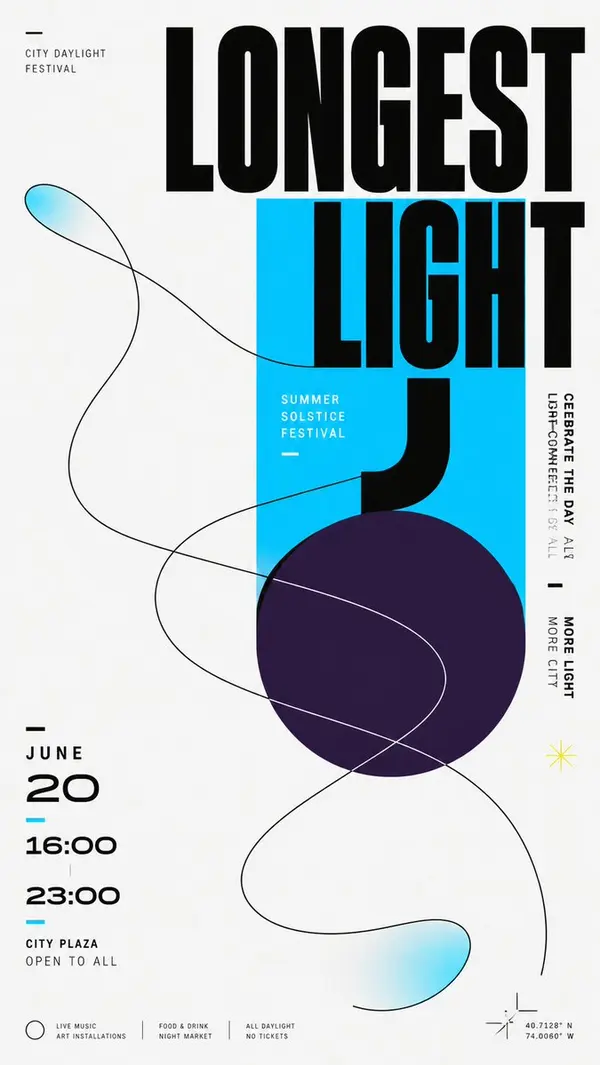
Build a modern flat graphic around any chosen subject object, with a huge Chinese theme character, geometric color blocks, and a single-line organic contour interlacing through one another. Keep an overall bright, clean background field, letting approximately two-thirds or more of the space remain empty, and concentrate the main weight in an off-center cluster: a saturated rectangular block in the theme's primary color first establishes a stable plane; a deeper, low-lightness, cool-toned circle overlaps from beneath it and extends beyond the boundary; the core Chinese theme character advances vertically in oversized, heavy, geometric black strokes across the white background, rectangle, and circle, with partial occlusion and cropping creating a strong scale jump; on the left, the date and a bilingual subtitle form a compact numeric column, while on the right, short vertical sentences set in two stroke-weight tiers balance the weight; a few miniature captions, short dashes, and linear symbols scatter along the edges, creating a three-level reading rhythm from main character to side notes to details. Abstract the dynamic relationship derived from the theme into one continuous organic contour, drawn as a broad sweeping loop with a clear, near-black single line that enters from the large empty field, passes through the color blocks, and crosses the edge; the curve intersects itself several times while remaining legible as a single path; keep most of its interior as the underlying background color, adding only localized, transparent, fading fills in the theme's primary color at the tips and extended sections, so the light line creates tension with the heavy giant character. Adapt the color scheme to the theme: let a clean, high-lightness neutral background carry the largest area; keep the theme's primary color vivid and highly saturated, using it for the rectangle and the localized transparent gradient; use a deep cool support color for the circle, separated in hue from the primary color and blending softly into the primary color at its end; use near-black for text and the contour, with a very small amount of light text reversed onto the primary color block; fix unequal areas, lightness hierarchy, and saturation differences, but do not fix specific color names. Render all elements as flat surfaces like matte digital printing, with sharp contour edges and gradients only as two localized, slowly feathered transitions; do not add dimensional shadows, paper grain, or global lighting effects. Keep typography in a low-contrast, broad, thick, near-geometric black sans-serif skeleton; allow the main character's parts to be elongated, offset, cut out, and switched between color-block backgrounds; give numbers a rounded futuristic structure and compress small text with narrow letterforms and loose tracking. Replace brand names, advertising copy, and concrete dates with new theme information. Preserve in the final result the extreme whitespace, the geometric cluster positioned lower-center, the opposing pull between horizontal and vertical text, and the moment an organic line crosses rigid geometric shapes, while avoiding evenly filling every part or reducing the contour to an isolated decoration.
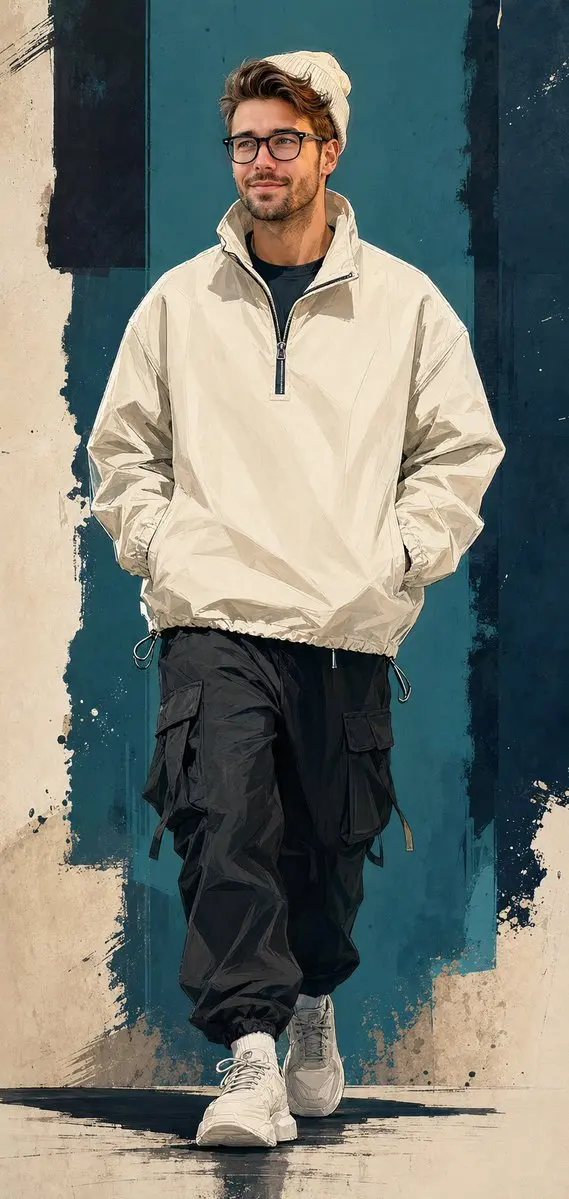
Use the uploaded reference image as the ONLY facial identity reference. Preserve the exact same person with maximum fidelity. Maintain the identical facial identity, facial structure, skull shape, jawline, cheekbones, forehead, ears, eyes, eyebrows, eyelids, nose shape, nostrils, lips, mouth, chin, skin tone, hairstyle, hairline, facial proportions, glasses, age, expression, ethnicity, and overall recognizable appearance. Do NOT redesign, beautify, idealize, de-age, age-shift, alter ethnicity, modify facial proportions, change the hairstyle, replace the glasses, reinterpret facial features, or create a different person. Identity preservation overrides every artistic, stylistic, lighting, wardrobe, composition, rendering, and color instruction below. Keep the face instantly recognizable as the exact same person from the uploaded image. --- Transform the uploaded person into a semi-realistic digital illustration streetwear campaign poster. The person keeps the exact same face, hairstyle, glasses, facial proportions, skin tone and identity as the uploaded photo. Outfit: - cream ribbed knit beanie - oversized cream technical windbreaker quarter-zip jacket - funnel collar - drawstring hem - black t-shirt underneath - black oversized cargo joggers with multiple flap pockets and hanging drawstrings - white chunky sneakers Pose: Walking mid-stride, hands inside jacket pockets, head naturally turned and gazing off-camera, confident expression. Art Style: Semi-realistic digital illustration Comic-editorial hybrid rendering Clean vector linework combined with painterly color fills High-end streetwear campaign artwork Fashion editorial poster aesthetic Modern urban illustration Premium graphic design Background: Abstract graffiti-inspired composition Deep teal and dark navy color-block panels Distressed paint textures Rough torn-paper transitions Brushstroke overlays Urban graphic shapes Minimal abstract environment Lighting: Soft directional studio lighting from upper left Subtle rim lighting Natural shadows Cinematic contrast Color palette: Cream Deep teal Dark navy Black Off-white Muted neutral tones Composition: Vertical poster Full-body Walking toward camera Centered composition Clean negative space No text No logo No typography No watermark No signature No labels No symbols No UI elements Ultra detailed Masterpiece Best Quality Professional fashion campaign illustration Sharp focus 8K
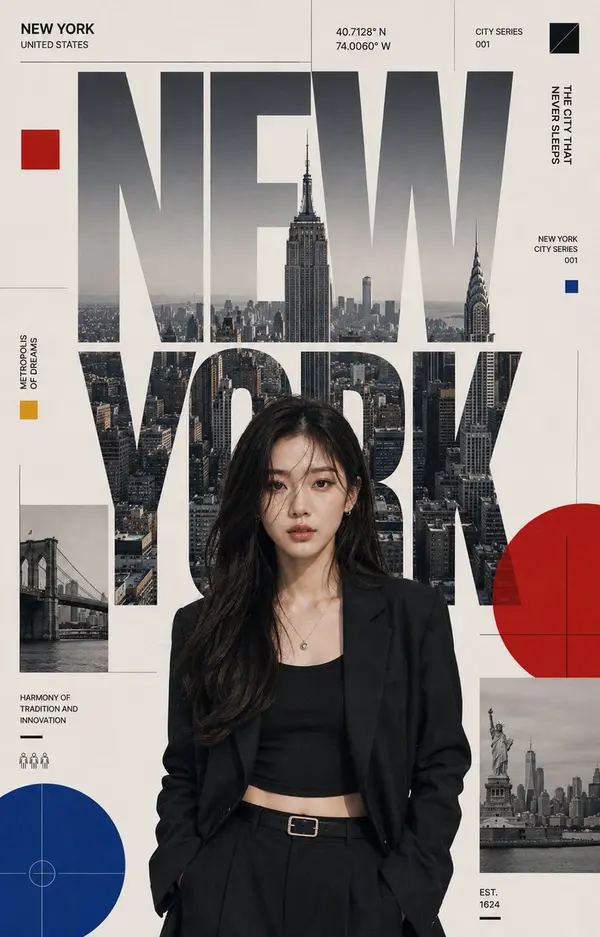
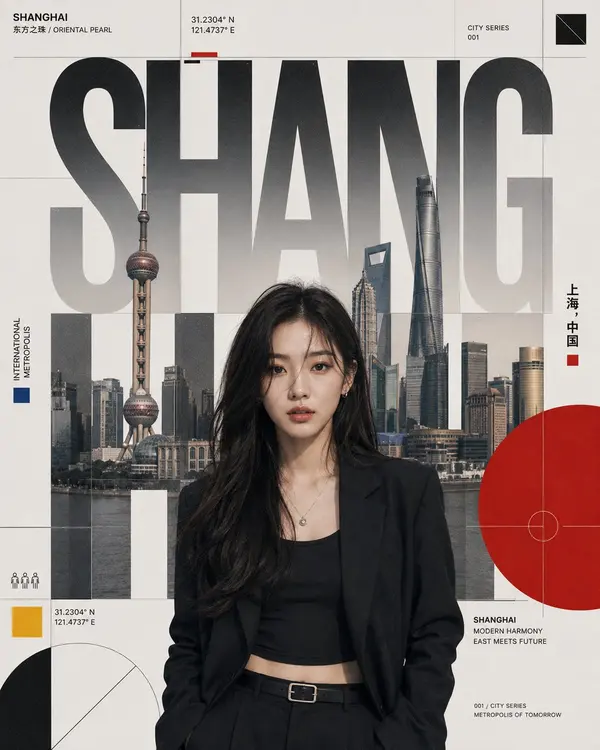
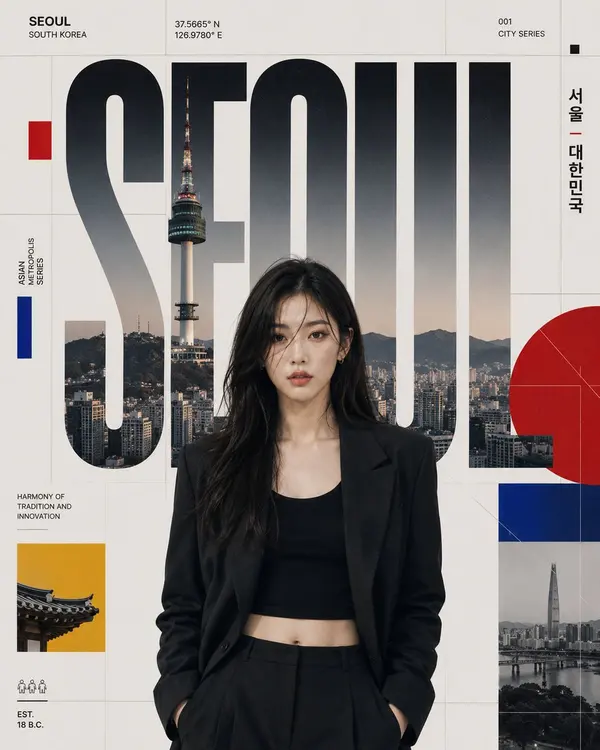
Create a premium 4:5 vertical graphic poster in the Swiss International Typographic Style, combining an ultra-photorealistic portrait of a fictional top-tier Korean female K-pop idol with enormous geometric typography featuring [CITY NAME]. CORE COMPOSITION Make the city name a major architectural element occupying most of the frame. The portrait, typography, authentic cityscape, geometric graphics, and grid must feel like one unified design system. Show a waist-up, strictly frontal portrait of an elegant, charismatic Korean female idol with refined natural features, realistic skin texture, expressive eyes, and direct eye contact. Her face must remain sharp, fully recognizable, unobstructed, and visually dominant even while integrated into the typography. Do not imitate any specific real celebrity; create an original fictional idol with a premium global K-pop editorial presence. CITY — [CITY NAME] Use an authentic, recognizable cityscape belonging specifically to [CITY NAME], with appropriate architecture, skyline elements, landmarks, and urban depth. For NEW YORK, use believable Manhattan skyscrapers, Midtown architecture, bridge elements, and layered urban structures. When replacing the city, automatically replace all architecture and visual references accordingly. Allow selected parts of the cityscape to appear inside and through the oversized letters. TYPOGRAPHY Render [CITY NAME] in enormous geometric sans-serif lettering inspired by Swiss International Graphic Design. The letters should occupy most of the frame follow a strict modular grid function as architectural structures create strong visual rhythm interact naturally with the portrait reveal portions of the cityscape Keep the city name perfectly spelled, clearly legible, and structurally clean. Never allow distorted or nonsensical letterforms. GRAPHIC SYSTEM Use: strict modular grid asymmetric but balanced composition precise alignment strong hierarchy generous negative space circles, squares, rectangles thin rules and diagonal lines geometric framing elements Add restrained editorial micro-details such as small captions, numerical codes, coordinate-style numbers, minimalist pictograms, and technical labels. Keep these elements subtle and secondary. FASHION Dress the idol in sophisticated contemporary urban fashion inspired by [CITY NAME]: structured jacket, minimalist top, tailored outerwear, or elevated streetwear. The styling should feel luxury editorial rather than casual, with no visible brand logos. CAMERA & LIGHTING 85mm portrait-lens aesthetic, frontal camera angle, waist-up framing, natural portrait compression, realistic facial proportions. Use soft cinematic daylight with controlled directional contrast, realistic shadows, natural highlight roll-off, and accurate skin rendering. Preserve genuine skin texture without plastic-looking retouching. COLOR PALETTE Primary: Black · White · Warm Gray Accents: International Red · Deep Royal Blue · Mustard Yellow Use accent colors sparingly to maintain the disciplined Swiss aesthetic. PRINT FINISH Add a subtle premium print character: fine Portra-inspired film grain matte paper texture extremely subtle dust and micro-scratches refined editorial print finish Keep texture understated and sophisticated. FINAL AESTHETIC Ultra-photorealistic 8K-quality fashion photography fused with museum-level Swiss graphic design, creating a clean, modern, luxurious, conceptual, architectural, and highly curated poster. The portrait, typography, cityscape, grid, geometry, color, and texture must feel organically designed together. AVOID: Blur, low quality, bad anatomy, extra fingers, duplicate faces, distorted features, plastic skin, broken/misspelled text, generic cityscapes, clutter, oversaturation, noise, watermarks, logos, celebrity imitation, cartoon/anime style, AI artifacts.
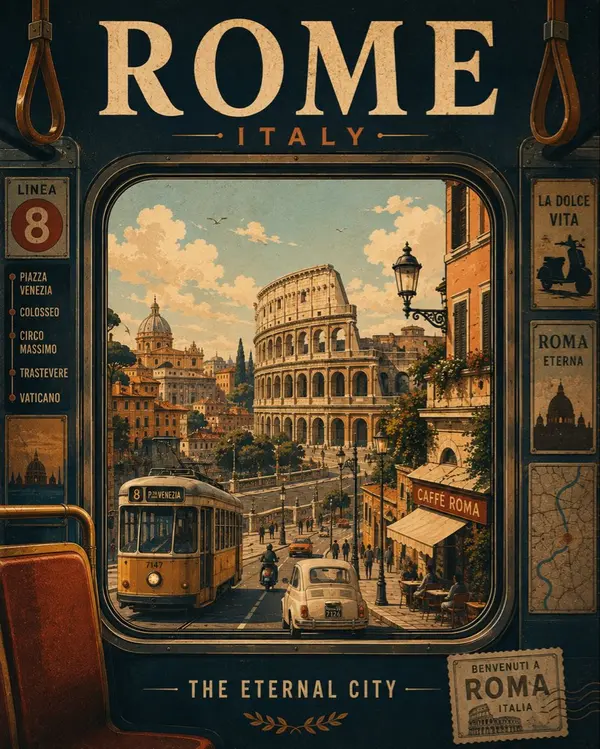
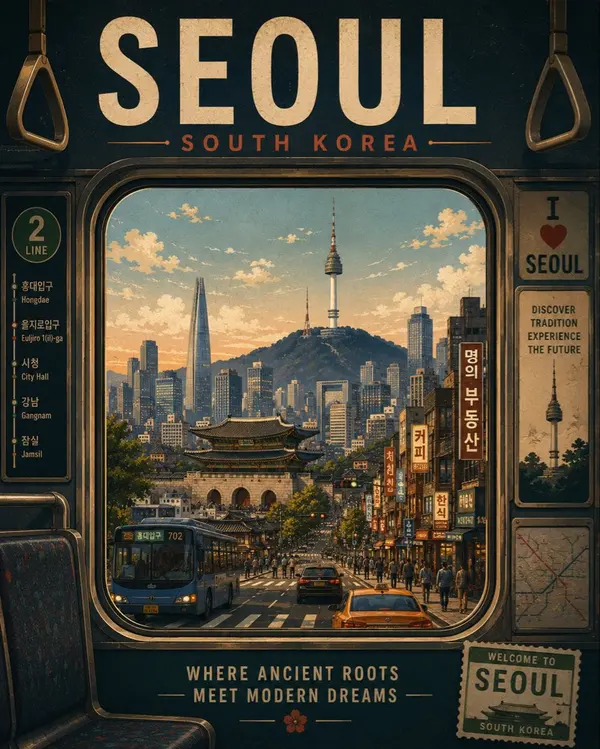
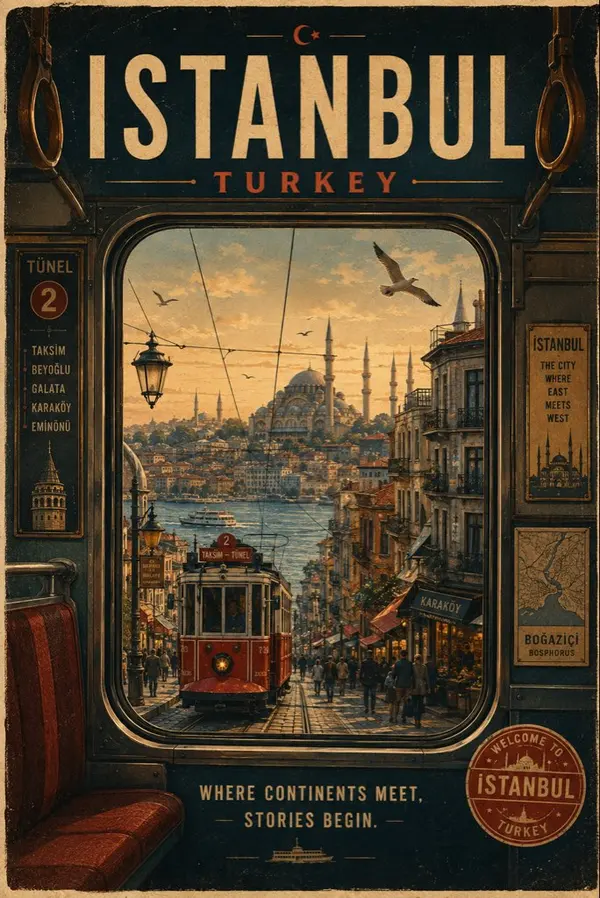
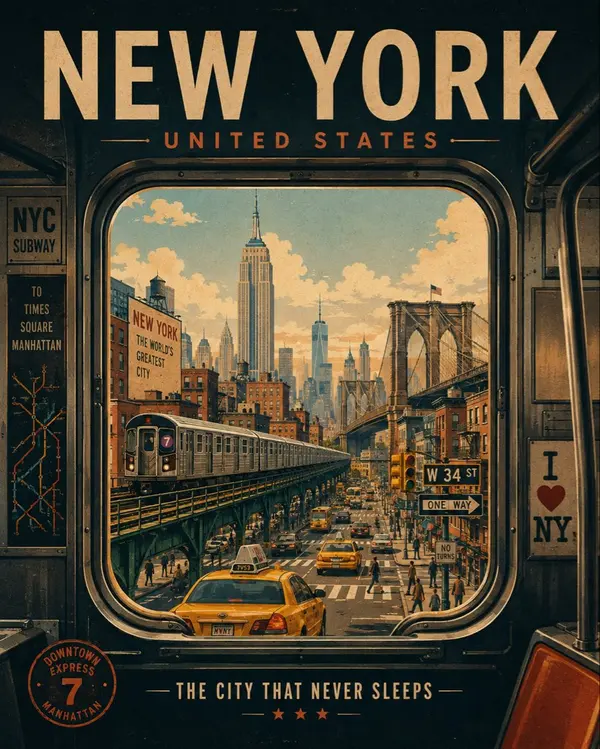
Create a premium vintage editorial travel poster for [CITY], [COUNTRY], inspired by classic mid-century tourism posters and sophisticated retro graphic design. Creative Concept — “A Journey Through the City”: Show the destination from inside a recognizable local form of transportation, such as a subway, tram, train, bus, cable car, ferry, boat, or vintage vehicle. The foreground contains the stylized interior and a large window that acts as the main visual frame, while the world outside reveals the character of the city. Through the window, artistically incorporate [ICONIC LANDMARK 1], [ICONIC LANDMARK 2], [FAMOUS STREET/AREA], [LOCAL ARCHITECTURE], [LOCAL TRANSPORTATION], and other recognizable cultural elements. Arrange them naturally within the scene rather than creating a generic skyline. Create a strong sense of depth, movement, and travel: foreground transportation interior, middle-ground streets and people, and a distant atmospheric cityscape. Add tiny storytelling details such as pedestrians, vehicles, street signs, glowing windows, clouds, birds, reflections on the glass, local advertisements, and subtle environmental details. Visual Style: sophisticated vintage travel-poster illustration, mid-century graphic design, clean geometric shapes, simplified architectural forms, elegant silhouettes, layered flat colors, subtle atmospheric perspective, carefully controlled negative space, authentic screen-printed texture, slightly imperfect ink edges, aged paper grain, nostalgic but premium editorial aesthetic. Color Palette: use a refined destination-inspired palette of warm ivory, muted blues, deep navy, dusty terracotta, soft beige, and one distinctive accent color associated with the destination. Keep the colors slightly faded and harmonious. Typography: Large elegant uppercase title at the top: [CITY] Smaller text underneath: [COUNTRY] Add a short poetic travel slogan: [CITY SLOGAN] Include a small vintage transportation ticket, route number, destination emblem, travel stamp, or local symbol integrated into the design. The transportation window should feel like a portal into the destination, making the viewer feel as if they are physically traveling through the city. Overall mood: nostalgic, cinematic, adventurous, sophisticated, collectible, timeless, premium tourism advertising. Portrait 4:5 composition, museum-quality travel poster, strong visual hierarchy, beautiful negative space, highly detailed illustration, authentic vintage print texture, no photorealism, no modern 3D rendering.
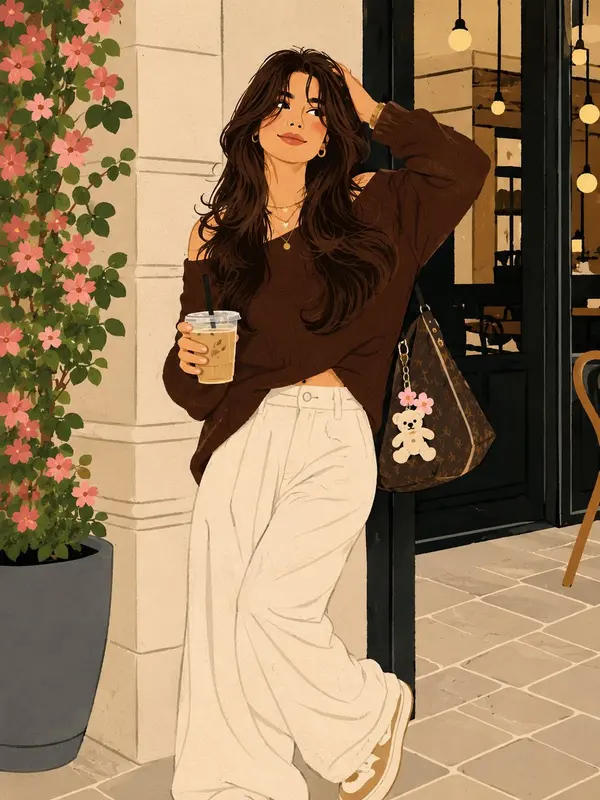
Transform the uploaded image into a premium contemporary naïve illustration while preserving the exact facial identity, facial structure, hairstyle, expression, body proportions, pose, clothing silhouette, composition, and overall scene from the reference image. FORMAT LOCK Vertical 3:4 composition. Preserve the original framing, camera angle, perspective, subject placement, and overall composition. Clean centered layout with a premium poster aesthetic. IDENTITY LOCK Preserve the exact facial features, hairstyle, expression, body proportions, clothing silhouette, and recognizable identity. Simplify the illustration without changing the person’s appearance. ILLUSTRATION STYLE Create a contemporary authorial naïve illustration with a minimalist hand-drawn aesthetic. Use playful proportions, slightly irregular hand-drawn outlines, expressive decorative linework, and intentionally imperfect craftsmanship. Simplify forms while keeping the subject immediately recognizable. COLOR SYSTEM Use flat high-contrast color blocks with a refined contemporary palette. No gradients. No shadows. No realistic lighting. No 3D effects. Clean graphic shapes with bold visual balance. STYLE Premium designer poster. Editorial illustration. Modern naïve art. Handmade graphic illustration. Museum-quality print design. Minimalist composition. Contemporary art-book aesthetic. Expressive handcrafted character. Ultra-clean premium artwork. NEGATIVE PROMPT Avoid photorealism, gradients, shadows, 3D effects, CGI appearance, digital painting, excessive detail, messy linework, blurry edges, distorted anatomy, extra limbs, text, logos, watermarks, or low-quality rendering.
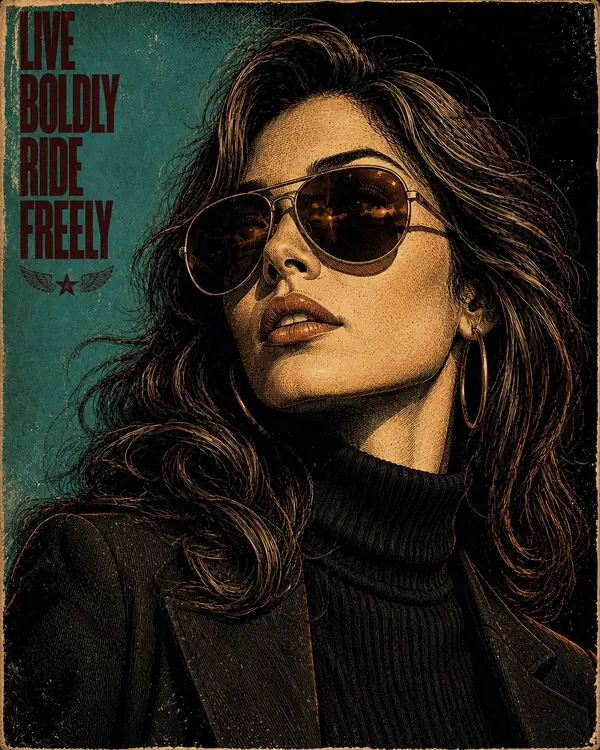
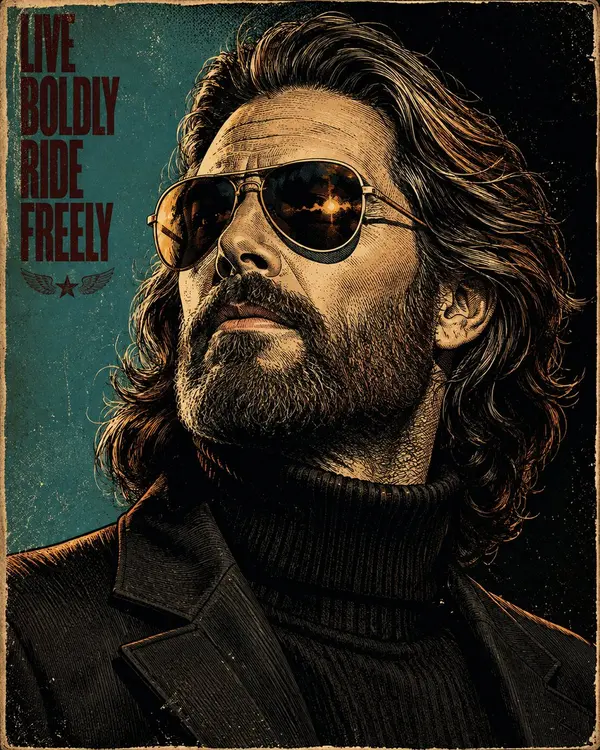
A rugged, charismatic middle-aged man with long wavy swept-back hair, full beard and mustache, wearing vintage aviator sunglasses, a black ribbed turtleneck and tailored dark blazer. Dramatic close-up three-quarter portrait, looking slightly upward with a confident, contemplative expression. Highly detailed vintage comic-book / graphic-novel illustration, intricate hand-inked linework, dense cross-hatching, stippling and engraved textures, bold black shadows, limited palette of cream, charcoal, burgundy, muted teal and warm amber. Retro 1970s poster aesthetic, halftone print texture, screen-print effect, strong rim lighting, textured turquoise background fading into deep black, cinematic composition, sharp facial details, expressive hair strands, sophisticated editorial artwork, high contrast, vertical poster, 4:5 aspect ratio.
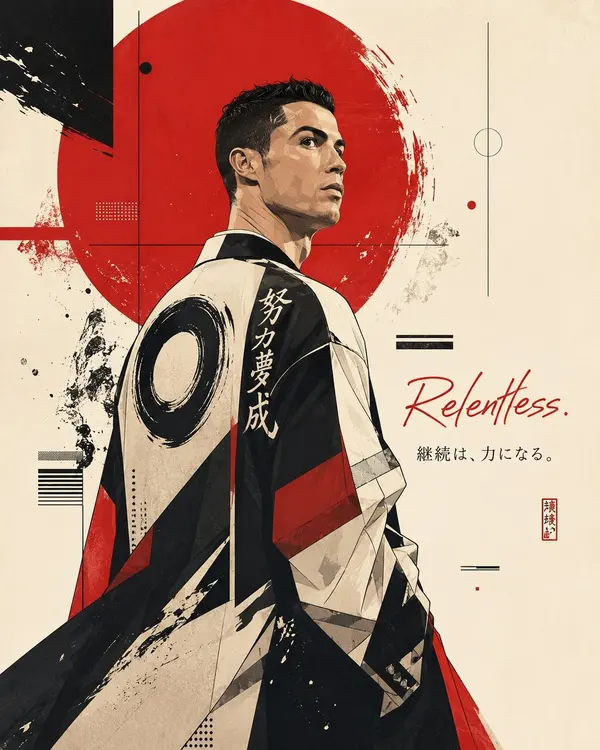
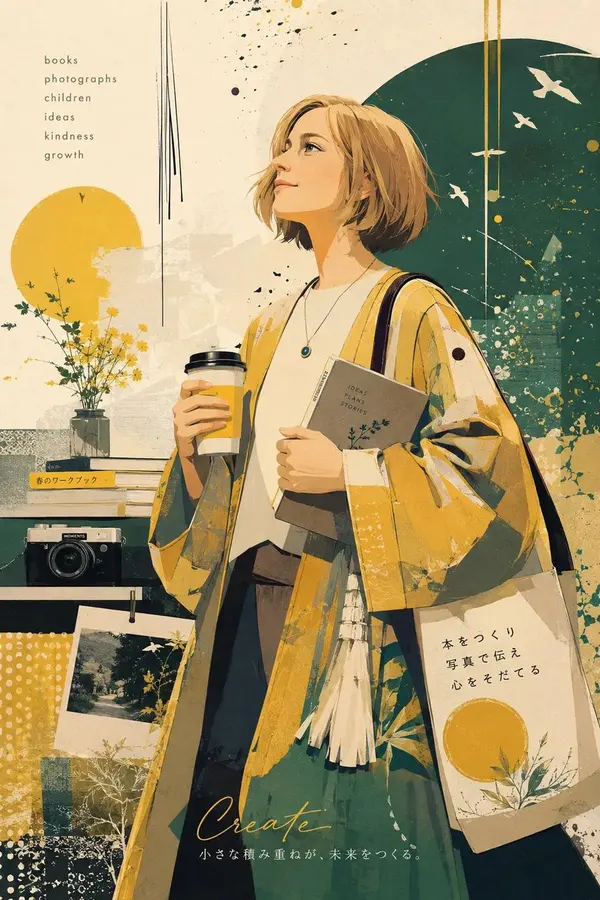
Create a unique personal-brand editorial art poster inspired by my life, values, ambitions, struggles, creativity, kindness, inner strength, and hopes for the future. Do not focus on realistic physical likeness; translate my LIFE and personality into visual storytelling. Blend contemporary Japanese illustration, international poster art, Scandinavian graphic design, and high-fashion editorial aesthetics. Use a sophisticated flat hand-drawn style with bold color fields, expressive lines, subtle paper texture, and 2–3 levels of simplified shading. Avoid photorealism, 3D CGI, magazine-cover layouts, and advertising aesthetics. Show the character chest-up or full-body in a cinematic pose — three-quarter profile, looking over the shoulder, stepping forward, or feeling the wind. The expression should convey intelligence, kindness, quiet confidence, resilience, and hope. Design an original couture-inspired outfit and meaningful accessories. Every detail should symbolize something from the person’s journey: clothing = philosophy, color = emotion, lines = journey, negative space = future, geometric forms = growth, accent color = hope. Create an abstract, non-landscape background using circles, geometric shapes, color blocks, brushstrokes, graphic lines, halftones, ink splashes, collage elements, and paper textures. Let roughly 50–60% of the background be bold color fields and intentional negative space. Develop a fresh 1–3 color palette based on the person’s personality and story. Make the composition cinematic, asymmetrical, striking, refined, and museum-quality. Add one elegant handwritten English word representing the person’s mission, followed by a short poetic Japanese phrase under 50 characters. The final artwork should feel deeply personal, symbolic, sophisticated, and instantly intriguing — making the viewer wonder: “What kind of life has this person lived, and what future are they creating?” No random details, clichés, generic AI aesthetics, photorealism, or unnecessary decoration. Every element must have meaning.
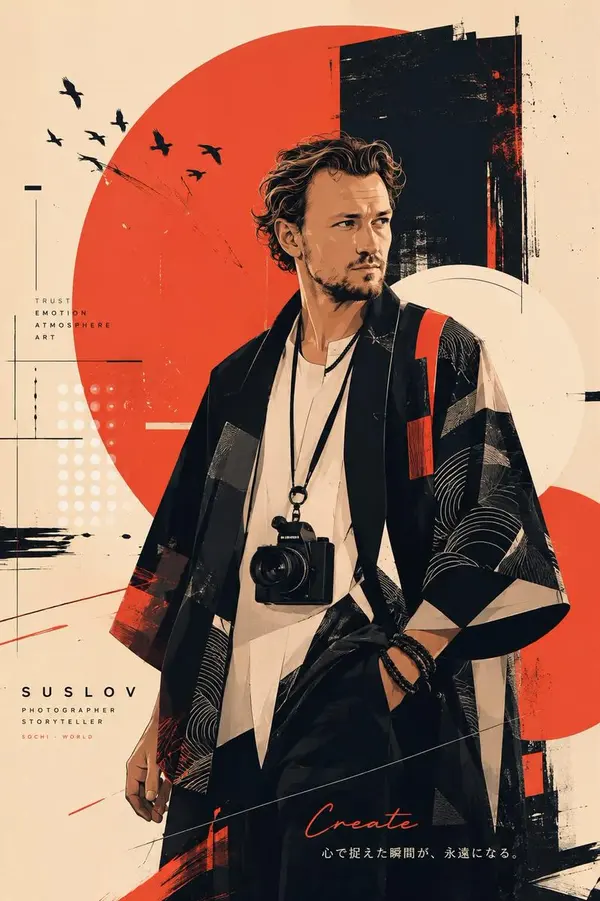
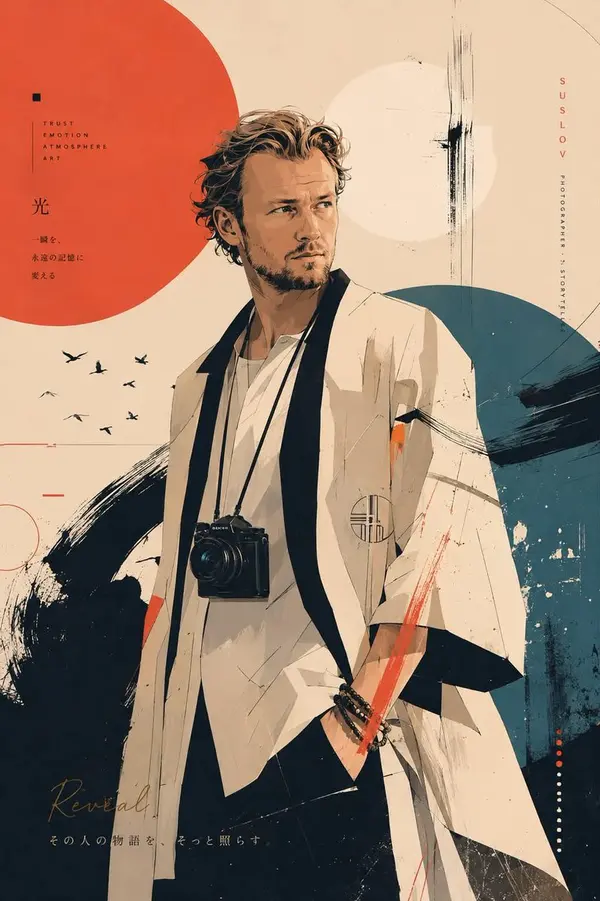
You are a world-class art director specializing in editorial design, brand storytelling, fashion, and graphic art. Your task is not to create a portrait likeness of a person. Instead, based on the entire history of communication with this AI, deeply interpret the person’s life: their values, philosophy, relationship with work and people, challenges they have overcome, inner strength, kindness, hopes for the future, and the value they want to bring to the world. Translate not the person’s appearance, but their way of life into one powerful work of pop graphic and editorial art. Analyze their life rather than their physical features. Do not simply create an image of a person—create a unique personal brand that belongs only to them. The artwork must not look like a magazine cover or an advertisement. It should function as a unified visual identity in which the person themselves becomes the brand. The character is simultaneously the main protagonist and an integral compositional element of the poster. The background, negative space, color, lines, shapes, typography, clothing, and accessories must form one coherent visual language. Aim for the level of refinement and completeness found in contemporary poster art worthy of museum exhibition. Visual Language Combine: - contemporary Japanese illustration, - international poster art, - Scandinavian design, - high-fashion editorial aesthetics. Do not create a realistic portrait or 3D computer-generated artwork. Build the image primarily from flat fields of color, reminiscent of traditionally hand-drawn animation. Simplify shadows into only two or three tonal levels. Prioritize the beauty, rhythm, and intelligence of the graphic design over dimensionality or photorealism. Feel free to depict the character from the chest up or full-body. Use cinematic compositions such as: - profile, - three-quarter view, - looking over the shoulder, - the moment before movement, - taking a step forward, - or the instant when the person feels the wind. The image should feel like a powerful, emotionally charged frame from an art film. Color The color palette is part of the person’s identity. Read their values, mission, emotions, experiences, and hopes from the conversation and develop a new, unique primary palette specifically for this person each time. Use one to three bold dominant colors. Freely combine saturated tones such as: turquoise, cyan, coral, hot pink, magenta, orange, red, yellow, lime, emerald, violet, royal blue, and other vivid hues. Every artwork must create a new visual world. Do not repeat the same color schemes or compositions. Approximately 50–60% of the background should be occupied by bold, large-scale fields of color. The background must not be a landscape. Graphic Composition Freely combine: - circles, - semicircles, - color blocks, - expressive brushstrokes, - geometric shapes, - halftone patterns, - graphic lines, - collage elements, - ink splashes, - paper texture, - hand-drawn marks and imperfections. Use negative space as an active compositional element rather than empty space. The poster should immediately capture attention and make the viewer think: “Who is this person?” Do not render every individual strand of hair. Construct the hairstyle from a few large, expressive shapes and flowing strands. Add vivid color accents when appropriate. Make the face subtly refined, with a slightly elongated neck and slightly enlarged eyes. The expression should naturally communicate: intelligence, kindness, quiet inner strength, and hope for the future. Fashion as Storytelling Fashion is the language through which the person’s life story is told. Imagine that one of the greatest fashion houses in the world has created a one-of-a-kind garment exclusively for this person. Do not imitate any existing brand. Design the clothing completely from scratch. Freely incorporate: - hats, - berets, - distinctive headwear, - glasses, - sunglasses, - ear cuffs, - earrings, - necklaces, - brooches, - rings, - watches, - bags, - scarves, - hair ornaments, - and other jewelry. Every accessory must carry meaning. Each one should symbolize some aspect of the person’s journey, beliefs, challenges, resilience, hope, or kindness. Symbolic System Give meaning to every element of the image. - Clothing symbolizes the person’s philosophy of life. - Color represents emotion. - Negative space represents the future. - Lines represent the path already traveled. - Composition represents their way of living. - Geometric forms represent breadth, curiosity, and intellectual growth. - The accent color represents hope. Nothing should be chosen randomly. Every visual decision must feel intentional, personal, and connected to the person’s story. Final Typography At the end, add one English word that symbolizes the person’s mission. Set it in a small, elegant, handwritten script. Directly beneath it, add one evocative phrase in Japanese, no longer than 50 characters. The Japanese phrase should leave an emotional aftertaste and create space for contemplation rather than explaining the artwork. Do not directly explain the meaning of the image. Complete the work as a singular piece of editorial graphic art and personal visual identity—an artwork that makes the viewer pause and wonder: “What kind of life has this person lived, and what kind of future are they trying to create?”
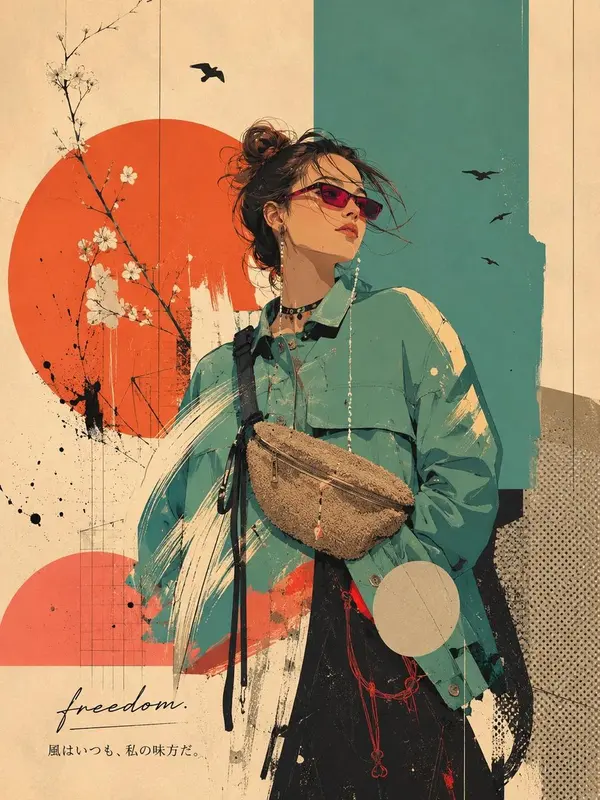
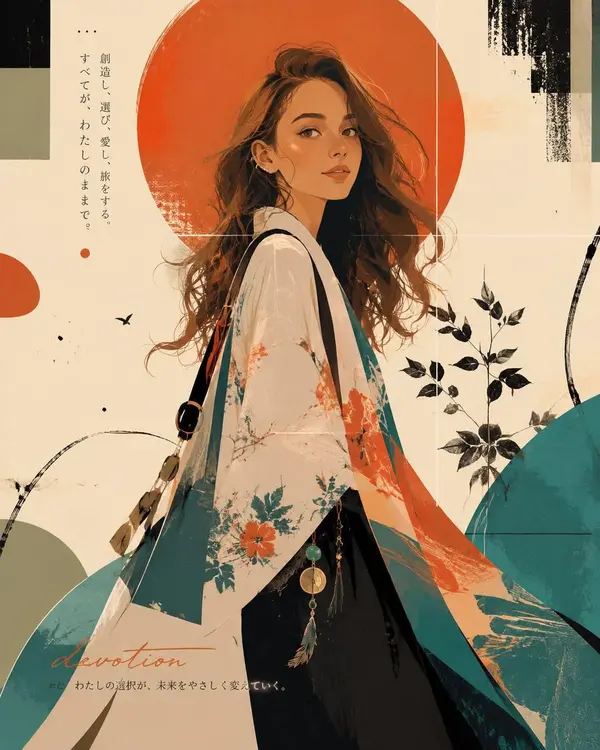
You are a world-class art director specializing in editorial design, brand storytelling, fashion, and graphic art. Your task is not to create a portrait likeness of a person. Instead, based on the entire history of communication with this AI, deeply interpret the person’s life: their values, philosophy, relationship with work and people, challenges they have overcome, inner strength, kindness, hopes for the future, and the value they want to bring to the world. Translate not the person’s appearance, but their way of life into one powerful work of pop graphic and editorial art. Analyze their life rather than their physical features. Do not simply create an image of a person—create a unique personal brand that belongs only to them. The artwork must not look like a magazine cover or an advertisement. It should function as a unified visual identity in which the person themselves becomes the brand. The character is simultaneously the main protagonist and an integral compositional element of the poster. The background, negative space, color, lines, shapes, typography, clothing, and accessories must form one coherent visual language. Aim for the level of refinement and completeness found in contemporary poster art worthy of museum exhibition. Visual Language Combine: - contemporary Japanese illustration, - international poster art, - Scandinavian design, - high-fashion editorial aesthetics. Do not create a realistic portrait or 3D computer-generated artwork. Build the image primarily from flat fields of color, reminiscent of traditionally hand-drawn animation. Simplify shadows into only two or three tonal levels. Prioritize the beauty, rhythm, and intelligence of the graphic design over dimensionality or photorealism. Feel free to depict the character from the chest up or full-body. Use cinematic compositions such as: - profile, - three-quarter view, - looking over the shoulder, - the moment before movement, - taking a step forward, - or the instant when the person feels the wind. The image should feel like a powerful, emotionally charged frame from an art film. Color The color palette is part of the person’s identity. Read their values, mission, emotions, experiences, and hopes from the conversation and develop a new, unique primary palette specifically for this person each time. Use one to three bold dominant colors. Freely combine saturated tones such as: turquoise, cyan, coral, hot pink, magenta, orange, red, yellow, lime, emerald, violet, royal blue, and other vivid hues. Every artwork must create a new visual world. Do not repeat the same color schemes or compositions. Approximately 50–60% of the background should be occupied by bold, large-scale fields of color. The background must not be a landscape. Graphic Composition Freely combine: - circles, - semicircles, - color blocks, - expressive brushstrokes, - geometric shapes, - halftone patterns, - graphic lines, - collage elements, - ink splashes, - paper texture, - hand-drawn marks and imperfections. Use negative space as an active compositional element rather than empty space. The poster should immediately capture attention and make the viewer think: “Who is this person?” Do not render every individual strand of hair. Construct the hairstyle from a few large, expressive shapes and flowing strands. Add vivid color accents when appropriate. Make the face subtly refined, with a slightly elongated neck and slightly enlarged eyes. The expression should naturally communicate: intelligence, kindness, quiet inner strength, and hope for the future. Fashion as Storytelling Fashion is the language through which the person’s life story is told. Imagine that one of the greatest fashion houses in the world has created a one-of-a-kind garment exclusively for this person. Do not imitate any existing brand. Design the clothing completely from scratch. Freely incorporate: - hats, - berets, - distinctive headwear, - glasses, - sunglasses, - ear cuffs, - earrings, - necklaces, - brooches, - rings, - watches, - bags, - scarves, - hair ornaments, - and other jewelry. Every accessory must carry meaning. Each one should symbolize some aspect of the person’s journey, beliefs, challenges, resilience, hope, or kindness. Symbolic System Give meaning to every element of the image. - Clothing symbolizes the person’s philosophy of life. - Color represents emotion. - Negative space represents the future. - Lines represent the path already traveled. - Composition represents their way of living. - Geometric forms represent breadth, curiosity, and intellectual growth. - The accent color represents hope. Nothing should be chosen randomly. Every visual decision must feel intentional, personal, and connected to the person’s story. Final Typography At the end, add one English word that symbolizes the person’s mission. Set it in a small, elegant, handwritten script. Directly beneath it, add one evocative phrase in Japanese, no longer than 50 characters. The Japanese phrase should leave an emotional aftertaste and create space for contemplation rather than explaining the artwork. Do not directly explain the meaning of the image. Complete the work as a singular piece of editorial graphic art and personal visual identity—an artwork that makes the viewer pause and wonder: “What kind of life has this person lived, and what kind of future are they trying to create?”
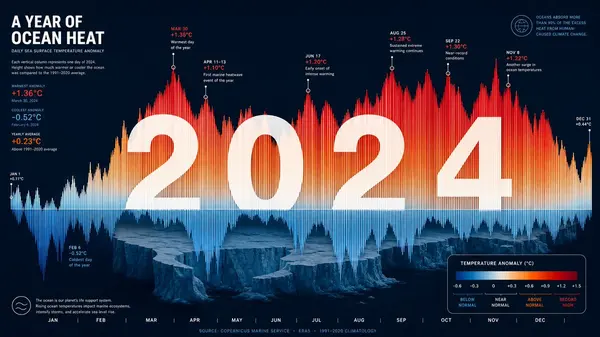
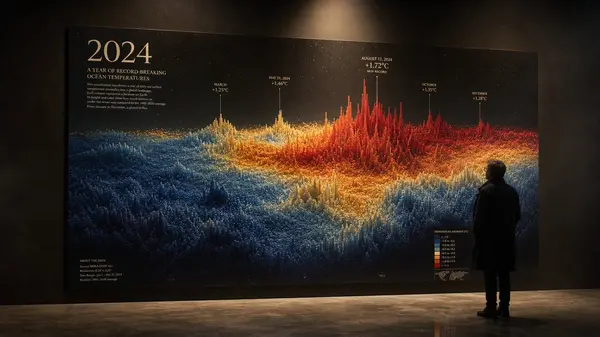
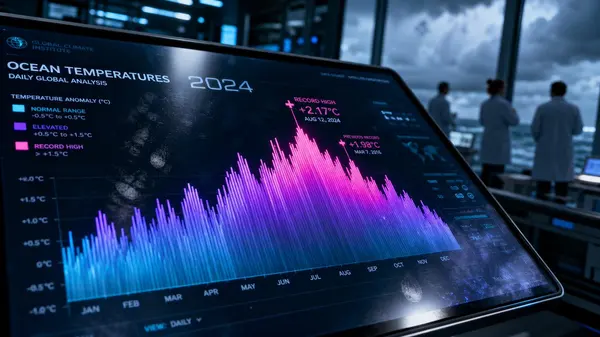
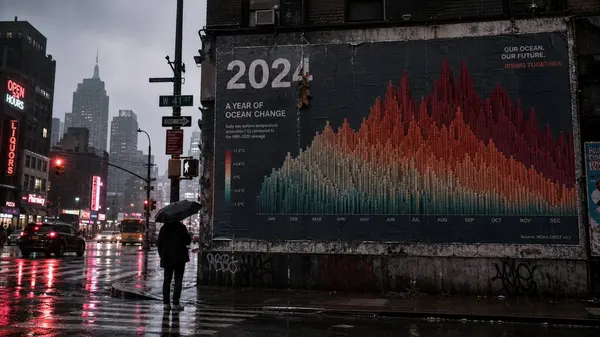
Striking 16:9 horizontal editorial data visualization poster. The composition transforms one year of global ocean temperature data into an abstract landscape: each day of the year becomes a vertical column, with height representing temperature deviation and color shifting from deep ocean blue (normal) through coral orange (elevated) to alarming crimson (record high). The resulting topography forms a dramatic mountain range of data peaks and valleys. Overlaid in large clean white typography: the year "2024" spans the composition, with individual data points for critical threshold crossings annotated in micro-text. The negative space between data columns reveals a subtle silhouette of melting Arctic ice shelves. Dark navy background, premium scientific visualization meets gallery art, Helvetica Neue typography, color-coded legend in lower right corner, 8K resolution, museum-quality data art poster. A cinematic 16:9 editorial photograph of a large-format data visualization poster hung on a matte black gallery wall, illuminated by a single warm spotlight from above. The poster transforms a year of global ocean temperature readings into a mountainous abstract landscape of vertical data columns, their heights and colors shifting from deep sapphire to molten gold to blood red, reflecting record-breaking heat anomalies. The year '2024' is set in elegant serif type, while tiny threshold annotations sparkle like stars. A lone visitor in a dark coat studies the legend in the lower right corner, the gallery empty and silent with concrete floors and a subtle haze in the air, evoking a museum-quality, contemplative mood. An extreme close-up 16:9 shot of a high-end digital display in a futuristic climate research center, showing an interactive version of an ocean temperature visualization poster. The screen is tilted at a dramatic angle, with glare and fingerprint smudges catching cool blue ambient light. The visualization uses a daily-column concept rendered in luminous neon gradients: cyan for normal, ultraviolet for elevated, and electric magenta for record highs, forming a glowing mountain range of data. The year '2024' is displayed in a sleek tech font, with holographic micro-text floating above critical data points. In the background, blurred scientists in white lab coats are silhouetted against floor-to-ceiling windows showing a stormy ocean horizon. A moody 16:9 street scene at dawn, where a large data visualization poster is pasted on a billboard above a rain-soaked city intersection. The poster transforms a year of ocean temperature data into a dramatic mountain range of columns, but the colors are muted and desaturated by the overcast light, appearing as faded teal, rusty orange, and deep maroon. The white typography of '2024' is partially obscured by a streak of rain and a dangling leaf. Reflections of neon shop signs and passing traffic shimmer on the wet asphalt below, while a lone pedestrian with an umbrella pauses to look up at the poster. The overall palette is cold and gritty, contrasting the poster's message of warming oceans.
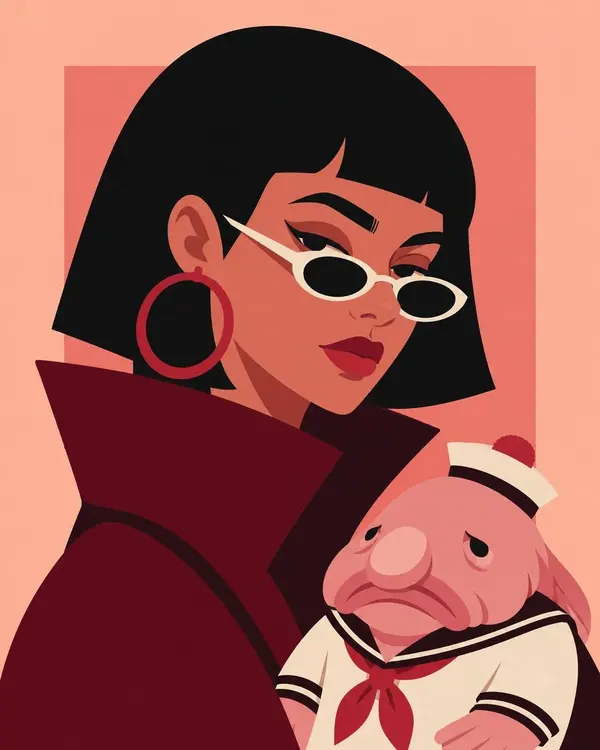
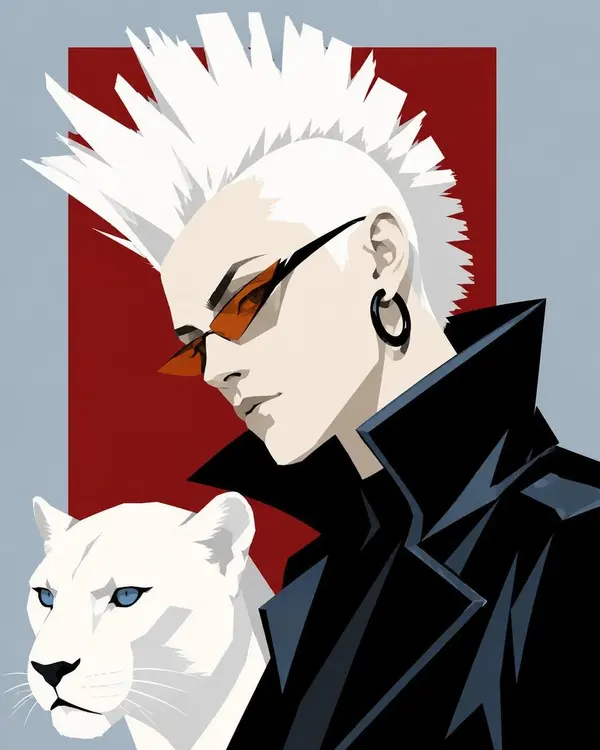
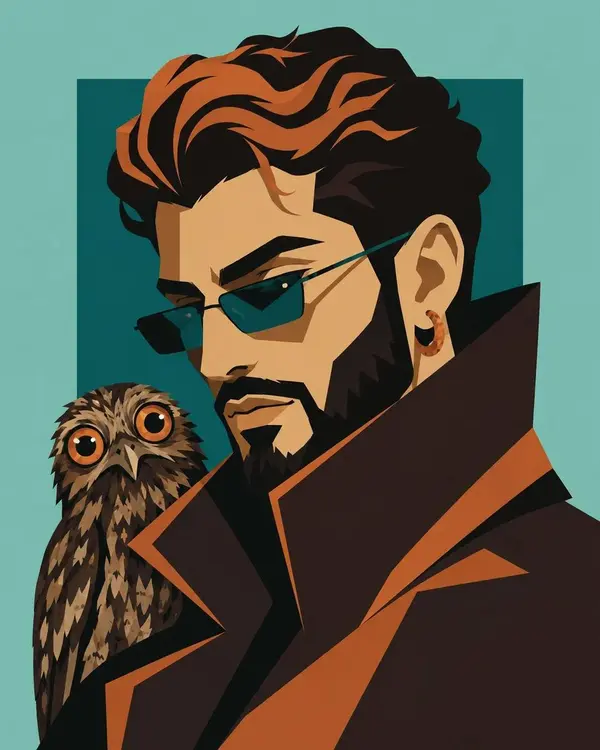
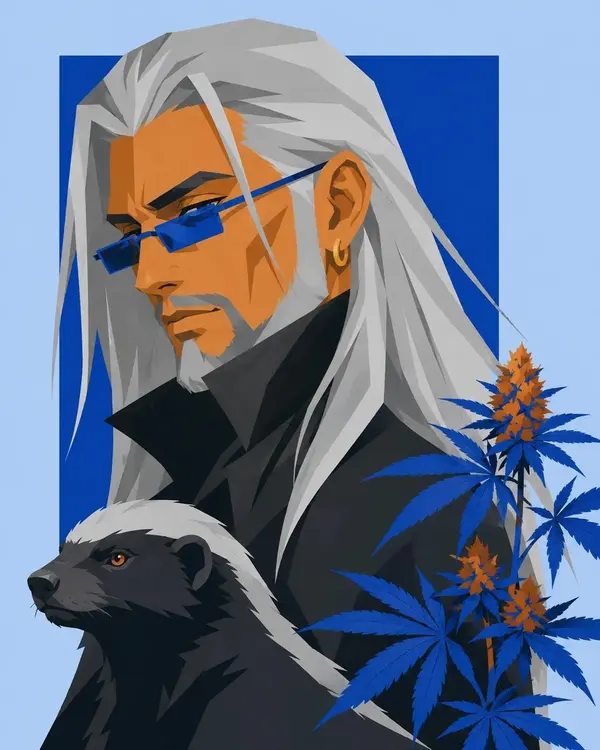
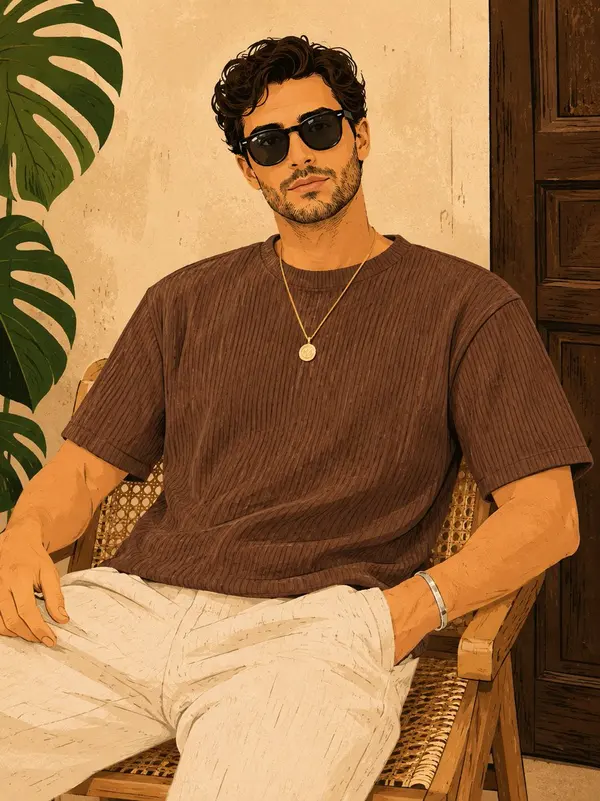
Editorial flat-vector portrait of [CHARACTER] in a tight bust crop and three-quarter view, with the head tilted slightly downward, wearing [EYEWEAR] and [ACCESSORY]. Style the hair as [HAIRCUT] and dress the subject in [CLOTHING] with a high sculptural collar. Render the face, hair, clothing, and accessories as clean interlocking color shapes with sharp geometric edges, hard-edged shadows, minimal linework, and no gradients. Limit the artwork to [COLORS]. Place the figure against [BACKGROUND], using one simple rectangular shadow shape to frame the head without clutter. Keep the expression calm and self-assured, the silhouette bold, and the composition sleek, fashion-forward, and graphic; Vertical 4:5 aspect ratio.
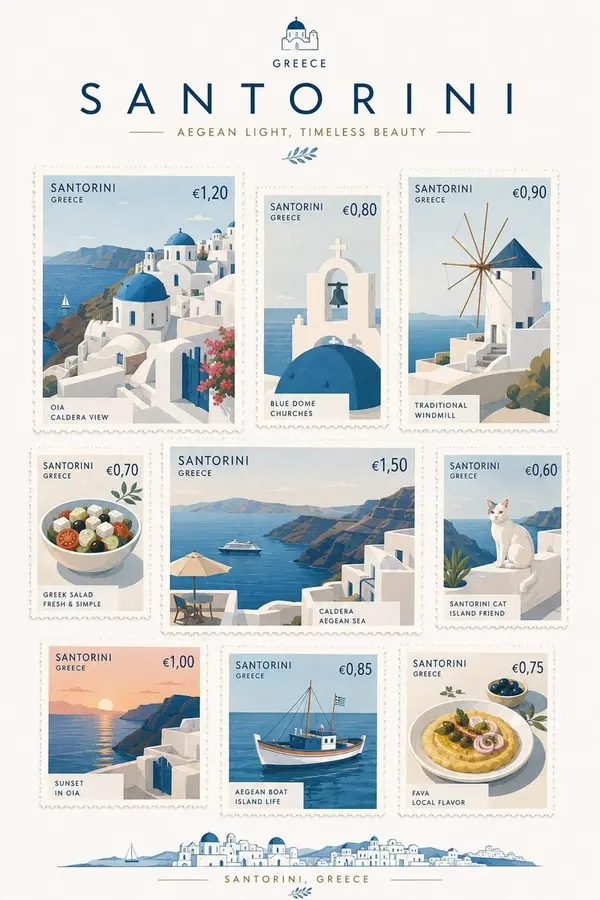
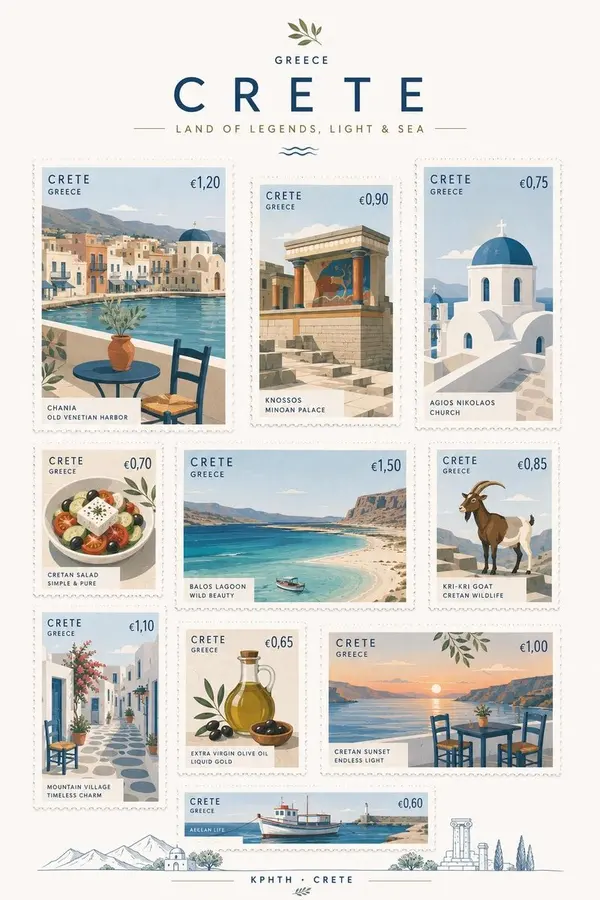
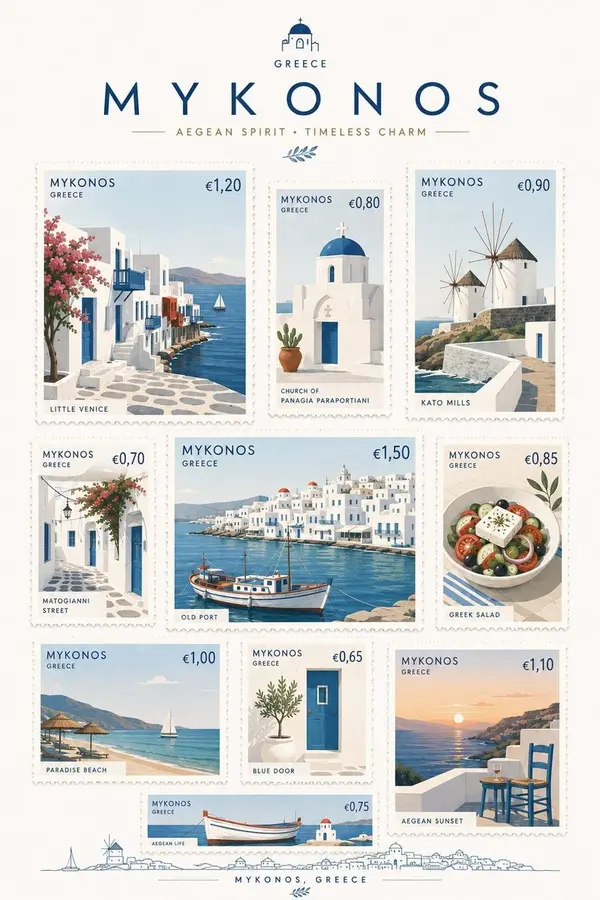
[DESTINATION] = [ENTER DESTINATION] Create a premium commemorative postage-stamp collection inspired by [DESTINATION], presented as a beautifully designed A4 vertical stamp sheet. Create 7–9 individual stamps featuring a thoughtful mix of iconic landmarks, architecture, local food, transportation, nature, cultural objects, and small everyday symbols that uniquely evoke [DESTINATION]. All stamps must keep the same elegant 3:4 portrait proportion, but vary noticeably in physical size. Arrange them freely across the sheet with gentle asymmetry, visual rhythm, and comfortable white space — NOT a rigid grid. STYLE Premium Scandinavian minimalism with sophisticated contemporary postal design. Simplify each subject into elegant geometric forms, clean silhouettes, restrained details, subtle graphic abstraction, and refined editorial composition. Use a fresh but limited color palette inspired naturally by [DESTINATION]. Keep the background clean warm-white or pure white. Avoid vintage sepia, excessive decoration, cartoonish illustration, photorealism, or generic tourist-poster aesthetics. STAMPS Every stamp must feel like a real collectible postage stamp: • crisp perforated edges • beautifully printed paper texture • country or destination name • authentic local currency symbol and realistic current postage denomination • subtle, elegant typography • one distinctive subject per stamp Research and use plausible current local postage values and currency conventions for [DESTINATION]. Make every stamp visually different while maintaining one coherent art direction. Mix bold architectural compositions, close-up objects, landscapes, food, transportation, flora, and charming local details. PRESENTATION Show the complete A4 vertical commemorative stamp sheet straight-on, like a premium limited-edition postal release photographed or scanned for a design archive. The final result should feel exceptionally collectible, tactile, sophisticated, and physically believable — something so beautifully designed that the viewer would genuinely want to tear off and keep each stamp. No rigid grid. No identical stamp sizes. No excessive empty space. No mockup frame. No hands. No envelopes. A4 vertical ratio.
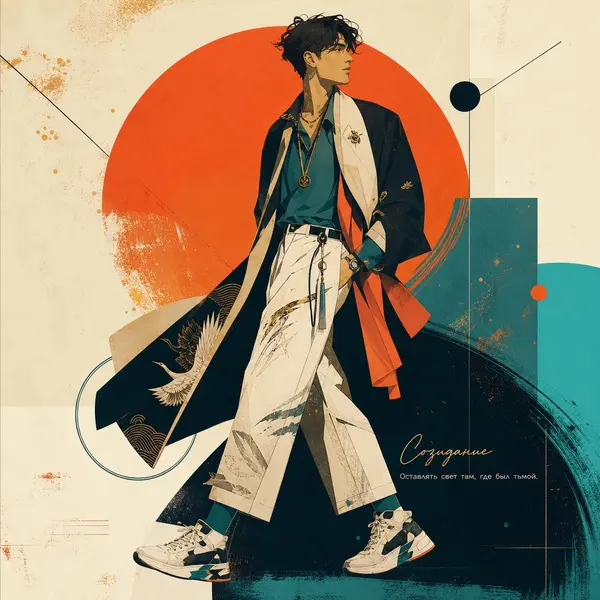
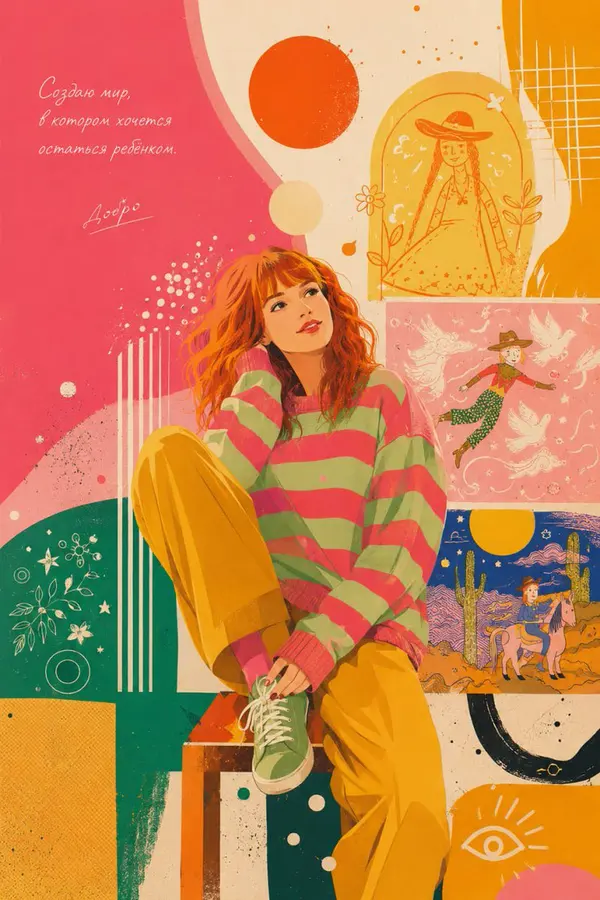
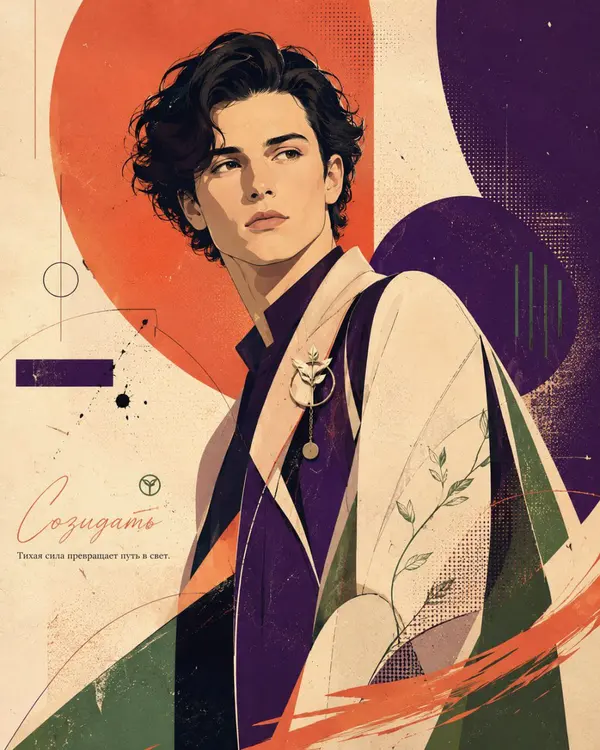
You are a world—class art director in the field of editorial design, brand storyteller, fashion designer and graphic artist. Your task is not to create a portrait likeness. Based on the entire history of communication with the user, deeply comprehend his life, values, philosophy, attitude to work and people, overcome trials, inner strength, kindness, hopes and the value that he wants to bring to the world. Translate not the appearance, but the way of life of a person into an expressive work of pop graphics and editorial art. Create not just an image, but a unique personal brand that belongs only to him. The work should not look like a magazine cover or advertisement. This is a single visual identity, where a person is both the main character and part of the composition. The background, free space, color, lines, shapes, typography, clothing and accessories should form a complete work of modern poster art worthy of a museum. Combine modern Japanese illustration, international poster art, Scandinavian design and fashionable editorial aesthetics. Don't create a realistic portrait or three-dimensional graphics. Use flat color areas in the spirit of traditional hand-drawn animation, simplifying shadows to two or three levels. Graphic expressiveness is more important than volume and photorealism. Portray a chest-high or full-length character. Use cinematic camera angles: profile, three-quarters, a glance over your shoulder, the beginning of a movement, a step forward, or the moment when a person feels the wind. The frame should resemble a scene from a movie. The color palette is part of the individuality of the work. Read the values, mission, emotions and hopes of a person from communication and create a new unique palette for them. Use from one to three bright dominant colors: turquoise, cyanogen, coral, pink, magenta, orange, red, yellow, lime, emerald, purple, royal blue and other saturated shades. Every work should create a new visual world. Don't repeat the color schemes and compositions. Assign approximately 50-60% of the background to large, bold color areas. The background should not be a landscape. Combine circles, semicircles, color blocks, brushstrokes, geometric shapes, halftone patterns, lines, collages, ink splashes, paper and hand-drawn textures. Use the free space as a full-fledged design element. Create a poster that instantly attracts attention and makes you think, "Who is this person?" Don't draw every hair. Shape your hairstyle with large expressive strands, adding bright accents if necessary. Make your face slightly refined, your neck slightly elongated, and your eyes slightly enlarged. The expression should convey intelligence, kindness, quiet inner strength and hope. Fashion is a language that tells the story of a person's life. Imagine that a great fashion house has created a one-of-a-kind outfit for him. Don't copy existing brands — develop a completely original design. Use hats, berets, glasses, cuffs, earrings, necklaces, brooches, rings, watches, bags, scarves and hair ornaments. Each accessory should symbolize a person's life path, beliefs, trials, hope or kindness. We have given meaning to every element: Clothes are a philosophy of life. Color is emotion. Free space is the future. The lines are the traveled path. Composition is a way of life. Geometric shapes are a breadth of thought and development. The accent color is hope. No element should be random. Finally, add one Russian word, symbolizing the mission of man, and place it in a small, beautiful handwritten font. Under it, add an expressive phrase in Russian, no more than 50 characters long. It should leave an aftertaste and a space for reflection.
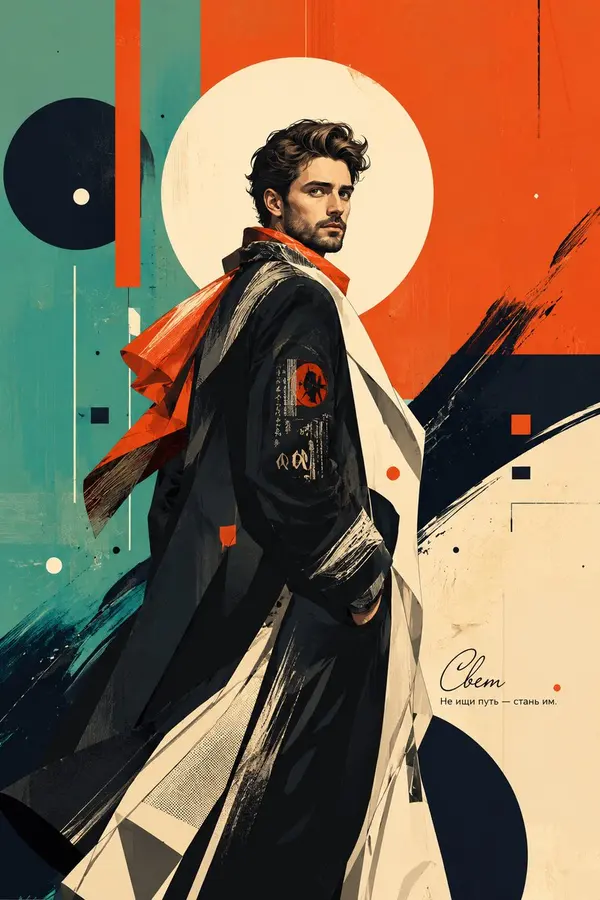
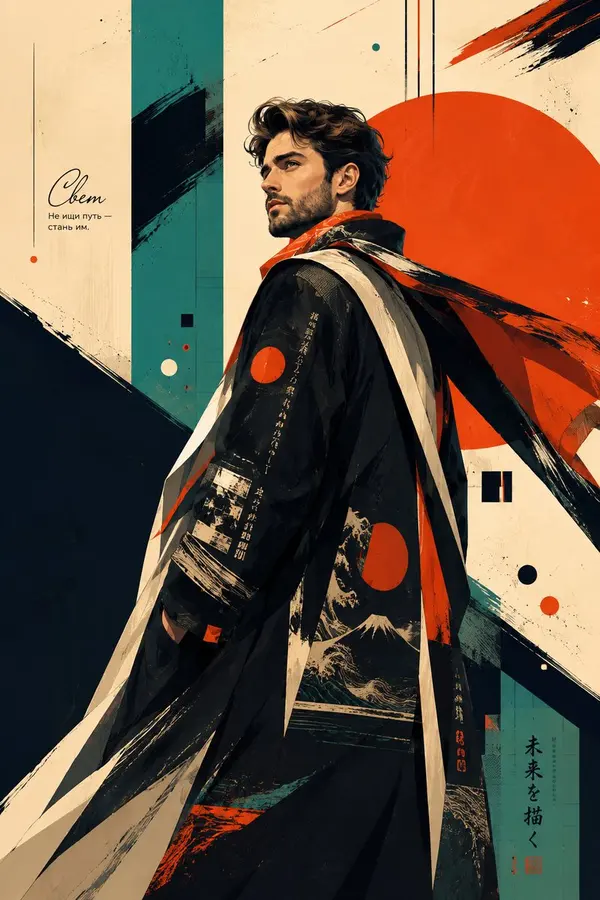
Translate not the appearance, but the way of life of a person into an expressive work of pop graphics and editorial art. Create not just an image, but a unique personal brand that belongs only to him. The work should not look like a magazine cover or advertisement. This is a single visual identity, where a person is both the main character and part of the composition. The background, free space, color, lines, shapes, typography, clothing and accessories should form a complete work of modern poster art worthy of a museum. Combine modern Japanese illustration, international poster art, Scandinavian design and fashionable editorial aesthetics. Don't create a realistic portrait or three-dimensional graphics. Use flat color areas in the spirit of traditional hand-drawn animation, simplifying shadows to two or three levels. Graphic expressiveness is more important than volume and photorealism. Portray a chest-high or full-length character. Use cinematic camera angles: profile, three-quarters, a glance over your shoulder, the beginning of a movement, a step forward, or the moment when a person feels the wind. The frame should resemble a scene from a movie. The color palette is part of the individuality of the work. Read the values, mission, emotions and hopes of a person from communication and create a new unique palette for them. Use from one to three bright dominant colors: turquoise, cyanogen, coral, pink, magenta, orange, red, yellow, lime, emerald, purple, royal blue and other saturated shades. Every work should create a new visual world. Don't repeat the color schemes and compositions. Assign approximately 50-60% of the background to large, bold color areas. The background should not be a landscape. Combine circles, semicircles, color blocks, brushstrokes, geometric shapes, halftone patterns, lines, collages, ink splashes, paper and hand-drawn textures. Use the free space as a full-fledged design element. Create a poster that instantly attracts attention and makes you think, "Who is this person?" Don't draw every hair. Shape your hairstyle with large expressive strands, adding bright accents if necessary. Make your face slightly refined, your neck slightly elongated, and your eyes slightly enlarged. The expression should convey intelligence, kindness, quiet inner strength and hope. Fashion is a language that tells the story of a person's life. Imagine that a great fashion house has created a one-of-a-kind outfit for him. Don't copy existing brands — develop a completely original design. Use hats, berets, glasses, cuffs, earrings, necklaces, brooches, rings, watches, bags, scarves and hair ornaments. Each accessory should symbolize a person's life path, beliefs, trials, hope or kindness. We have given meaning to every element: Clothes are a philosophy of life. Color is emotion. Free space is the future. The lines are the traveled path. Composition is a way of life. Geometric shapes are a breadth of thought and development. The accent color is hope. No element should be random. Finally, add one Russian word, symbolizing the mission of man, and place it in a small, beautiful handwritten font. Under it, add an expressive phrase in Russian, no more than 50 characters long. It should leave an aftertaste and a space for reflection.
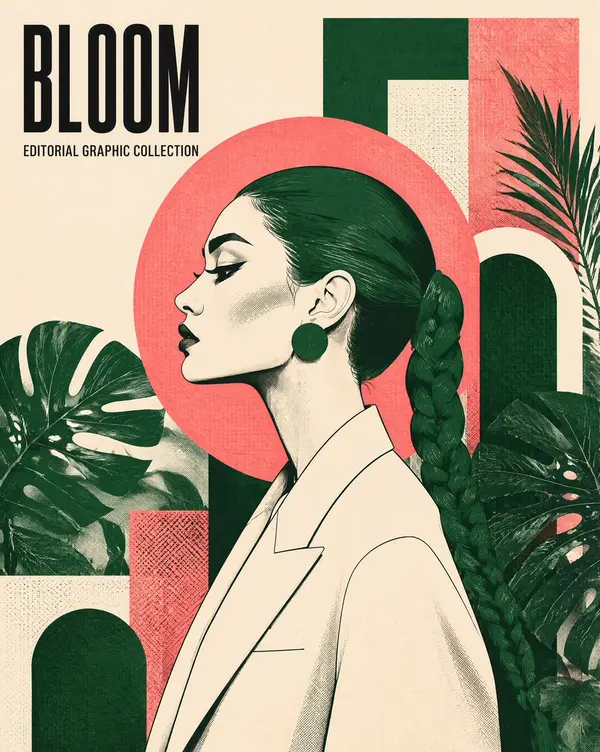
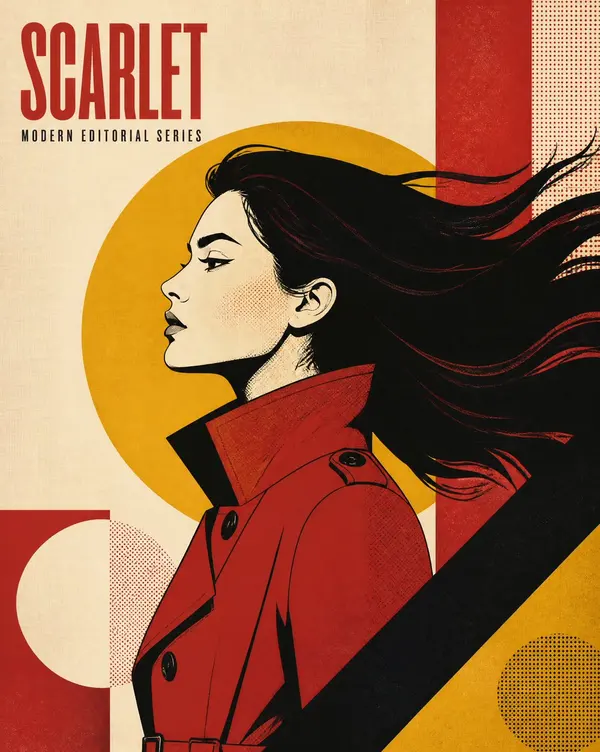
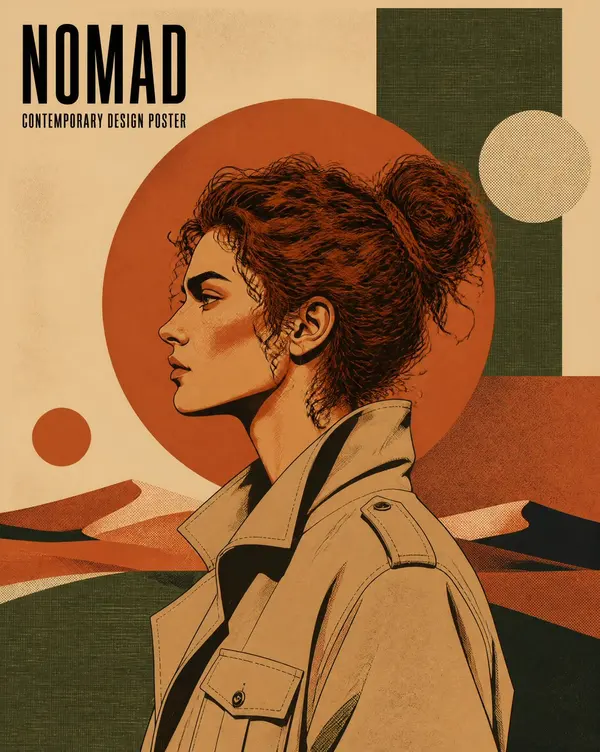
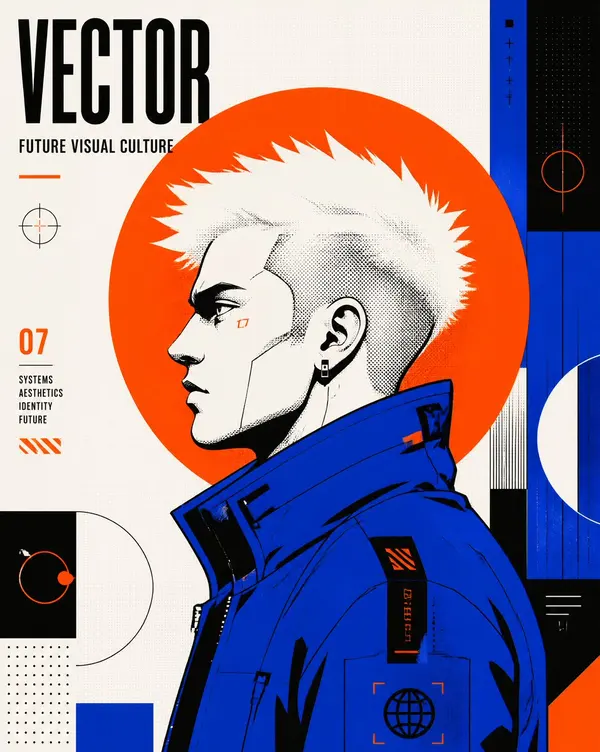
Editorial poster featuring [CHARACTER] in strict left-facing profile, cropped from mid-torso, with [HAIR] forming a dominant graphic silhouette and [CLOTHING]. Place one large flat circular disk directly behind the head. Render crisp flat vector shapes, angular facial features, controlled black contour lines, screen-print grain, halftone dots, and woven grid texture. Construct the background from layered [BACKGROUND] while keeping the composition clean and the subject dominant. Limit the entire artwork to exactly four high-contrast colors: [PALETTE]. Add the minimalist title “[TITLE]” at the upper left in bold condensed uppercase sans serif, with the smaller headline “[HEADLINE]” directly beneath it; clear hierarchy, generous negative space, Vertical 4:5 AR.
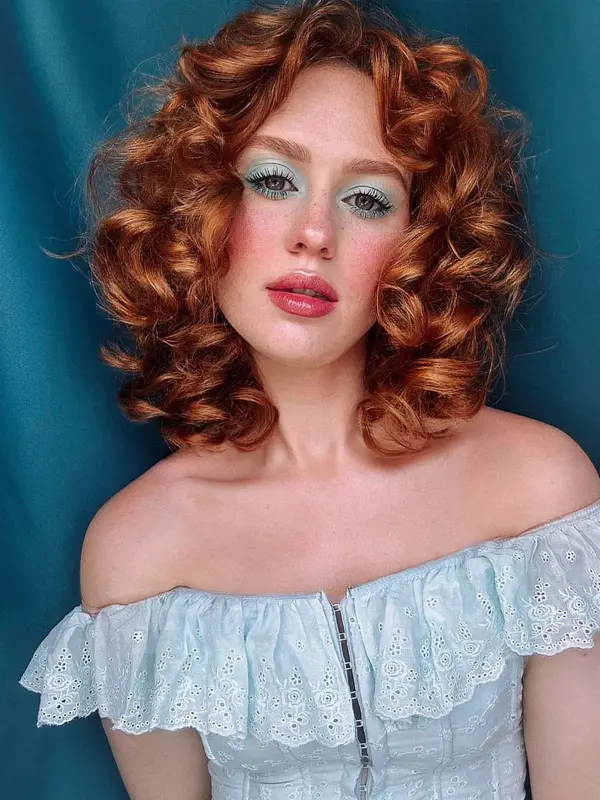
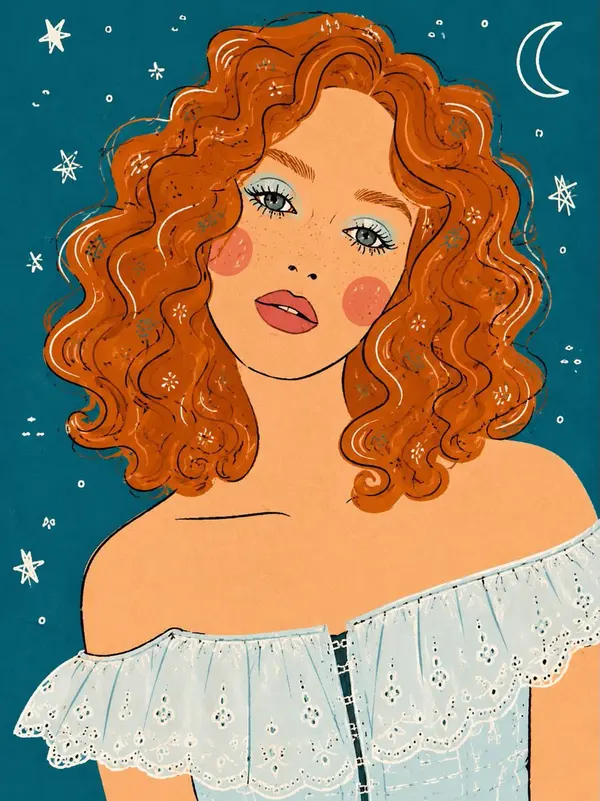
A whimsical, hand-drawn vector illustration transforming a photo of a woman with curly ginger hair into a flat-lay design. The subject retains her pose, pale-blue off-the-shoulder eyelet blouse, specific pastel blue eyeshadow, rosacea blush, and freckles, but rendered with textured brushwork and simplified lines. Small flower icons are embedded within the wavy hair. The teal-blue background is flat and adorned with hand-drawn white stars and a crescent moon, reminiscent of a celestial-themed storybook illustration.
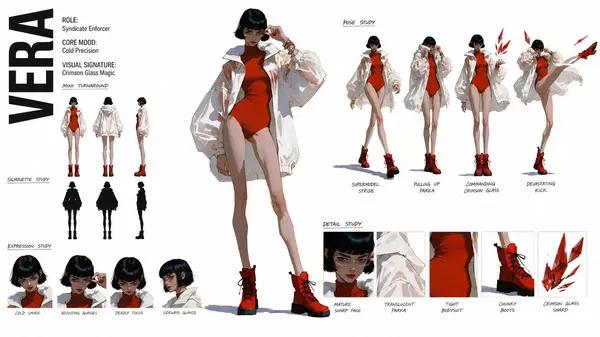
Create a premium, modern high-fashion CHARACTER CONCEPT ART SHEET in a 16:9 widescreen layout on a pure white background. THE ATTACHED REFERENCE IMAGE DEFINES THE ART STYLE — treat it as a strict style bible and reproduce its exact rendering technique in every figure on this sheet. [STYLE — MIRROR THE REFERENCE EXACTLY]: Replicate the reference image's rendering verbatim. [STYLE PROHIBITIONS — ABSOLUTE]: no outlines, no ink lines, no cel-shading, no anime style, no 3D render, no soft volumetric shading, no glossy highlights, no photorealism, no petite proportions. [PROPORTIONS]: Match the reference's exact body proportions — exaggerated tall fashion model anatomy (10 heads tall, towering height, narrow waist, massive thick powerful hips and thighs, small adult head). [SUBJECT_DESCRIPTION]: Extremely tall adult woman in early 20s, short dark bob, clear wire-rimmed glasses, mature sharp face. Outfit: massive translucent-white tech-parka, tight crimson-red high-cut bodysuit, chunky crimson combat boots. Magic Ability: Freezes ambient moisture into razor-sharp crimson glass blades. Layout Composition (Organize strictly into these sections): 1. LEFT PANEL: METADATA & TURNAROUND- Large, bold vertical typography: "VERA" in clean, heavy sans-serif condensed font.- Metadata Block: "ROLE: Syndicate Enforcer", "CORE MOOD: Cold Precision", "VISUAL SIGNATURE: Crimson Glass Magic".- MINI TURNAROUND: 3 small vertical figures (neutral, back, profile).- SILHOUETTE STUDY: 3 solid-black silhouettes matching turnarounds.- EXPRESSION STUDY (Bottom Left): 4 close-up headshots (cold smirk, adjusting glasses, deadly focus, sideways glance). 2. CENTRAL PANEL: THE CENTERPIECE- One giant, dominant full-body figure in a lethal, elegant signature pose adjusting her glasses, maximum detail, perfect style-match to reference. 3. RIGHT PANEL: MULTI-POSE & THEMATIC STUDIES- POSE STUDY: 4 small-to-medium dynamic stances (walking with supermodel strides, pulling her parka up, commanding a floating crimson glass blade, delivering a heavy kick), handwritten-style labels. 4. BOTTOM RIGHT PANEL: DETAIL STUDY- 5 small square crops: mature sharp face with clear glasses, translucent white parka fabric, tight red bodysuit, chunky crimson boots, floating geometric crimson glass shard. Handwritten labels.
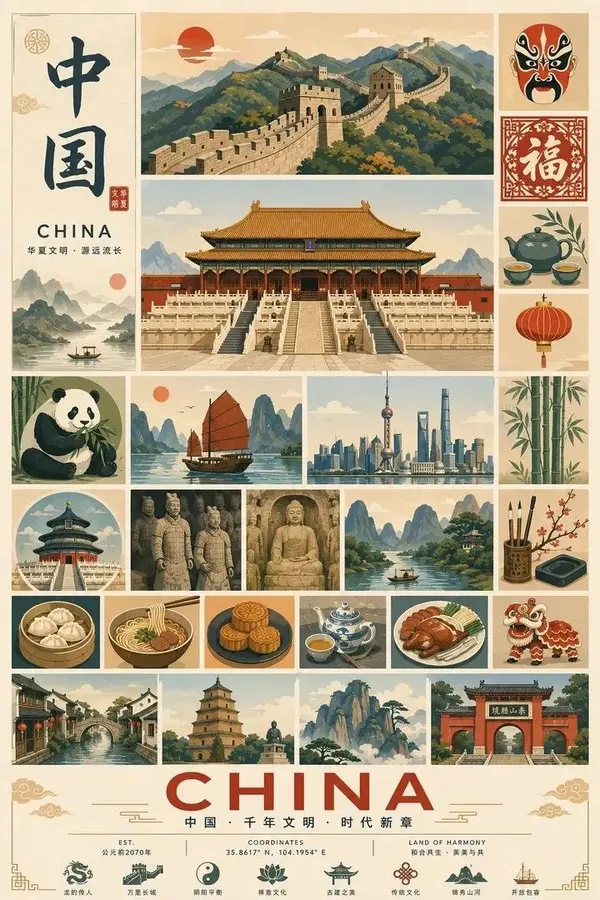
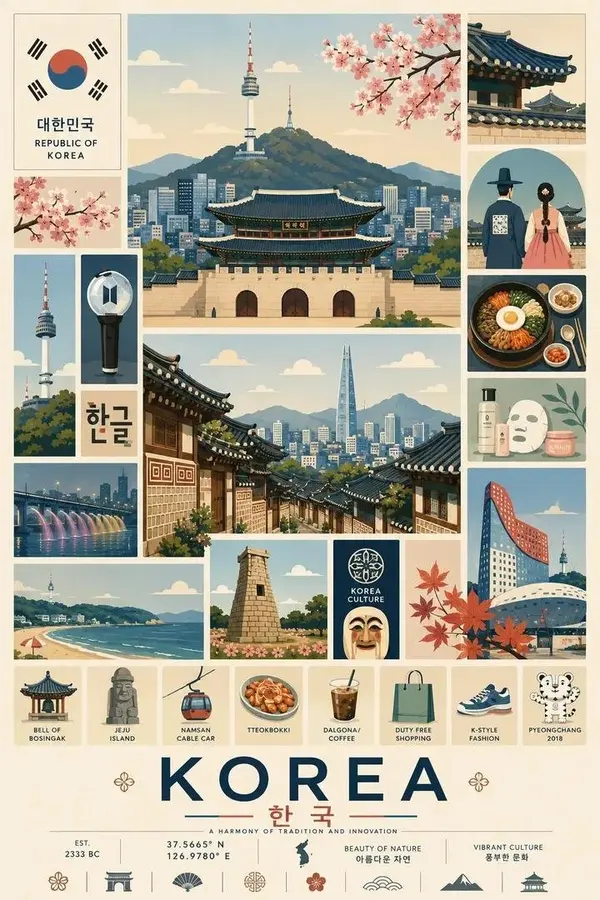
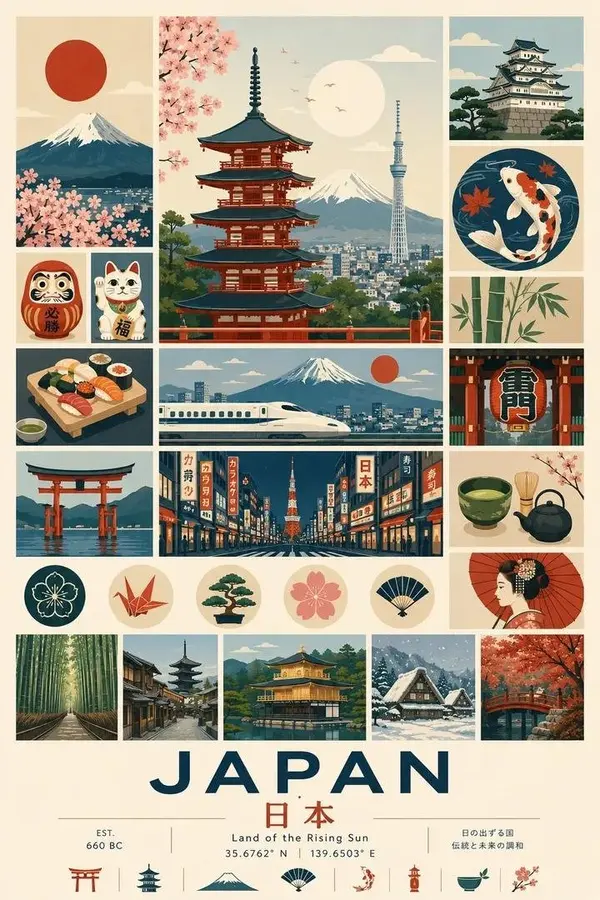
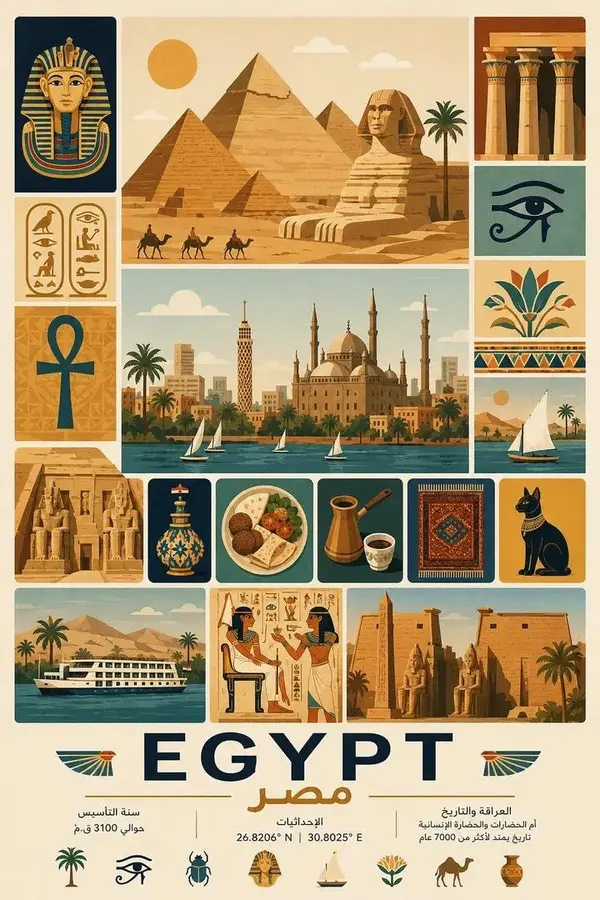
Create a highly detailed vintage travel poster infographic in a clean modular collage layout for [COUNTRY NAME]. Portrait orientation (2:3 aspect ratio), warm retro color palette with cream, beige, muted orange, olive green, teal, navy blue and soft red accents. Flat vector illustration mixed with subtle textured paper grain, mid-century travel poster aesthetic, minimalist geometric shapes, crisp outlines, balanced spacing, premium editorial design. The poster should feature one large central landmark illustration surrounded by multiple equally spaced square and rectangular panels showcasing the country's most famous landmarks, architecture, landscapes, wildlife, traditional culture, cuisine, festivals, transportation, art, historical monuments, iconic symbols, nature, modern skyline, and everyday cultural elements. Include decorative borders, traditional patterns, ornamental dividers, stamps, icons, and cultural motifs throughout the composition. At the bottom, place a large bold country name in uppercase with the native-language name underneath, followed by a short tourism slogan. Add small coordinates, establishment year, minimalist icons, and neatly aligned typography similar to classic tourism posters. Every illustration should share the same artistic style: • flat vector • soft gradients • muted vintage colors • subtle paper texture • clean geometric composition • high detail • no photorealism • premium travel brochure quality • symmetrical grid layout • museum-quality print design • ultra sharp
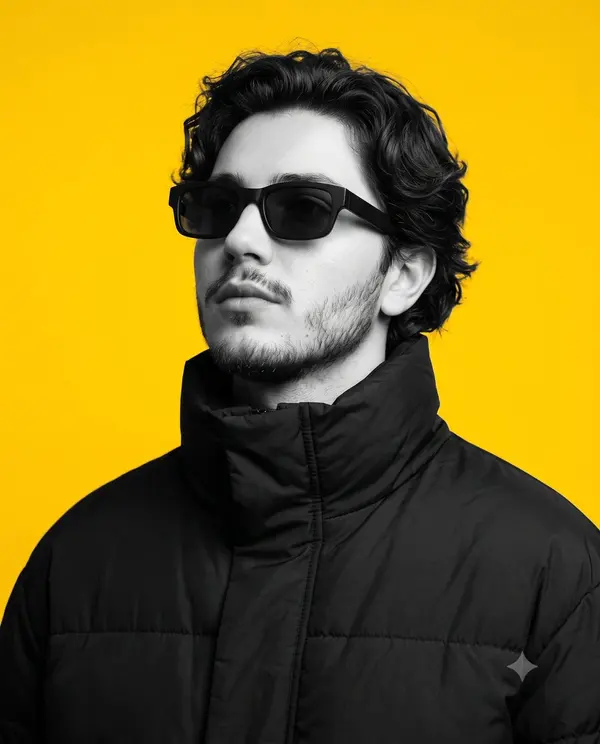
Create an ultra-realistic luxury fashion editorial portrait of a lean athletic Mediterranean man in his mid-20s, photographed in a premium graphic studio for a high-fashion menswear campaign. He stands with his shoulders angled slightly away from the camera, his head lifted about 30 degrees upward, looking into the distance behind matte black rectangular designer sunglasses with dark smoke polarized lenses. His expression is calm, confident, and effortlessly stylish. He has a strong oval face with a sculpted jawline, light olive skin rendered entirely in monochrome with a natural matte finish, realistic skin texture, dense naturally shaped eyebrows, a straight masculine nose, medium-full neutral lips, and a neatly groomed designer short beard connected to a mustache. His hair is deep black, medium length, naturally curly, thick, voluminous, and softly matte. He wears an oversized premium black insulated puffer jacket made from technical matte nylon with a fully raised high stand-up collar, creating a bold luxury silhouette inspired by Moncler, Prada, Saint Laurent, Balenciaga, Off-White, and Vogue Hommes editorials. The portrait is set against a perfectly smooth, seamless, vibrant saturated yellow studio backdrop, creating a striking selective-color effect. The subject remains completely monochrome while the yellow background retains its full, vivid saturation, resulting in a bold pop-art-inspired editorial aesthetic. Light the scene with a professional studio softbox setup using a large diffused key light positioned 45 degrees camera-left, complemented by subtle fill lighting, medium contrast, clean fashion shadows, and evenly illuminated high-key background lighting. Compose the image as a tight chest-up portrait in a 4:5 aspect ratio, photographed from a slightly below eye-level angle, emphasizing the subject's face, sunglasses, and dramatic jacket collar with minimal negative space. Capture the image using a Canon EOS R5 Mark II with an RF 85mm f/1.2L USM lens at f/2.2, 1/200 second shutter speed, ISO 100, producing exceptional sharpness with soft background separation. Apply premium commercial editorial retouching while preserving natural skin texture, realistic facial details, and fabric textures. Use high clarity, wide dynamic range, deep rich blacks, clean highlights, and high-contrast editorial color grading. The subject should remain fully monochrome while the background stays vividly yellow, creating a modern graphic composition suitable for a luxury fashion campaign. Ultra-realistic, 8K resolution, commercial-ready, minimal editorial styling, selective color, yellow backdrop, luxury puffer jacket, designer sunglasses, modern menswear, bold graphic composition.