Nano Banana is the public name used for Google's Gemini image generation family, including Nano Banana Pro, Gemini 3 Pro Image, Gemini 2.5 Flash Image, and related image variants.
Which model does Playyy use for these prompts?
Nano Banana Pro is selected initially. Use the model picker to choose another Nano Banana model; your browser remembers your last choice for this collection.
How are the prompts collected?
The gallery is hand-picked by our team from creators sharing their work in public communities. If a prompt of yours is featured and you'd prefer it taken down, just reach out and we'll remove it right away.
How do I try a prompt?
Hit the Try button on any card and you'll be taken to the prompt editor. Choose an image model, customize the prompt, then select Generate to create it in Playyy.
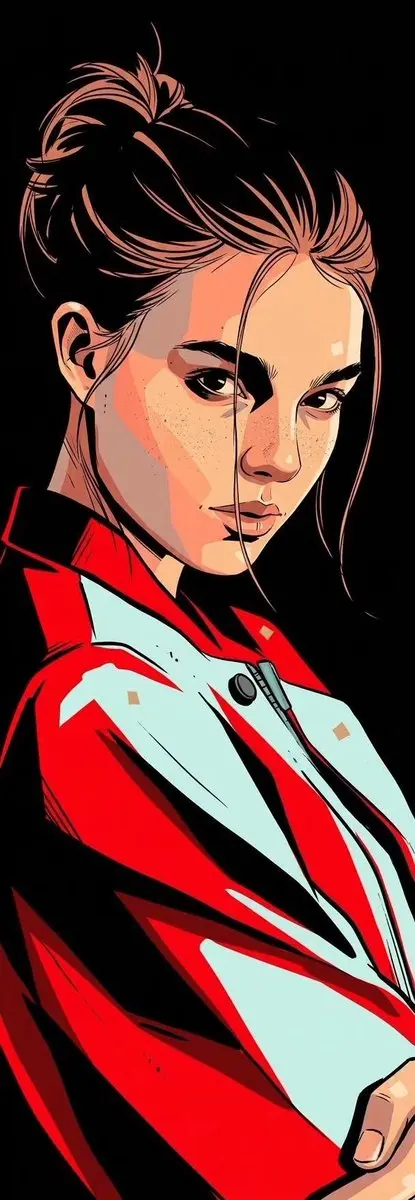
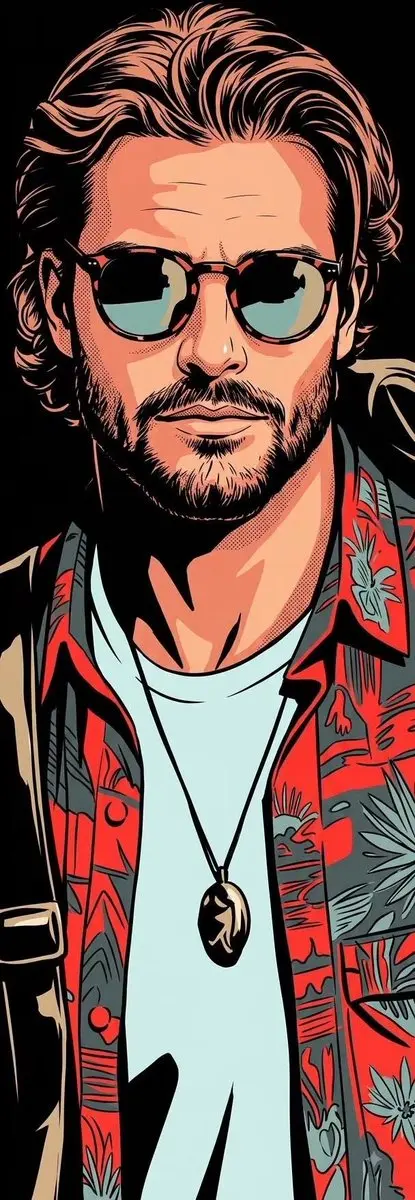
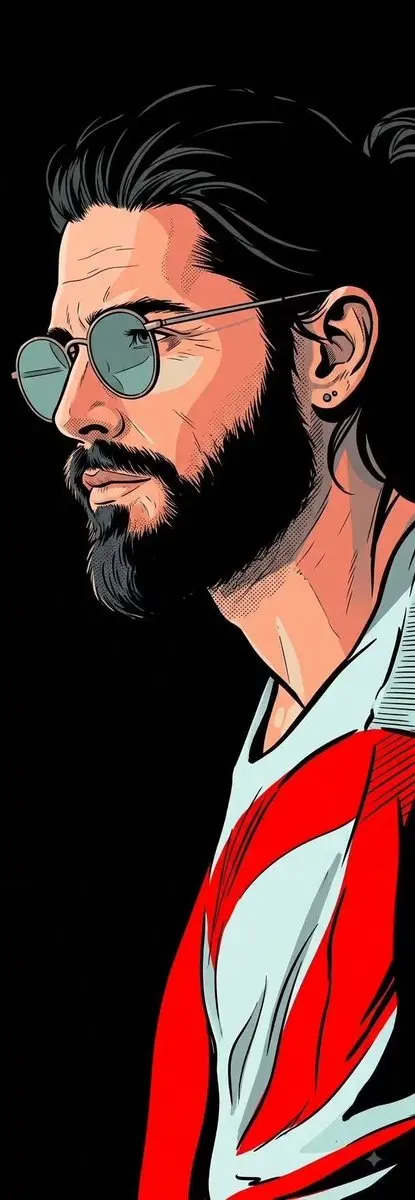
Bold contemporary graphic portrait illustration with a striking high-contrast comic-book / editorial ink aesthetic. Combine clean vector-like color blocking, expressive hand-drawn ink contours, sharp cel-shading, selective stippling, and subtle engraved line textures. The artwork should feel like a premium modern graphic-novel portrait rather than a photorealistic painting.
Use an extremely dominant pure deep black background, creating a dramatic silhouette around the subject. The black background should merge naturally with the deepest shadow areas of the artwork.
Exact color language
Preserve this restrained, high-contrast palette:
deep pure black — background, sunglasses, deepest shadows, outlines, clothing shadows
warm peach / light salmon skin — primary skin tone
soft coral-peach — illuminated skin planes
muted dusty peach — secondary facial modeling
intense vivid red / scarlet red — dominant clothing accents
pale desaturated cyan / mint blue — shirt and selected cool accents
muted turquoise-gray — subtle reflective details
dark charcoal gray — secondary linework and transitional shading
tiny amounts of warm beige for restrained highlights
Keep the colors solid, flat, and highly controlled, with minimal tonal variation. No rainbow palette, no neon multicolor effect, and no glossy photorealistic color grading.
Rendering technique
Construct the subject primarily from large, clean, sharply separated color planes. Use bold black areas to define dramatic facial shadows, neck shadows, eye sockets, beard/stubble regions, clothing interiors, and silhouettes.
Employ hard-edged cel shading rather than soft airbrushed gradients. Shadows should appear as deliberate graphic shapes with strong angular boundaries.
Add subtle fine stippling and tiny dot textures selectively across skin, facial hair, and transitional areas to create tactile printed-illustration character.
Linework
Use precise black ink outlines with variable thickness:
bold contour lines around the main silhouette
medium-weight structural facial lines
extremely fine lines for wrinkles, stubble, tattoos, fabric seams, and small details
occasional slightly rough hand-inked marks
The linework should remain crisp and confident, with controlled imperfections that preserve a handmade comic-illustration feeling.
Facial rendering
Faces should retain recognizable anatomical structure while being transformed into stylized graphic planes. Model the nose, cheekbones, jaw, lips, forehead, and neck using combinations of warm peach planes and sharply contrasting black shadow masses.
Highlights should be small, flat, opaque shapes, not soft photographic reflections.
Clothing and accessories
Clothing should use large saturated red graphic shapes contrasted against deep black shadows and pale muted cyan elements. Fabric folds are suggested through angular black lines, restrained darker-red shapes, and selective highlight strokes.
Metallic or reflective accessories should remain simplified into black, gray, muted turquoise, and tiny pale highlights.
Overall aesthetic
High-contrast graphic portrait + modern comic-book illustration + premium editorial poster art + bold ink drawing + flat color blocking + cel shading + subtle stippling + sophisticated limited palette.
The final result should feel powerful, masculine/fashion-editorial, dramatic, clean, rebellious, and visually iconic, with the subject emerging sharply from the black background.
No watercolor, no soft painterly rendering, no realistic photographic texture, no 3D rendering, no smooth gradients, no excessive colors, no glow effects, no text, no logo, no watermark.
Aspect ratio: 9:26 — extremely tall vertical composition. Background: solid deep black.
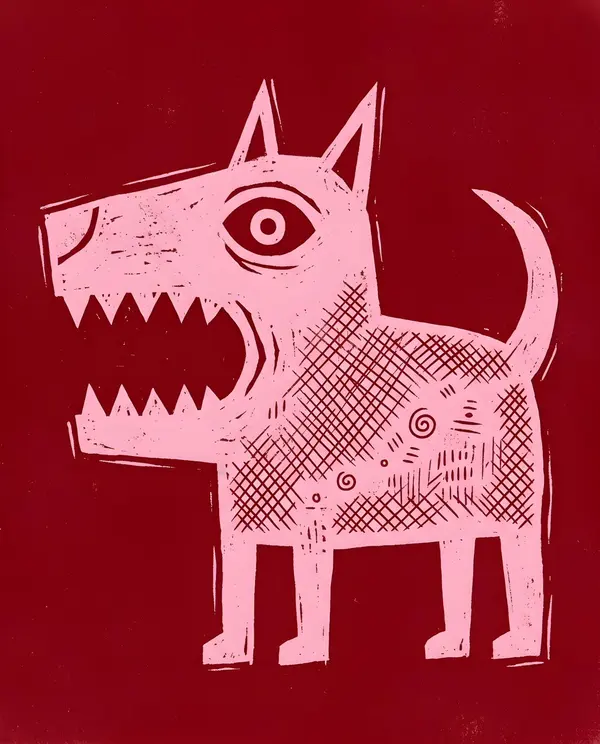
A stylized, primitive illustration of a dog is rendered in a light pink against a dark red background. The dog is depicted in a side profile, with a large, angular head featuring a single, circular eye with a smaller circle in its center, and two pointed ears. Its mouth is open, revealing a row of sharp, triangular teeth and a dark, cavernous interior. A curved tail extends from its rear. The body of the dog appears to be filled with hand drawn crosshatching and symbols. Its four legs are depicted as simple, rectangular shapes. The overall aesthetic is reminiscent of a stencil or woodcut print, with a rough, textured quality.
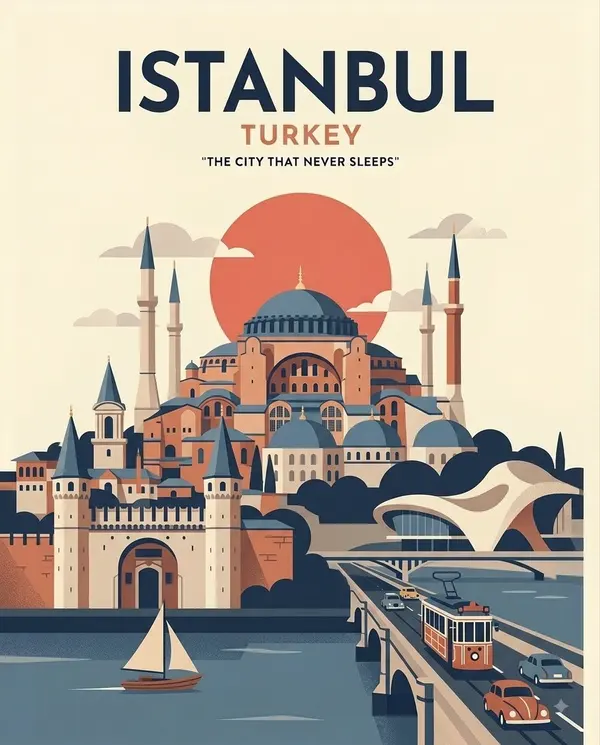
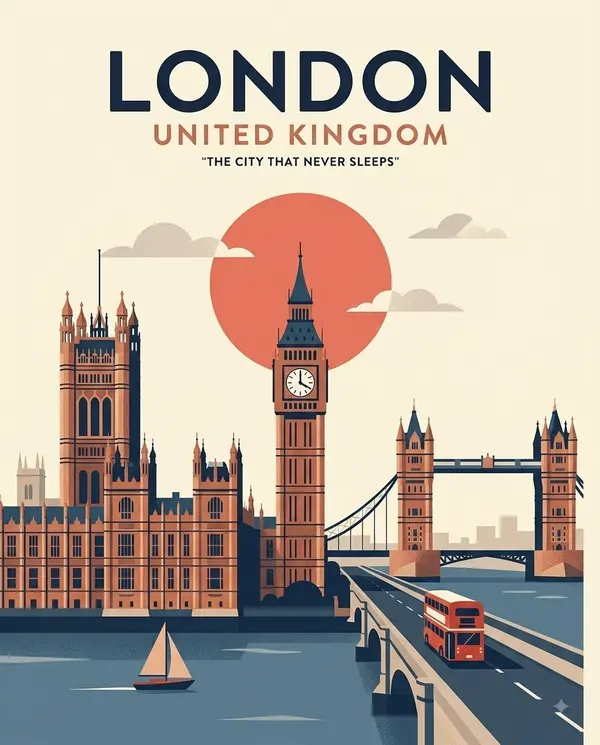
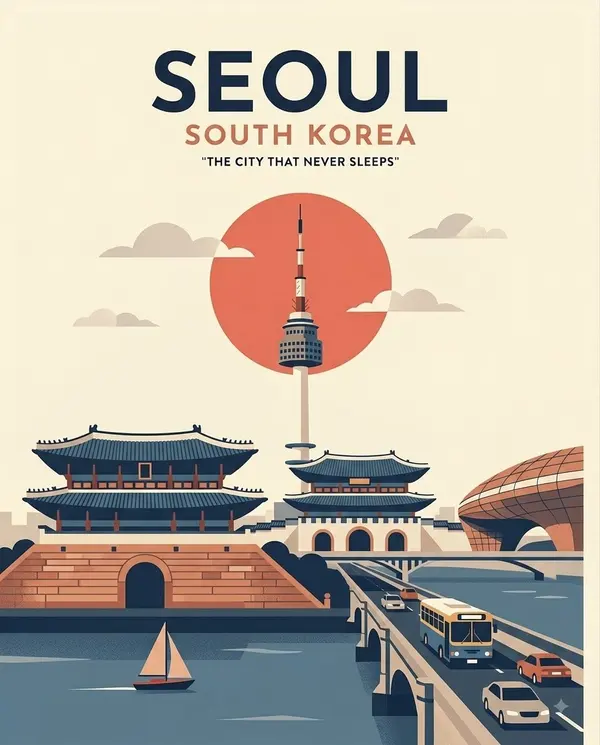
Create a minimalist, premium vintage-style travel poster for [DESTINATION / CITY, COUNTRY], inspired by the visual language of a classic mid-century travel print.
Use a clean, sophisticated composition with a limited, harmonious color palette, subtle aged-paper texture, and a refined screen-printed / paper-cutout aesthetic. The overall artwork should feel like a collectible vintage travel poster rather than a modern digital illustration.
At the top, add elegant serif-style typography reading:
“[CITY]”
in a deep, sophisticated color.
Directly underneath, add:
“[COUNTRY]”
in a smaller complementary accent color.
Main Illustration
Create an instantly recognizable but highly stylized representation of [CITY], featuring [LANDMARK 1], [LANDMARK 2], [LANDMARK 3], and [ICONIC LOCAL ELEMENT / VEHICLE / CULTURAL SYMBOL].
Arrange the elements naturally within a simplified landscape featuring [RIVER / COASTLINE / MOUNTAINS / STREETS / CITY SKYLINE]. Add one or two subtle atmospheric details such as [SMALL BOAT / PEOPLE / BIRDS / TREES / VEHICLE], keeping the composition uncluttered.
Include a simple circular sun or moon positioned behind the skyline, with soft paper-cutout clouds or minimal atmospheric shapes.
Visual Style
Mid-century vintage travel poster aesthetic
Minimalist editorial composition
Flat geometric shapes
Clean, confident linework
Simplified architectural forms
Limited 4–6 color palette
Muted vintage tones with one strong accent color
Subtle paper grain and screen-print texture
Slightly imperfect ink registration
Layered paper-cutout appearance
Elegant art-deco influence
Strong visual hierarchy
Sophisticated, premium collectible-poster feeling
No photorealism
No excessive detail
No gradients or glossy digital effects
No modern 3D rendering
The final composition should feel timeless, artistic, elegant, nostalgic, and instantly identifiable as [CITY], while maintaining a restrained and sophisticated vintage travel-poster aesthetic.
Poster format: vertical 4:5, centered composition, generous negative space, high-end print quality.
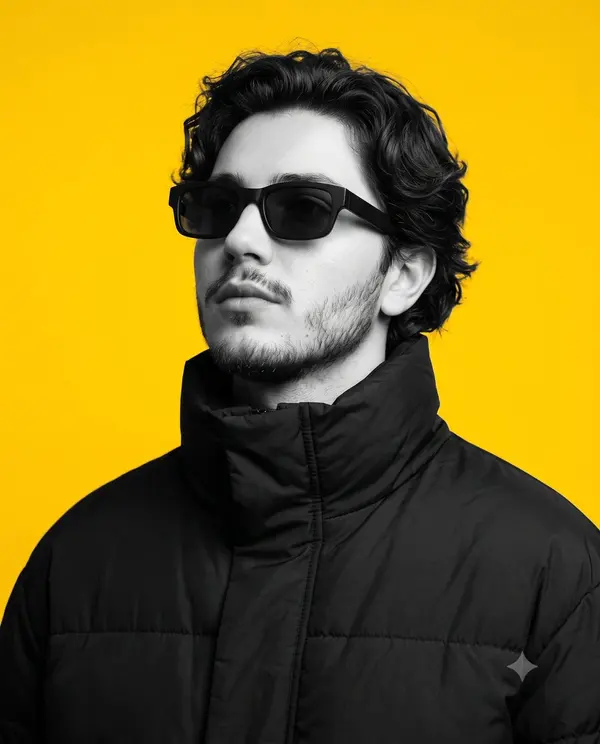
Create an ultra-realistic luxury fashion editorial portrait of a lean athletic Mediterranean man in his mid-20s, photographed in a premium graphic studio for a high-fashion menswear campaign. He stands with his shoulders angled slightly away from the camera, his head lifted about 30 degrees upward, looking into the distance behind matte black rectangular designer sunglasses with dark smoke polarized lenses. His expression is calm, confident, and effortlessly stylish.
He has a strong oval face with a sculpted jawline, light olive skin rendered entirely in monochrome with a natural matte finish, realistic skin texture, dense naturally shaped eyebrows, a straight masculine nose, medium-full neutral lips, and a neatly groomed designer short beard connected to a mustache. His hair is deep black, medium length, naturally curly, thick, voluminous, and softly matte.
He wears an oversized premium black insulated puffer jacket made from technical matte nylon with a fully raised high stand-up collar, creating a bold luxury silhouette inspired by Moncler, Prada, Saint Laurent, Balenciaga, Off-White, and Vogue Hommes editorials.
The portrait is set against a perfectly smooth, seamless, vibrant saturated yellow studio backdrop, creating a striking selective-color effect. The subject remains completely monochrome while the yellow background retains its full, vivid saturation, resulting in a bold pop-art-inspired editorial aesthetic.
Light the scene with a professional studio softbox setup using a large diffused key light positioned 45 degrees camera-left, complemented by subtle fill lighting, medium contrast, clean fashion shadows, and evenly illuminated high-key background lighting.
Compose the image as a tight chest-up portrait in a 4:5 aspect ratio, photographed from a slightly below eye-level angle, emphasizing the subject's face, sunglasses, and dramatic jacket collar with minimal negative space.
Capture the image using a Canon EOS R5 Mark II with an RF 85mm f/1.2L USM lens at f/2.2, 1/200 second shutter speed, ISO 100, producing exceptional sharpness with soft background separation.
Apply premium commercial editorial retouching while preserving natural skin texture, realistic facial details, and fabric textures. Use high clarity, wide dynamic range, deep rich blacks, clean highlights, and high-contrast editorial color grading. The subject should remain fully monochrome while the background stays vividly yellow, creating a modern graphic composition suitable for a luxury fashion campaign.
Ultra-realistic, 8K resolution, commercial-ready, minimal editorial styling, selective color, yellow backdrop, luxury puffer jacket, designer sunglasses, modern menswear, bold graphic composition.
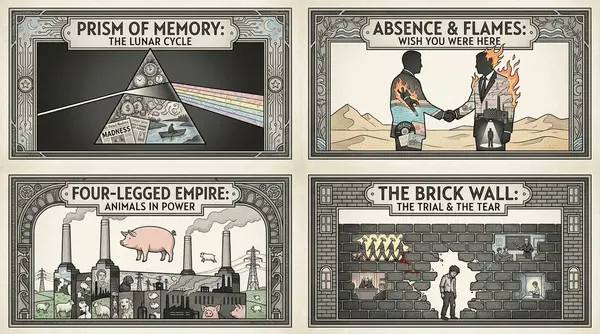
2x2 grid, 16:9, do this for 4 famous pink floyd like albums: CONCEPT ANCHOR 1: "Monochrome album-card design — rectangular framed panels, bold title bands, ornamental linework, symbolic architecture, music-poster rhythm"
::
CONCEPT ANCHOR 2: "Double-exposure cinema poster — subject silhouette filled with narrative scenes, psychological landscapes, hidden memories, high-contrast mood"
::
CONCEPT ANCHOR 3: "Pastel storybook relief — delicate handmade textures, tiny scenic details, soft architectural forms, quiet poetic atmosphere"
INSTRUCTION:
Find the exact visual center of these three concepts.
Ignore literal bands, film references, characters, and known stories.
Use only the compositional and material DNA.
Render $ SUBJECT as a symbolic story-poster where its outer form is graphic and iconic, but its interior becomes a delicate illustrated world.
STYLE RULES:
- Place the subject inside a rectangular poster/card frame with elegant Art Deco borders.
- Use a large title plaque or caption band inferred from the subject's core identity.
- The subject's silhouette should contain layered miniature scenes, memories, symbolic landscapes, or interior story fragments.
- Use mostly monochrome linework and gray contrast, but allow small pastel textile accents inside the inner world.
- Add decorative patterns: circuits, vines, waves, gears, stars, windows, arches, or symbols inferred from $ SUBJECT.
- Let the poster feel archival, musical, cinematic, and storybook-like.
- The image should be readable as a bold icon from far away and emotionally rich up close.
OUTPUT:
A framed symbolic poster where $ SUBJECT becomes a monochrome Art Deco icon containing a soft hidden story-world.
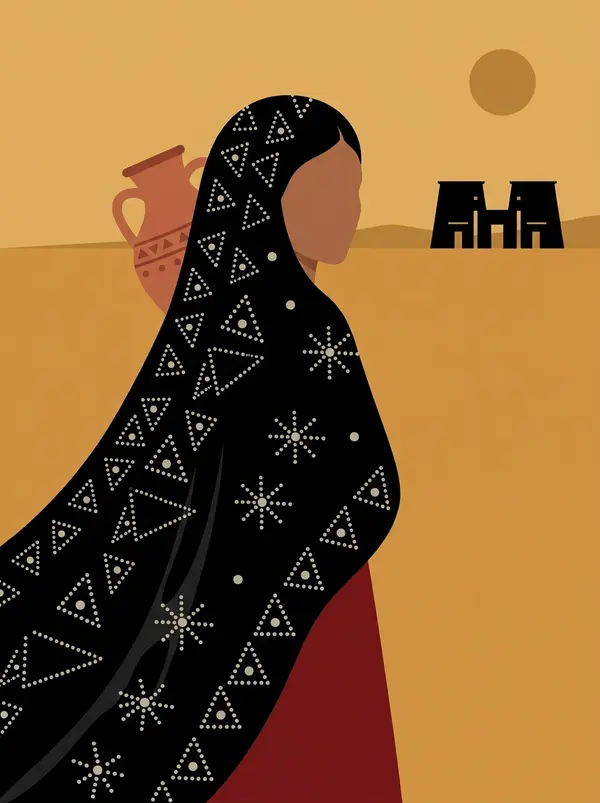
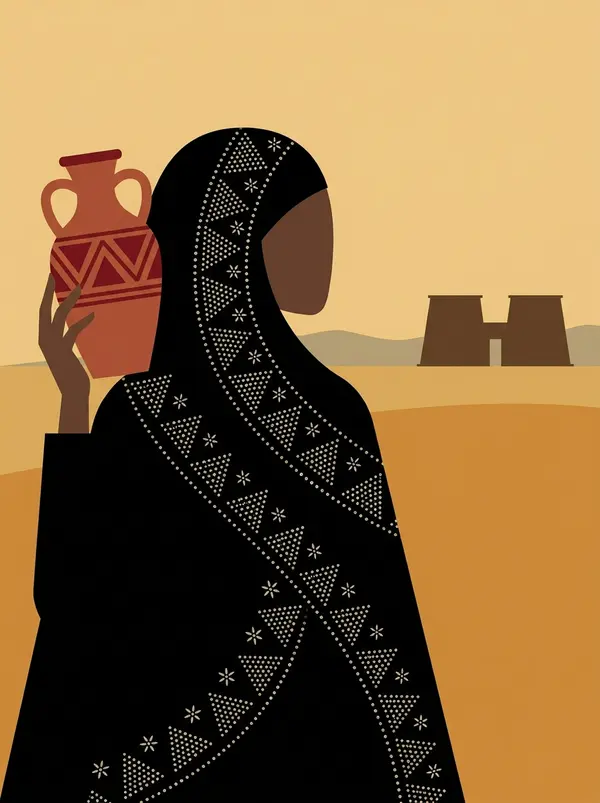
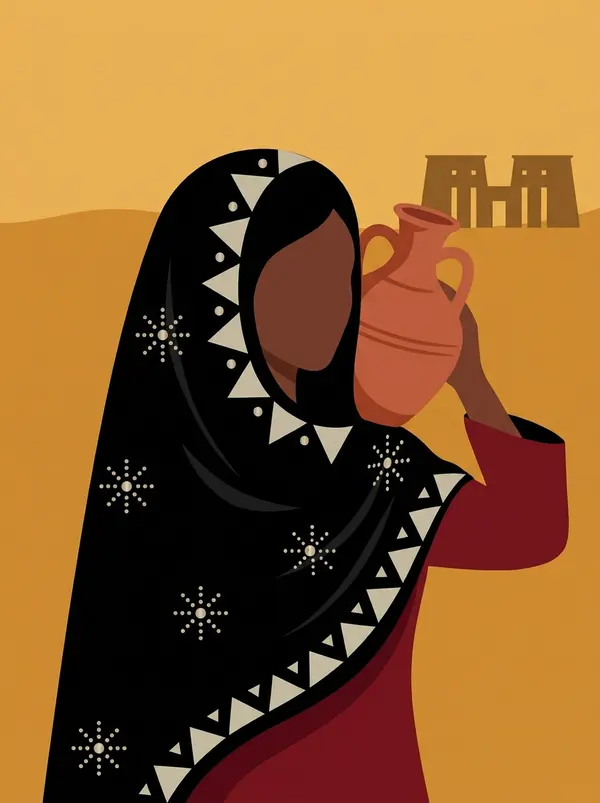
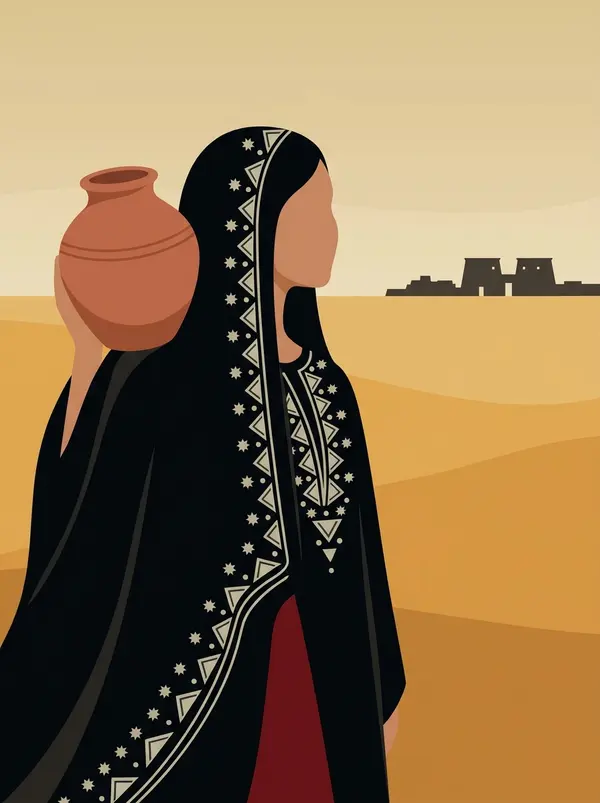
Flat vector illustration, side profile of a Sa'idi Egyptian woman, featureless face, wearing a long black tarha (headscarf) decorated with flat silver Tally embroidery patterns, geometric triangles and stars rendered as flat metallic dots.
She holds a stylized clay water jar (ballas) on her shoulder.
Background: flat warm ochre desert with a distant pharaonic temple silhouette on the horizon.
Palette: ochre, black, silver-cream, terracotta, deep red. Fusion of Upper Egypt folk and pharaonic memory.
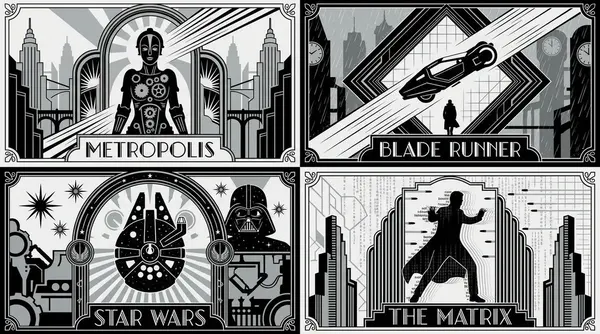
2x2 grid, 16:9, do this for 4 famous scifi movies: {instructions: A = { silhouette and key internal features of $ SUBJECT, vectorized into black/white forms }
B = { deco ornamentation library: arches, stepped towers, vertical ribs, sunburst panels, circular medallions, chevrons, geometric grids }
C = { background metropolis: tall towers, bridges, arches, clock faces, abstract machinery }
D = { motion graphics: diagonal speed lines, fan rays, stepped echoes, theatrical silhouettes }
POSTER = (A ∩ subject_layer) ∪ (B ∩ ornamental_overlay) ∪ (C ∩ background_field) ∪ (D ∩ dynamic_layer) ∪ (ornamental_border)
Where:
- A is placed centrally, scaled to 70% of canvas.
- B elements are placed along the principal axes of A (symmetry axes, high‑curvature boundaries) by a space‑filling algorithm that respects a semi‑symmetrical grid.
- C fills the remaining canvas, its architectural shapes chosen to echo the angular frequency of A's silhouette (e.g., a curved subject spawns more arches, an angular subject spawns more stepped towers).
- D lines originate from the subject's action focal points, their direction and density derived from the pose vector.
- All elements strictly black, white, or limited 10% grey.}