Why Brand Consistency Matters for Local Businesses
 Luca Moretti
Gather every piece of marketing a local restaurant or venue produced in the last three months: the event flyer someone made in a hurry, a handful of Instagram posts from different staff, a printed menu from two owners ago, a Facebook event cover. Lay them side by side and the problem is obvious. Different fonts, different colors, different moods. Most of them are fine on their own. Together they don't look like one business. That's what brand consistency fixes, and for local businesses it matters more than for almost anyone else, because the same few thousand people see your materials over and over. Each consistent piece adds to their memory of you. Each mismatched one starts from zero.
Direct answer. Brand consistency means every flyer, social post, menu, sign and email from your business uses the same colors, fonts, logo and photo style, so customers recognize you before they read your name. For a local business, the practical start is fixing two or three colors and one or two fonts, saving them as a brand kit, and using them on everything.
What Brand Consistency Means for a Local Business
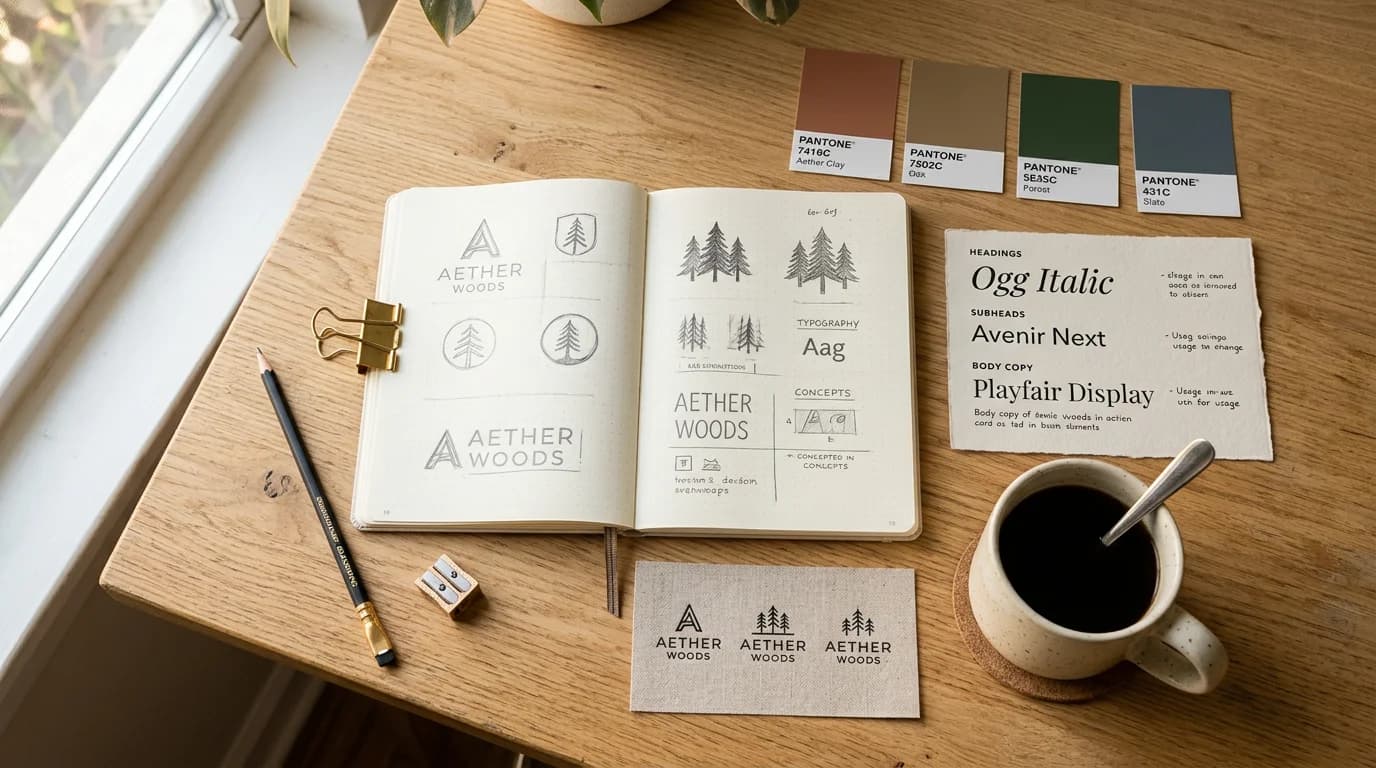
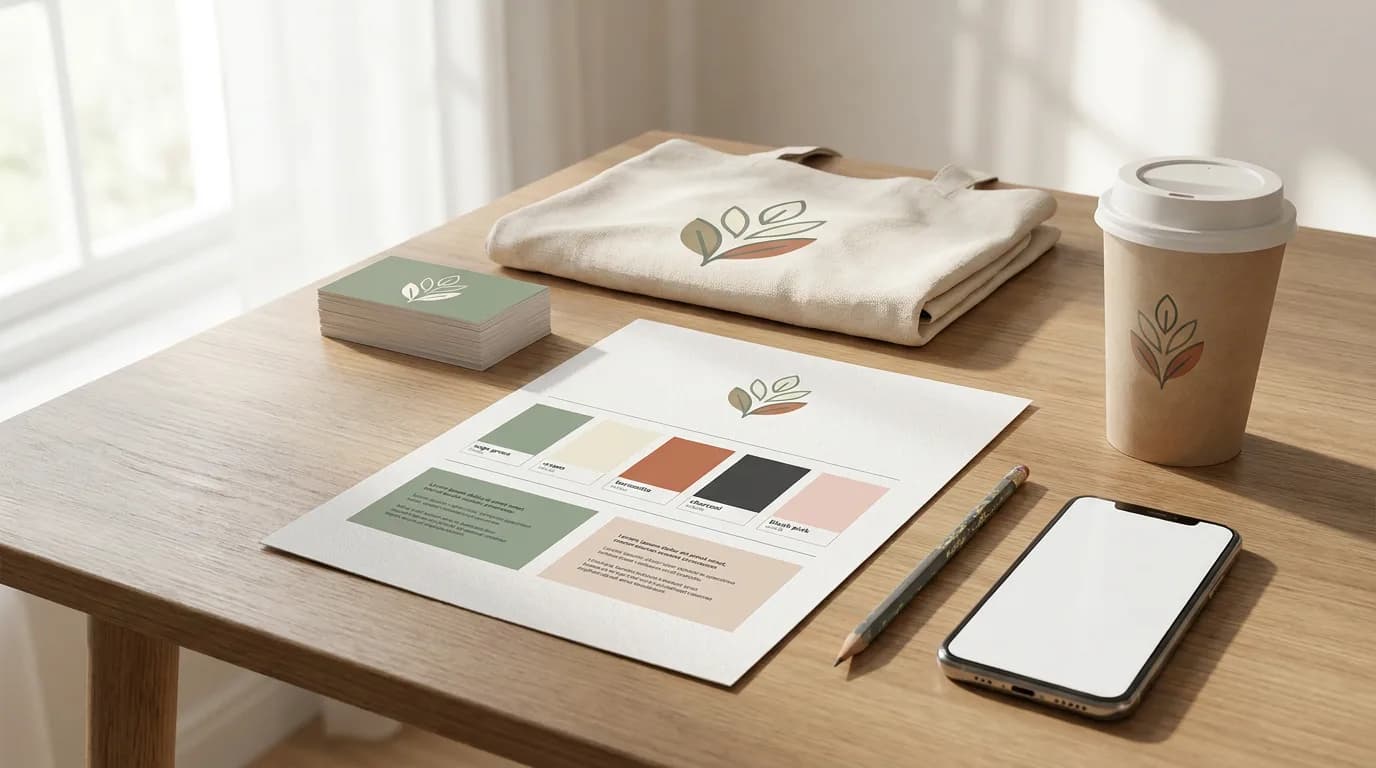
You don't need an agency brand book. For a café, a yoga studio, a hair salon or a music venue, brand consistency comes down to a short list:
- the same two or three colors, with exact values
- the same one or two fonts
- the same logo, in the right version for light and dark backgrounds
- the same style of photos
- the same way of talking, whether that's warm and chatty or short and direct
What changes is the content: this week's special, Saturday's gig, the new class time. What stays fixed is everything around it. When that balance holds, people start to recognize your posts in their feed and your flyer in a shop window without reading a word.
Why It Matters More for Local Businesses
Your audience sees you repeatedly. A national brand reaches millions of people a few times. A local business reaches the same neighborhood dozens of times a year. Repetition is where recognition comes from, so a local business gets more out of consistency per piece than almost anyone.
It makes you look established. Matching colors on the sign, the menu and the Instagram grid read as one business that has been around a while. Mismatched materials read as improvised, and that impression forms before anyone has tried the food or booked a class.
It helps people find and choose you. Your Google listing is often the first thing a new customer sees. Google's own guidance on improving local ranking says businesses with complete and accurate info are more likely to show up in local results, and suggests using photos and videos to show customers what you offer. A profile whose logo, cover photo and images match your shopfront and posts makes the first visit feel familiar.
Brand Consistency Examples From Local Businesses
These six examples are common patterns rather than specific shops. Each shows what stays fixed and what's allowed to change.
The bakery that owns one shade of pink
- Fixed: one pink, used on the boxes, the awning, the stickers and the background of every Instagram post. Cakes are always photographed on the same marble counter.
- Changes: the cakes, the seasonal flavors, the captions.
- Why it works: the box leaves the shop and gets carried down the street and onto office tables. People recognize it from across a room.
The restaurant whose holiday menu stays in house colors
- Fixed: navy and gold, one serif for headings, the logo in the same corner of every menu and poster.
- Changes: at Christmas, the menu adds a small illustrated holly sprig in gold rather than switching to red and green.
- Why it works: the season shows up, but the restaurant still looks like itself. Years of seasonal menus line up as one family.
The plumber whose van does the advertising
- Fixed: one bright color nobody else in town uses, a big phone number, a short name and a simple icon. The same color appears on invoices, uniforms and the Google profile.
- Changes: nothing much, and that's the point.
- Why it works: the van is seen by more people than any ad, and it's read from across a road in a few seconds.
The yoga studio with a fixed weekly schedule post
- Fixed: the same layout for the class schedule every week: same soft palette, same fonts, the studio name in the same spot, photos of real members.
- Changes: class times, teacher names, the photo.
- Why it works: followers recognize the post before they read it, which is exactly when they decide whether to stop scrolling.
The music venue that uses one poster template
- Fixed: a poster grid with the venue name in the same band at the top, one display font, and a consistent black and white photo treatment for the act.
- Changes: the band, the date, and an accent color chosen per show.
- Why it works: posters around town become a series. People know it's a gig at that venue before they know who's playing.
The vet clinic whose reminder cards match the door sign
- Fixed: a teal and white palette, rounded type and a simple paw icon on the sign, the reminder postcards, the website and the appointment emails.
- Changes: the pet's name and the date.
- Why it works: a reminder that looks like the clinic gets noticed and trusted. One that looks like a generic template gets thrown away.

For bigger-name cases, from Coca-Cola's bottle to Mailchimp's mascot, see these brand identity examples grouped by business type.
Where Local Brand Consistency Breaks Down
The causes are almost always the same.
Different people, no shared reference. The manager makes the specials board, a weekend staff member makes the Instagram post, a friend helped with the seasonal flyer. Each works from memory of what the brand looks like, so you get three versions of one business.
Different tools, different defaults. The flyer came from one app, the post from another, the email header from a template. Each tool starts from its own fonts and colors unless yours are loaded into it.
Seasonal drift. One Christmas in red and green isn't a problem. Years of holiday, Valentine's and summer promotions that each abandon the house style add up to a brand that looks different every month.
No example of "right." When the answer to "what should this look like?" is "something like what we usually do," consistency depends on memory. A single finished example fixes that.
Brand Consistency Checklist
Use this once to set up, then run the short weekly and quarterly checks.
Set up once
- Pick two or three brand colors and write down their hex codes (and CMYK values for print).
- Pick one heading font and one body font. Write down the exact names and weights.
- Save your logo as a transparent PNG, a white version for dark backgrounds, and a square icon for profile pictures.
- Choose three to five reference photos that show the look you want.
- Write three voice rules, such as "short sentences," "say 'you', not 'customers'," "no exclamation marks in prices."
- Make one finished example each of a flyer, a post and a story, and save them where everyone can see them.
- Load the colors, fonts and logo into every tool your team uses.
Every new piece
- Uses only the brand colors and fonts.
- Uses the right logo version, in the usual position.
- Photos match the reference style.
- Opening hours, prices and address match your Google listing and website.
- Would someone recognize it as yours with the logo covered?
Once a quarter
- Put the last three months of materials side by side and remove anything that looks like a different business.
- Check that your Google profile photos, social profile images and shop signage still match.
- Update templates rather than starting new designs from scratch.
Producing Consistent Materials Every Week
A venue running four events a week needs a flyer, a post and a story for each one: a dozen pieces, every week. That's where consistency usually breaks, because nobody has time to check each piece against a guide.
The fix is to make the on-brand version the easiest one to produce. Playyy's brand kit generator reads your website (or a PDF or images you upload) and saves your logo, colors, headline and body fonts and written style guidelines as a brand kit. Every new design starts from that kit automatically. For each event, describe it to the AI flyer generator, get an editable flyer in your colors and fonts, then make the matching Instagram post and Story from the same kit. Halloween night and next week's wine tasting come out looking like they belong to the same place, because they were built from the same kit.
The same principle applies across social platforms, which our guide to staying visually consistent on every platform covers in more detail.
The Short Version
Brand consistency is what turns "I've seen that somewhere" into "I know that place." For a local business it comes down to a few fixed choices, two or three colors, one or two fonts, one logo and one photo style, applied to everything from the van to the weekly post. Start with the setup checklist above, make one finished example of each format, and check the last three months of materials side by side every quarter. If you want the underlying ideas first, our explainer on what brand identity includes covers the definition and the five pillars.

Luca Moretti
I help restaurants, venues, schools, workshops and small service businesses create posters, menus, invitations, event flyers and social promotions. I write for non-designers who need practical, good-looking visuals for real-world promotions.
Frequently asked questions
Consistent branding means every piece a business puts out, from the shop sign to the Instagram post to the receipt, uses the same logo, colors, fonts, photo style and tone of voice. The content changes from week to week; the look and sound stay the same. Over time that repetition is what lets customers recognize the business at a glance.