7 Personal Brand Examples for Creators to Study
 Minji Park
The creator with 50,000 followers whose posts blend into the feed and the creator with 8,000 whose thumbnails you'd spot from across the room are usually separated by one thing: a personal brand that's clear and repeated. The best personal brand examples among creators rarely come from big budgets. They come from a one-line promise, a small set of visual choices and a content format that people learn to recognize. Below are seven patterns by creator type, followed by the steps to build your own.
Direct answer. A personal brand is the consistent promise, look and voice people associate with you. Strong personal brand examples share three traits: a one-line positioning that says who they help, a fixed visual system of colors, fonts and photo style, and a signature content format repeated across platforms. Build yours by defining the promise first, then the visuals.
7 Personal Brand Examples by Creator Type
These are patterns drawn from the way successful creators in each niche present themselves, not profiles of individual people. For each, there's the positioning, the visual system and the part worth borrowing.

1. The educator who explains one subject well
Positioning: "I explain [topic] to [audience] in plain language." Think of a creator who teaches personal finance to first-time earners or chemistry to high school students.
Visual system: a clean, high-contrast palette, usually one bold color on white or dark gray, a heavy sans-serif for thumbnail text of three to five words, and a recurring layout with the creator's face on one side and a single object or diagram on the other.
Worth borrowing: a numbered series. "Lesson 14" or "Money Basics #6" tells new viewers there's a body of work to binge and tells returning viewers exactly where they left off.
2. The designer or illustrator whose work is the brand
Positioning: a recognizable style rather than a topic. The work itself does the introducing.
Visual system: the palette and textures from their own art carry through to the profile banner, the newsletter header and the shop. Typography is often hand-drawn or a single distinctive display font used sparingly.
Worth borrowing: process content in a fixed frame. Timelapses and sketch-to-final posts shot from the same angle, at the same crop, become a format followers recognize instantly.
3. The fitness coach with a method
Positioning: a named approach for a specific person, such as strength training for busy parents or mobility for desk workers.
Visual system: energetic accent colors, often one saturated color against black or white, bold condensed type, and consistent lighting and location so every workout clip looks like it comes from the same gym or living room.
Worth borrowing: naming the method. A program with a name is easier to remember, easier to recommend and easier to turn into a paid product later.
4. The podcaster with a show-first identity
Positioning: the show is the brand, and the host is the familiar voice inside it.
Visual system: square cover art that reads at thumbnail size, episode cards built on one template with the guest photo in the same position each time, and audiogram clips in the show's colors.
Worth borrowing: a single episode-card template. Swapping only the guest photo and title keeps a weekly show recognizable in a crowded feed and cuts production time to minutes.
5. The founder building in public
Positioning: "Here's how I'm building [company], with real numbers." The audience follows the story as much as the product.
Visual system: often deliberately plain: a consistent headshot, a simple chart style for revenue or user updates, and screenshots framed the same way every time. Restraint signals honesty here.
Worth borrowing: a recurring update format, such as a monthly numbers post with the same chart layout. Consistency makes progress easy to follow and turns the series itself into a brand asset.
6. The home cook with a signature setting
Positioning: a cuisine or constraint, such as twenty-minute weeknight dinners or plant-based comfort food.
Visual system: the same countertop, cutting board or overhead angle in every video, a warm palette pulled from the kitchen itself, and recipe cards in a fixed layout with one display font for dish names.
Worth borrowing: the set as a logo. When the background is consistent, viewers recognize a clip in the first second, before any text appears.
7. The career writer on LinkedIn
Positioning: a clear point of view on one profession, such as hiring in tech or freelancing for designers.
Visual system: a professional headshot with a solid brand-colored background, a banner that states the promise in one line, and document-style carousel posts with the same cover design every time.
Worth borrowing: the banner as a billboard. Most profile visitors read the banner and the headline before anything else, so both should say who you help and how.
What These Personal Brand Examples Have in Common
Different niches, same underlying structure:
- A promise you can say in one sentence. Every example above is known for one thing, even when the content ranges widely.
- A small, fixed visual system. Two or three colors, one or two fonts and one photo style, repeated rather than reinvented.
- A signature format. A numbered series, a fixed camera angle, a repeatable card. Formats are what make content recognizable at thumbnail size.
- The same identity everywhere. The profile photo, handle and colors match across platforms, so a follower on one app recognizes you on another.
How to Build a Personal Brand in Six Steps
1. Find what you're already known for
Start with evidence. List the questions people ask you, your most-saved posts and the topics you could talk about without notes. Ask a handful of followers or colleagues to describe your work in three words. The overlap is your starting point.
2. Write a one-line brand statement
Use a simple frame: "I help [audience] [do something] through [your format or angle]." For example, "I help new managers run better meetings through short, practical videos." Put a version of that line in every bio.
3. Choose your visual constants
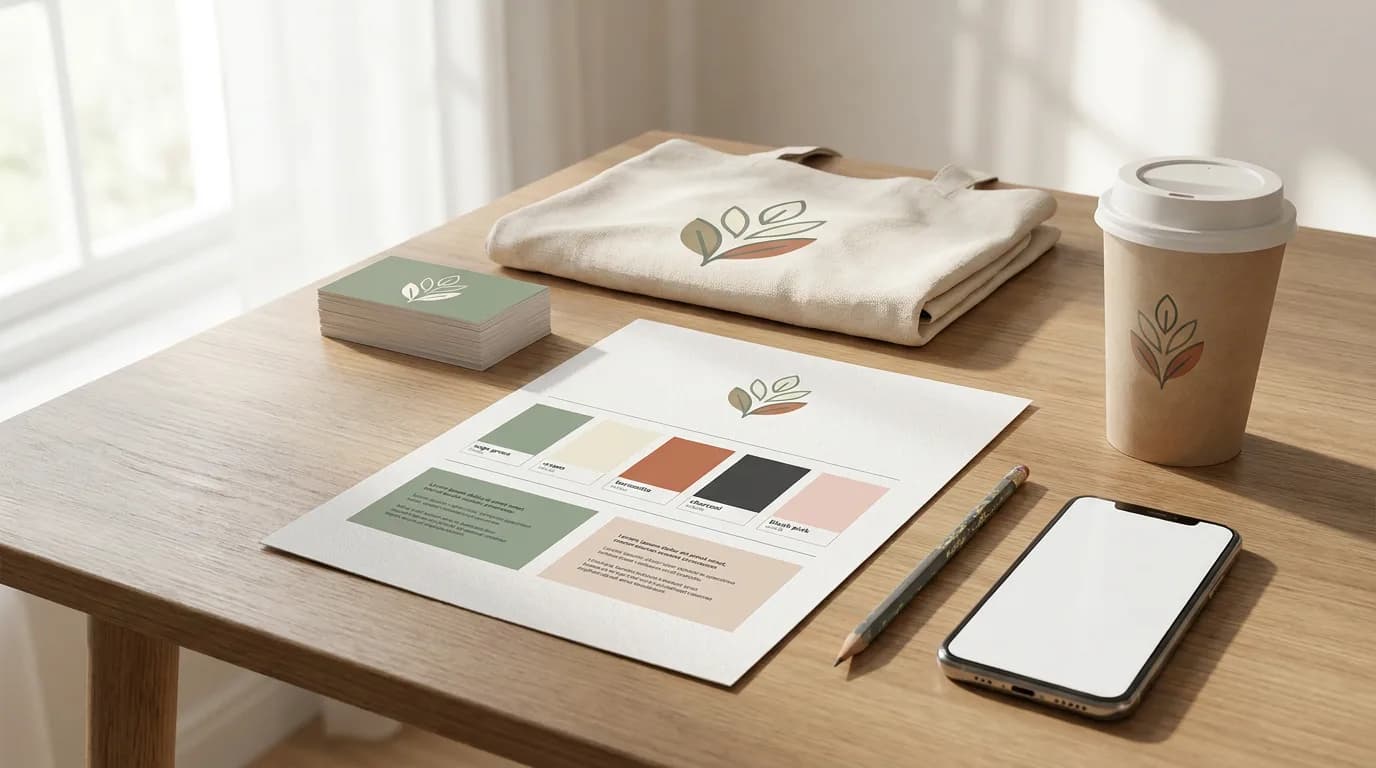
Pick one dominant color, one accent and a neutral; one or two fonts; and a photo style you can repeat, such as the same light, background and framing. A brand kit generator can save time if you already have a website or portfolio: Playyy reads the URL, pulls your colors, fonts and logo, writes guidelines for voice and imagery, and applies them to every new design.
For a full checklist of what to collect, see our guide to what a brand kit includes.
4. Set up your profiles as one identity
Use the same headshot and handle everywhere, and design for the size people actually see. On YouTube, a profile picture renders at 98 x 98 px, and the text-safe area of a 2048 x 1152 banner is just 1235 x 338 px, so keep the essentials large and centered.
Our YouTube banner design guide covers the layout in detail.
5. Pick one or two signature formats
Choose a repeatable format for your main content: a thumbnail layout, an episode card, a carousel cover. Save it as a template so every new post starts from the same structure rather than a blank canvas.
6. Review a grid every month
Put your last twenty posts side by side. Where did colors or fonts drift? Which formats got the strongest response? Tighten the rules that slipped and drop the formats that didn't land. A personal brand is built by repetition, so small corrections each month add up.
Keep It Consistent as You Grow
Launches are where personal brands most often break. A course, a product or a community gets its own look, and existing followers no longer recognize it. Treat every launch as an extension of your main identity: the same palette, fonts and photo style on the sales page, the email announcement and the social posts. For more on keeping visuals aligned across channels, see our guide to visual brand strategy.
The personal brand examples above work because each creator decided what they stand for, picked a few visual rules and repeated them until the audience could spot their work instantly. Start with the one-line statement, set up your brand kit, and build your next posts from it. To produce launch and series visuals in your brand style, try the AI social media post generator.

Minji Park
I help indie creators, online educators and small product teams prepare launch visuals and social campaigns. My goal is to make launches feel polished and trustworthy — even when you are working without a designer.
Frequently asked questions
Look at evidence, not aspirations. List the questions people already ask you, the posts that got saved or shared most, and the topics you could talk about for an hour without notes. Then ask five people who follow your work to describe it in three words. Where those lists overlap is your personal brand; your job is to state it clearly and repeat it.