E-commerce Product Images That Meet Every Marketplace Spec
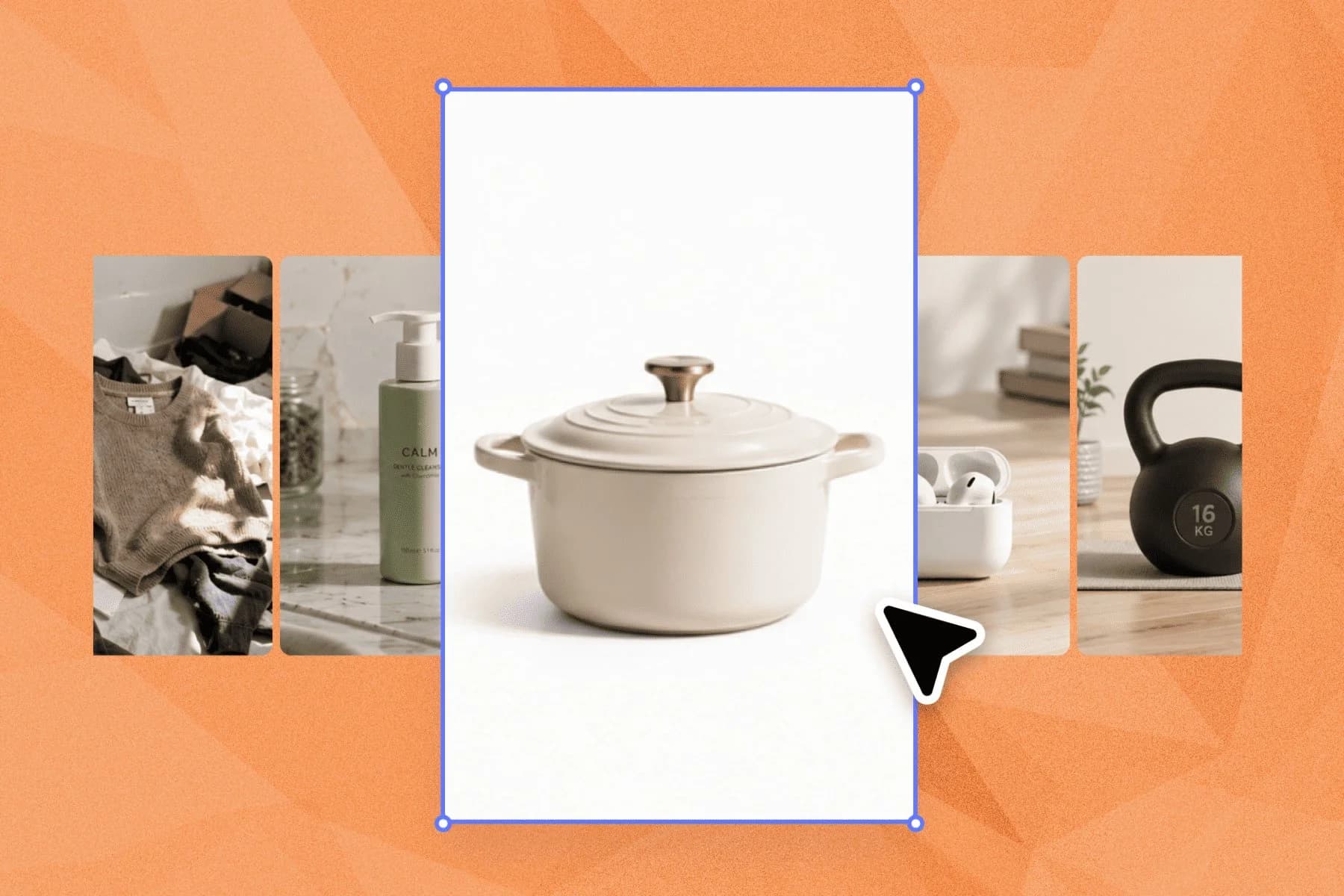
Standardize product images across every SKU — background removal, cleanup, and upscaling that meet marketplace specs.
Explore workflowConvert images to TIFF online — no sign-up required
A workflow built around your real creative needs — from first direction to final asset.

TIFF (Tagged Image File Format) is the standard format for print production, press workflows, and professional image archival. It supports lossless compression, full colour depth (8-bit, 16-bit, and 32-bit per channel), alpha channels, and multiple layers. Converting to TIFF produces a file that can be passed to print vendors, repro houses, and professional imaging software without format restrictions or quality loss.
Try for free
TIFF files can be large — uncompressed 300 DPI images for print run to hundreds of megabytes. LZW (Lempel–Ziv–Welch) compression reduces TIFF file sizes by 30–60% without any quality loss. The compressed TIFF is lossless, opens correctly in Photoshop, Lightroom, GIMP, and any TIFF-compatible application, and passes through print workflows without processing artefacts.
Try for free
Most commercial print vendors — offset printers, large-format studios, and repro houses — specify TIFF as their preferred or required submission format. Converting your JPG, PNG, or WebP to TIFF before submission ensures the vendor receives a format they can open, process, and output without conversion on their end.
Try for freeOutput TIFFs use LZW compression — lossless, widely supported, and 30–60% smaller than uncompressed TIFF. Every pixel is preserved exactly.
TIFF is the standard submission format for commercial print, offset printing, and large-format production. Convert before submission to avoid format rejection.
Convert from JPG, PNG, WebP, AVIF, GIF, BMP, and SVG to TIFF in one step.
Convert an entire set of assets to TIFF in one upload. Useful for preparing a full product image set or illustration library for print production.
Images are processed server-side and discarded immediately after conversion.
TIFF output opens correctly in Photoshop, Lightroom, GIMP, Affinity Photo, and all professional imaging and prepress applications.
“Our print vendor only accepts TIFF. I was converting manually in Photoshop before every submission — now I batch convert the full print set in one go before packaging for the vendor.”

Sophie Whitmore
Social Media Manager & Brand Content Consultant
“I archive photography deliverables as TIFF. Converting the final JPEGs and PNGs to TIFF with LZW compression gives me lossless archives that are half the size of uncompressed TIFF.”

Luca Moretti
Local Business & Event Marketing Consultant
“Clients occasionally need print-ready TIFF files from assets we originally produced as PNG or WebP for web. Converting takes seconds and the vendor accepts them without issues.”

Aiko Tanaka
Independent Designer & Visual Systems Consultant
When a print vendor or repro house requests a TIFF, they're asking for a specific technical specification — lossless, full colour depth, no lossy compression artefacts. Converting to TIFF from any source format produces a file that meets these expectations without requiring the original application or source file.
PNG is lossless but isn't widely supported in professional print workflows. TIFF is lossless AND universally accepted in the same workflows. For archiving images you intend to use in print, TIFF is the better choice — you get the lossless guarantee with format compatibility that PNG doesn't provide in prepress contexts.
Once an image is in TIFF format, subsequent saves don't introduce additional compression artefacts. Edit, colour-correct, and re-export a TIFF multiple times — each save is bit-for-bit lossless, unlike JPEG which degrades with every re-save.
Standardize product images across every SKU — background removal, cleanup, and upscaling that meet marketplace specs.
Explore workflow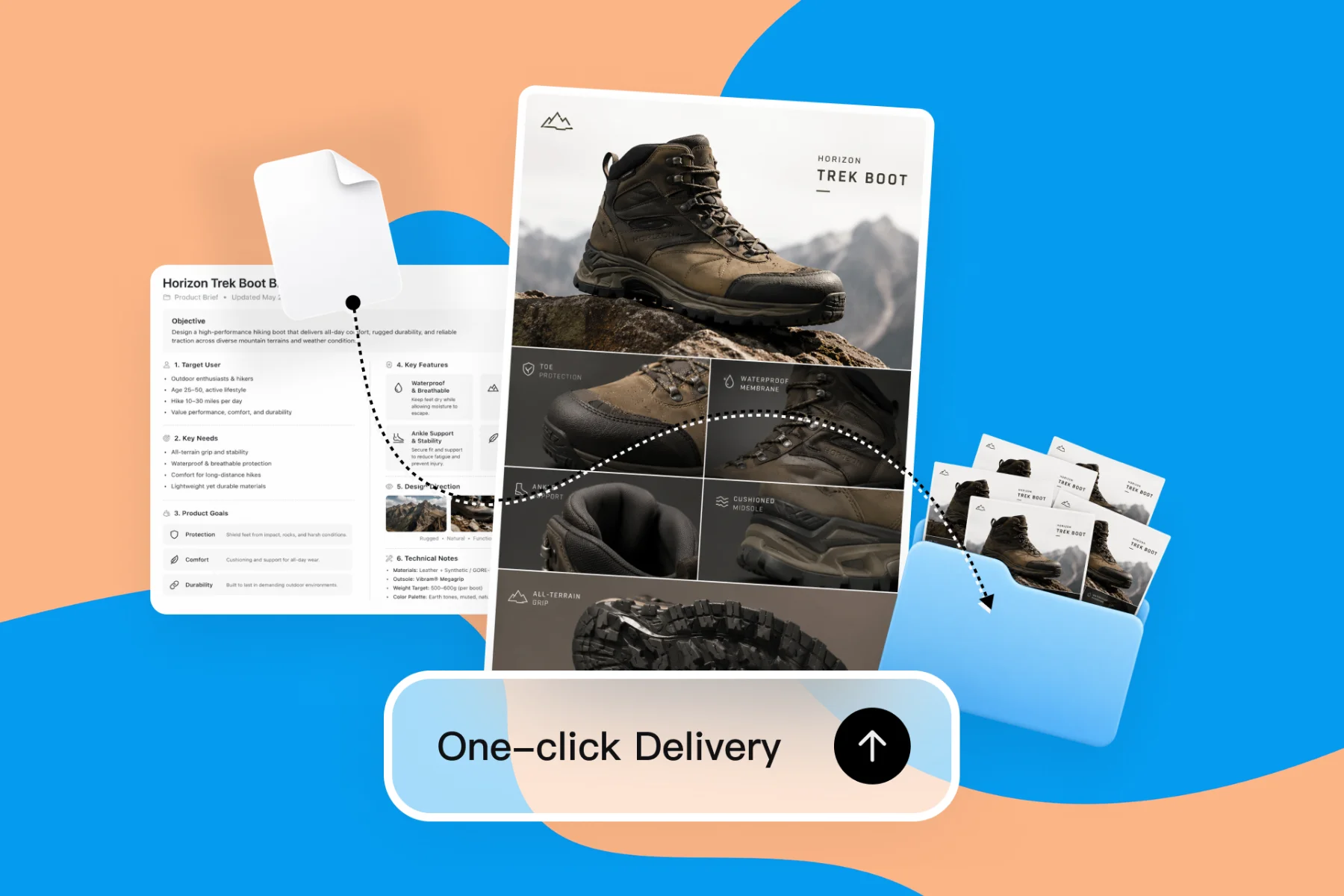
From client brief to every deliverable format — AI generation, editing, and export without switching tools.
Explore workflowLZW (Lempel–Ziv–Welch) compression. LZW is lossless — every pixel is preserved exactly — and is supported by all TIFF-compatible applications including Photoshop, Lightroom, and GIMP. LZW typically reduces TIFF file size by 30–60% compared to uncompressed TIFF.
Yes. LZW-compressed TIFF files open correctly in Photoshop, Lightroom, Affinity Photo, GIMP, and all professional imaging applications that support TIFF.
The TIFF output is lossless — but the JPEG source was already lossy when it was created. Converting JPEG to TIFF doesn't recover data the JPEG compression removed. It does stop further degradation: the TIFF is a lossless snapshot of the JPEG's current pixel data.
Yes. TIFF supports alpha channels. Transparent PNGs convert to TIFF with their alpha data intact.
TIFF stores more data per pixel and uses less aggressive compression than formats like JPEG or WebP. A JPEG converted to TIFF will be larger because TIFF is lossless — it can't compress the pixel data as aggressively as JPEG's lossy algorithm. This is the expected behaviour for a format designed for quality, not file size.
See how teams are using Playyy to ship better visuals, faster.

Sixty lifestyle images, three days, no studio. How one Shopify brand cut product shoot costs by 80% using AI photo editing.
 James Walker
200 blurry and watermarked legacy images, two days, one campaign deadline — how Ridgeline's team recovered their entire visual archive with AI.
James Walker
Six retainer clients, one tab. How one brand consultant uses Playyy's AI Image Editor to remove people from photos and ship launch visuals.
 Daniel Brooks
Keep every image on brand, control the final look, and turn campaign ideas into polished assets without waiting on another design cycle.