How to Get Clean Edges with an AI Background Remover
 James Walker
Background removal has been part of product photography workflows since Photoshop introduced the Magic Eraser in the late 1990s. For most of that time, it was either tedious manual work — path tool selections on complex subjects — or low-quality automatic results that needed significant manual correction. That changed around 2020, when AI segmentation models achieved accuracy comparable to careful manual masking on most product types in seconds rather than hours.
Background removal accuracy has reached a practical threshold for production use. For the categories that matter most to ecommerce — apparel, footwear, electronics, packaged goods, accessories — the gap between AI background removal and careful Photoshop masking is no longer meaningful at typical web display resolutions. What used to take a retoucher many minutes per image now takes seconds.
Direct answer. Getting clean edges with an AI background remover comes down to starting with a high-contrast source image, choosing a tool with strong semantic segmentation, and using the edge refinement brush only on problem areas — hair, transparency, and reflections — rather than reprocessing the entire image. Most standard product photos are export-ready on the first pass.
How AI Background Removal Works
Modern AI background removers use a computer vision technique called semantic segmentation — the model identifies every pixel in an image and assigns it to a category (subject or background). The sophistication of the model determines how accurately it handles the boundary between these categories, particularly at edges where subject and background blend.
The technical architecture behind the best tools (including U²-Net and similar encoder-decoder networks) processes multiple scales of the image simultaneously, allowing the model to understand both the broad compositional structure (which large region is the subject) and the fine-detail edge quality (which specific pixels belong to the subject's edge). This dual-scale processing is what allows modern tools to handle fine hair and fabric details that earlier tools consistently failed on.
For understanding, it helps to think of the model as making two decisions for each pixel: "Is this likely to be the subject or the background?" (global confidence) and "How confident am I about this specific pixel, given the surrounding pixels?" (local confidence). Pixels with low confidence — typically at edges, transparent regions, and areas where subject and background have similar color — are where accuracy differences between tools show up most clearly.
What this means practically: background removal accuracy scales with the contrast between subject and background. Products photographed against a background that's similar in color or texture to the product itself will always produce lower accuracy than products photographed against a contrasting background. The best input is a well-lit product against a background with clear color or value separation from the subject.
What Affects Background Removal Accuracy
Five factors determine how clean your result will be on the first pass:
1. Subject-background contrast. A navy blue jacket against a white background removes cleanly. The same jacket against a dark blue background requires much more careful processing. The higher the contrast between subject edge and background, the more accurate the AI's boundary detection.
2. Edge complexity. Straight edges (books, electronics, packaged goods) are processed accurately by all tools. Hair, fur, fine fabric texture, and translucent material edges are the most challenging. For these subjects, expect to refine parts of the edge by hand.
3. Transparency in the subject. Products with transparent or semi-transparent sections (glassware, eyewear, liquid-filled bottles, sheer fabric) are the most technically challenging category for background removal. The AI must decide what to keep and what to remove in areas that are partially see-through, which varies significantly between tools.
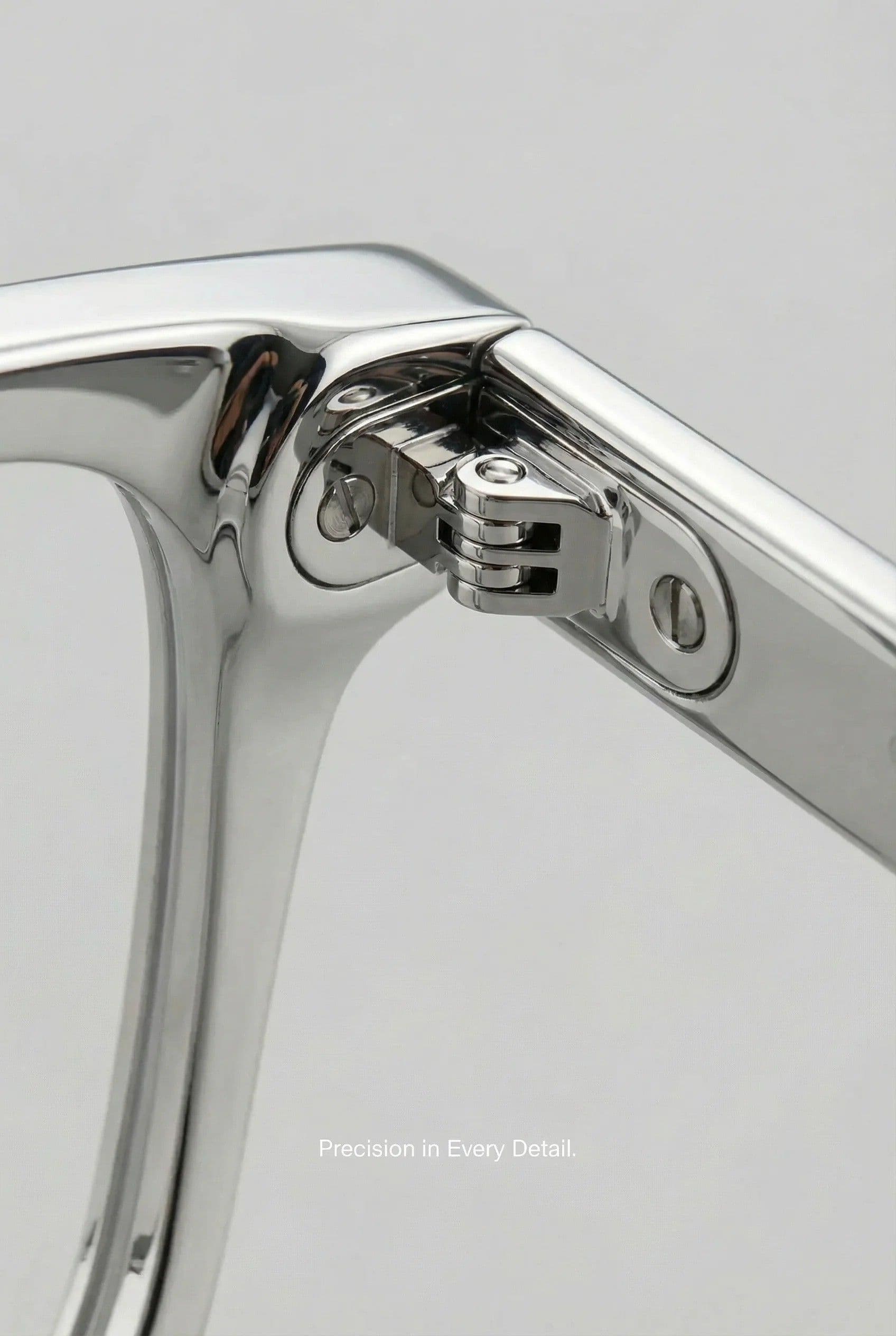
4. Reflections. Highly polished surfaces (chrome, patent leather, lacquered products) that reflect the background create ambiguity between subject and background pixels. A chrome faucet reflecting a white wall looks locally similar to the background it's reflecting. Most tools handle mild reflections well but struggle with full-mirror surfaces.
5. Source image quality. Resolution, focus quality, and lighting direction all affect accuracy. Blurry edges, motion blur, or underexposure in the source image reduce segmentation confidence at edges. Starting with the highest-resolution, sharpest available source image consistently produces better results.
Background Removal for Product Photography
Ecommerce product photography has two primary background requirements: clean white backgrounds for marketplace listings (Amazon, Walmart, and most major platforms require or strongly recommend white backgrounds for main product images) and lifestyle or contextual scenes for brand content, social media, and ad creative.
AI background removal is the starting point for both workflows.
White Background Workflow
For marketplace listings, the standard workflow is: remove background → place product on white → adjust exposure if needed → export. This produces the compliance image that most platforms require for main product images.
Accuracy standards for marketplace images are higher than for lifestyle content because these images are the primary visual reference buyers use to evaluate the product. Edge quality, shadow handling, and the absence of background contamination (gray or colored halos at the product edge) directly affect whether the listing looks professional or amateurish.
Playyy's background remover handles this workflow in three steps: upload, remove, export. For standard product types, the result is marketplace-ready on the first pass. For products with complex edges, touch up specific problem areas with the eraser instead of reprocessing the entire image.
Deep Dive: How to Remove Backgrounds from Product Photos for Free
Lifestyle Scene Generation Workflow
For brand content and ad creative, the standard workflow is: remove background → place product in AI-generated scene → adjust scale and shadow → export.
This workflow used to require a designer, a stock library subscription, and compositing work in Photoshop. AI generation tools have collapsed it into a single session: the background-removed product is placed into a generated scene using Playyy's AI image generator, with the scene specified by text prompt (surface material, lighting direction, background environment, time of day). One product shot can produce several scene variations in a single session.
Pairing a white-background shot with at least one lifestyle context image outperforms cutouts alone, because the two answer different questions — one shows exactly what arrives, the other shows scale and use. Baymard's product-page research makes the same point: cutouts leave shoppers unable to judge how big something actually is. AI background removal plus scene generation puts that second image within reach of brands without a studio budget.
Deep Dive: AI Photoshoots for Creators: Studio-Quality Photos Without a Photographer
Accuracy varies far more by subject than by tool. Hard-edged, opaque products — electronics, boxed goods, footwear — are close to solved, and most current tools handle them equivalently. The real separation appears on transparent and reflective subjects: glassware, jewellery, anything with a specular highlight or a visible background through the product. There, the model has to decide what to keep rather than where the edge is, which is a harder problem and where cheap tools fail visibly.
Batch Background Removal for Large Catalogs
Manual background removal doesn't scale. A catalog with 200 products at 15 minutes per image is 50 hours of work — viable for a retoucher on a one-time project, but not sustainable for catalogs that update regularly or expand quickly.
For catalogs beyond a few dozen products, AI background removal is the only approach that scales economically. The workflow choices are between tool UI (uploading and processing images through a web interface), API integration (piping images through the removal API as part of a larger workflow), and batch processing tools that handle multiple images in a single session.
For brands managing their own image pipeline, Playyy's batch processing handles full catalogs in a single session with no per-image manual trigger. For development teams building a larger product data pipeline, background-removal APIs such as PicWish's (and, after December 1, 2026, the remove.bg API through Leonardo.ai) let usage scale with the catalog.
A specific issue for large catalogs: consistency. Batch background removal doesn't automatically produce consistent edge treatment, shadow handling, or white calibration across images shot in different conditions. For catalog consistency at scale, processing all images with the same tool settings and reviewing a sample of outputs before bulk export prevents visible inconsistency across the product grid.
Choosing the Right Background Remover Tool
The tool selection depends on three factors: volume, accuracy requirements, and what happens after the background is removed.
For low to moderate volume with post-removal design work: Playyy handles background removal within a full design and AI generation workspace. After removing the background, you can generate a scene, apply brand kit elements, resize for multiple formats, and export — without leaving the tool. The free tier covers most individual creator and small business use cases.
For high-volume accuracy on complex subjects: Remove.bg's edge detection has long been stronger on fine hair, transparent objects, and reflective surfaces than most alternatives, but its standalone site and self-serve API close on December 1, 2026 as the technology moves into Canva. See our remove.bg alternatives for where to move that workflow.
For volume at low per-image cost: PicWish's free tier (a limited number of non-HD downloads per day) and its paid HD plans are a low-cost option for standard product categories.
For mobile product photography workflows: Pixelcut handles shoot-and-remove workflows from an iPhone or Android device, keeping background treatment consistent across shooting sessions.
For detailed tool comparisons including accuracy data, see:
Comparison: Photoroom Alternatives: 7 Tools Compared for Product Photography
Comparison: PicWish Alternatives: Best Background Removers for Volume Work
Comparison: Pixelcut Alternatives: Best Mobile Product Photo Tools
Comparison: Magic Studio Alternatives: AI Background and Object Removal Compared
Background Removal in the Broader AI Visual Pipeline
Background removal is the starting point of a larger AI visual production workflow, not the end point. Understanding where it fits helps in choosing tools that work together rather than requiring exports between incompatible systems.
A complete AI product visual pipeline moves through: source image → background removal → object cleanup (stray elements, shadows, reflections) → scene generation or background replacement → image enhancement (sharpness, color correction, upscaling) → format adaptation for different channel specs → export.
Each stage used to require a separate specialized tool. Playyy's platform covers all five stages — background removal, object removal with the object remover tool, AI scene generation with the AI image generator, image enhancement and upscaling with visual enhancer, and format adaptation with the image expander — in a single workflow without exporting between tools.
For brands producing product content at consistent volume, keeping all stages in one tool removes the export-and-reimport steps between separate apps, and those savings compound across a catalog.
Getting Clean Edges: Advanced Techniques
Even with AI tools handling most images cleanly, specific subjects and shooting conditions require additional refinement techniques for export-ready results.
Fine hair and fur. The most reliable approach is two-pass processing: let the AI do its initial removal, then use the edge refine brush specifically on the hair/fur perimeter at 200–400% zoom. Targeting only the problematic areas rather than reprocessing the entire image preserves the accuracy of the clean-edge sections.
White or light products on white backgrounds. These require source image correction before removal: add a colored or gradient background in the source before running AI removal, then place on white after. The AI needs contrast to detect the edge accurately.
Transparent glassware and bottles. For transparent containers, the most practical approach is to remove the background from the non-transparent sections accurately, then manually restore appropriate transparency to the glass area using the eraser at reduced opacity. Full automation is unreliable for transparency.
Composite products. Products with multiple separate pieces (jewelry sets, product bundles, multi-component products) often process best when the largest continuous element is used as the anchor for edge detection, with smaller elements refined manually.
Shadow retention. For some use cases — particularly product photography on white backgrounds for premium brands — retaining a natural drop shadow makes the result look more grounded than floating the product on pure white. After background removal, adding a 20–30% opacity soft shadow layer on the white background adds depth without looking artificial.
The Complete Background Removal Workflow
-
Start with the best source image available. Resolution, focus, and lighting direction all affect output quality. A 2,000px source image always produces better results than a 500px source image, even with the same tool settings.
-
Choose the right tool for the subject type. Standard products → any of the main tools. Complex edges (hair, transparency, reflections) → Playyy's background remover followed by targeted touch-ups.
-
Process and review at zoom level. Check the edge quality at 200% zoom, particularly at the perimeter areas most likely to have accuracy issues (hair, fine texture, transparent sections).
-
Refine specifically, not globally. Use the refinement brush only on problem areas. Reprocessing the entire image to fix a small edge issue often introduces new errors elsewhere.
-
Export in the right format. PNG for transparency preservation, WebP at 85% for web backgrounds (white or solid color), JPG for print. For ecommerce marketplace compliance, confirm the platform's specific format and resolution requirements before exporting at scale.
-
Maintain consistency in batch processing. Review 5–10% of a batch before bulk export. Lighting variation across source images produces visible processing variation in output — catching this before export prevents catalog inconsistency.
For the complete product photography pipeline from source to published listing, including AI scene generation and format adaptation for different platforms, see the complete guide to product photography with AI and how to remove backgrounds from product photos for every use case.
Start removing backgrounds with Playyy's free background remover — upload any image, remove the background with one click, and continue to AI scene generation, brand kit application, and multi-format export in the same workspace.

James Walker
I help Shopify and Amazon sellers improve product images, promotional banners and ad creatives. I focus on practical visual improvements that help products look more credible and conversion-ready — no design jargon, just what works.
Frequently asked questions
The fastest method is an AI background remover tool — upload the image, and the AI isolates the subject and removes the background in seconds. For most product photos and portraits, modern AI tools like Playyy's background remover handle the task accurately with no manual masking required. For complex subjects (fine hair, transparent objects, highly reflective surfaces), checking the edge quality at zoom level and using the eraser tool for specific corrections produces the best results.