How a Design Studio Recolors a Background in Minutes
 Aiko Tanaka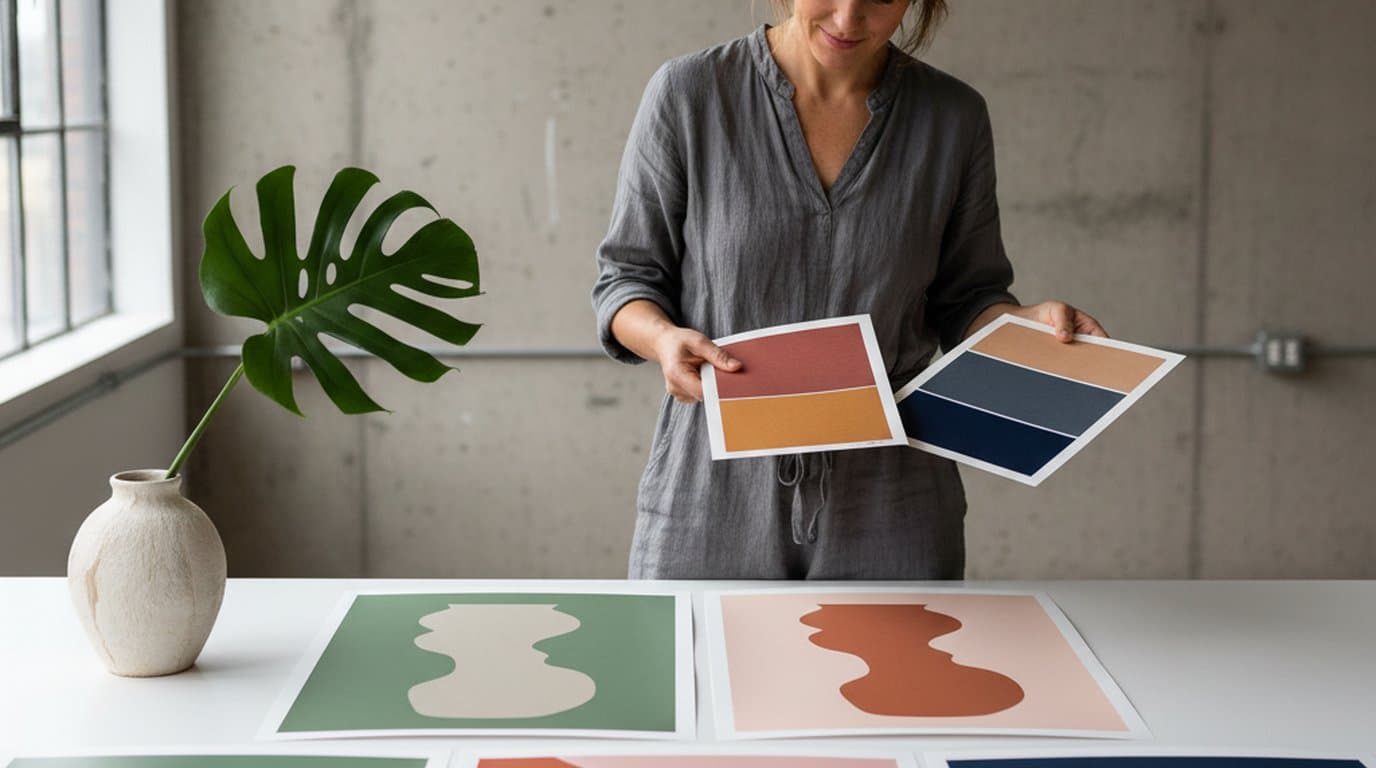
It is a Tuesday morning in Alfama and Ana Costa has four hours before a 2 p.m. pitch with a boutique olive oil brand. On her worktable: a single base concept generated overnight. On her screen: eight empty palette directions she has promised the client. A year ago, this Tuesday would have been unsalvageable.
The studio is a three-person independent practice in Lisbon, serving boutique brands across packaging, identity, and editorial work. Ana founded the studio in 2022 after eight years in São Paulo agencies. The studio's reputation is built on color — specifically, on showing clients more palette directions than competing studios bother to produce. Until recently, that reputation cost the team most of its nights.
When the team moved its concept-stage color exploration onto Playyy's AI Image Editor, the math of a pitch changed.
The studio now shows eight palette directions in the time it used to show two. That single shift — driven by the editable canvas where every element and background recolors instantly — pushed the studio's pitch acceptance rate from roughly one-in-four to nearly one-in-two across the first quarter of 2026.
The result. The studio used Playyy's AI Image Editor to produce eight palette directions in a single sitting rather than overnight, turning what had been an all-night rebuild into a same-morning pitch. Pitch acceptance improved, and revision rounds per project fell.
Why the Old Palette-Exploration Workflow Broke
The previous workflow had three stages, and the failure was always in the middle stage.
Ana's team generated a base concept in Figma using flat vector compositions, then exported each element into Illustrator for color exploration. Each new palette direction meant re-tinting individual shapes, manually adjusting accent colors, and re-exporting back into a Figma frame for the pitch deck. A single palette direction took roughly 80 minutes from clean comp to pitch-ready frame.
Eight directions, multiplied across two product shots per direction, came out to roughly 11 hours of dedicated palette work for a single pitch. The studio rarely had 11 hours. So pitches usually went out with two or three palette directions — enough to demonstrate range, not enough to give clients the feeling of having genuinely explored the brand's color space.
The studio's problem showed up in one place: the pitch-to-win ratio. Clients liked the work. They just did not commit to a palette they had not seen.
Rapid iteration on colour and composition is the capability designers most consistently say their tools handle badly. The studio's experience matched that exactly: the bottleneck was never the idea, it was the cost of re-rendering the idea in seven slightly different colors.
The Launch Upgrade: An Editable Canvas Where Every Element Recolors Instantly
Playyy's AI Image Editor launched in May 2026 alongside the existing AI Image Generator, Background Remover, and Object Eraser. The new layer brought what generative-only tools could not — a fully editable canvas with recolor, swap, layered masking, outpaint, inpaint, restyle, and text editing.
For the studio, the relevant capability was the recolor system. On the editable canvas, the background lives as its own masked region. Selecting it and applying a new color does not flatten the comp or break the subject's lighting — it re-renders the background pixels while preserving the subject's shading, shadow cast, and ambient color bounce. The same logic applies to any accent element in the composition.
That meant the studio could finally treat palette exploration as a single decision tree rather than a series of rebuilds. Generate the base concept once. Duplicate. Recolor. Repeat. Each palette direction took roughly nine minutes instead of 80.
"We stopped designing the same comp eight times. The comp is the comp. The palette is a switch." — the studio's creative director
The Six-Step Palette-Exploration Workflow
The studio formalized its new process into a six-step pitch-stage workflow. It runs the same way for packaging, identity, and editorial briefs.
-
Brief intake and palette hypothesis. Ana writes 6-8 palette directions on paper before opening any software — terracotta, sage green, navy, blush, deep burgundy, dusty cobalt, ochre, off-black. The list comes from the brand's positioning, not from sampling existing work.
-
Base concept generation. The team uses Playyy's AI Image Generator to produce one foundational composition in a neutral palette. This becomes the master comp. For the Tuesday olive oil pitch, that meant a single bottle in studio lighting against a soft warm background.
-
Duplicate to eight working files. Each working file inherits the same composition. No re-rendering, no re-prompting — the master comp is the source of truth across all eight directions.
-
Recolor the background and the accent. Using the editable canvas, the background region is selected and recolored to the target palette. The bottle label and any secondary element follow. Because the canvas adapts surface lighting to the new color cast, the recolor reads as photographic rather than flat-filled.
-
Refine each variant individually. Some palettes need micro-adjustments — a sage green background sometimes needs the label to shift two shades warmer to maintain hierarchy. The team applies these tweaks in 60-90 seconds per variant using Style Transfer for tone consistency across the set.
-
Export the pitch deck. All eight variants export at the same resolution into a single Figma frame for client review. Total time on the Tuesday pitch: 90 minutes from blank canvas to deck-ready file.
For a related approach to color-led brand decisions, see the studio's reference guide on building a sage green color story.
How Concept-Pitch Outcomes Have Changed
The studio kept the same client roster, the same brief intake process, and the same pricing structure. The only variable they changed was the palette-exploration phase. The outcome differences are documented in their internal pitch log.
Pitch acceptance improved. Revision rounds after the initial palette commitment fell. The timeline from pitch acceptance to delivery shortened, primarily because clients chose a direction faster and stuck with it.
The mechanism, in Ana's reading, is straightforward. A client shown three palettes feels they are being asked to pick between three known options. A client shown eight feels they are being given the entire color space and asked which corner of it the brand lives in. The decision shifts from comparison to commitment.
Studios that present more concept directions tend to see higher first-round acceptance, because the client is choosing between options rather than reacting to one.
For studios coming from a Photoshop-heavy workflow, the migration path is documented in this Photopea alternatives breakdown, which covers where browser-based editors now match or exceed desktop tools for brand work.
The Studio's Broader Workflow Shift
The studio has not stopped using Photoshop. What changed is the phase of the project where Photoshop appears.
Through 2024 and most of 2025, Photoshop sat at the center of the studio's pitch-stage workflow. It was where palette explorations happened, where comps got rebuilt, where accent colors were tested. That phase now lives entirely on the AI editable canvas. Photoshop returns at finishing — high-resolution print preparation for packaging mockups, complex layered compositing for editorial spreads, retouch on photography assets the client provides.
The studio also retired its old Figma-to-Illustrator-to-Figma export loop for concept work. The base comp and all eight palette variants now live in a single editable file, with elements that recolor non-destructively. When a client at the pitch asks "what does this look like in dusty cobalt?" — a question that used to mean "send us a revised deck Thursday" — the answer is now a 90-second adjustment on the screen in front of them.
Two other Playyy tools have moved into the studio's regular workflow alongside recoloring: Inpaint Replace for swapping label elements during pitches when the client wants to see an alternative typeface treatment, and Split Layers for isolating product elements from generated comps so accent recoloring can happen independently of the background palette change.
For studios considering this kind of transition, the more general principles are covered in this brand identity guide, which works through the difference between exploring color at the concept stage versus locking it at the production stage.
What the Pitch Process Looks Like Now
The Tuesday olive oil brand pitched at 2 p.m. went well. The client picked the dusty cobalt direction at 2:34 p.m., 34 minutes into the meeting, and signed the engagement letter on the studio's standard terms by Thursday afternoon. Two of the other seven palette directions were saved into the project file for use in seasonal campaign extensions.
Ana's pitch calendar through the rest of 2026 looks different than it did a year earlier. The studio takes on four pitch meetings per week instead of two. The team's overtime hours dropped sharply once the 11-hour palette-exploration block disappeared. New client conversations now start with the question Ana wants — "which of these palette directions feels like the brand?" — rather than the question the old workflow forced — "is this close enough to what you imagined?"
The studio's positioning has shifted in step with the workflow. The studio now markets itself, in its first conversations with prospective clients, as a studio that arrives at the pitch with the full palette space already explored. That positioning was previously aspirational. It is now an accurate description of how a Tuesday morning runs.

Aiko Tanaka
I work with boutique brands, cafes, creators and small businesses on visual systems, layout discipline, typography and moodboards. My focus is on fast concept exploration that still has a strong design point of view.
Frequently asked questions
On an editable AI canvas, the background and the subject sit on separate masked regions, so the recolor only touches the pixels you select. You pick the background area, choose a target color from a swatch or hex value, and the canvas re-renders that region while preserving the subject's lighting, shadow, and texture. Because the change is non-destructive, you can swap palettes repeatedly during a pitch without redrawing anything.