7 Best Lovart Alternatives in 2026 (Free & Paid)
 Daniel Brooks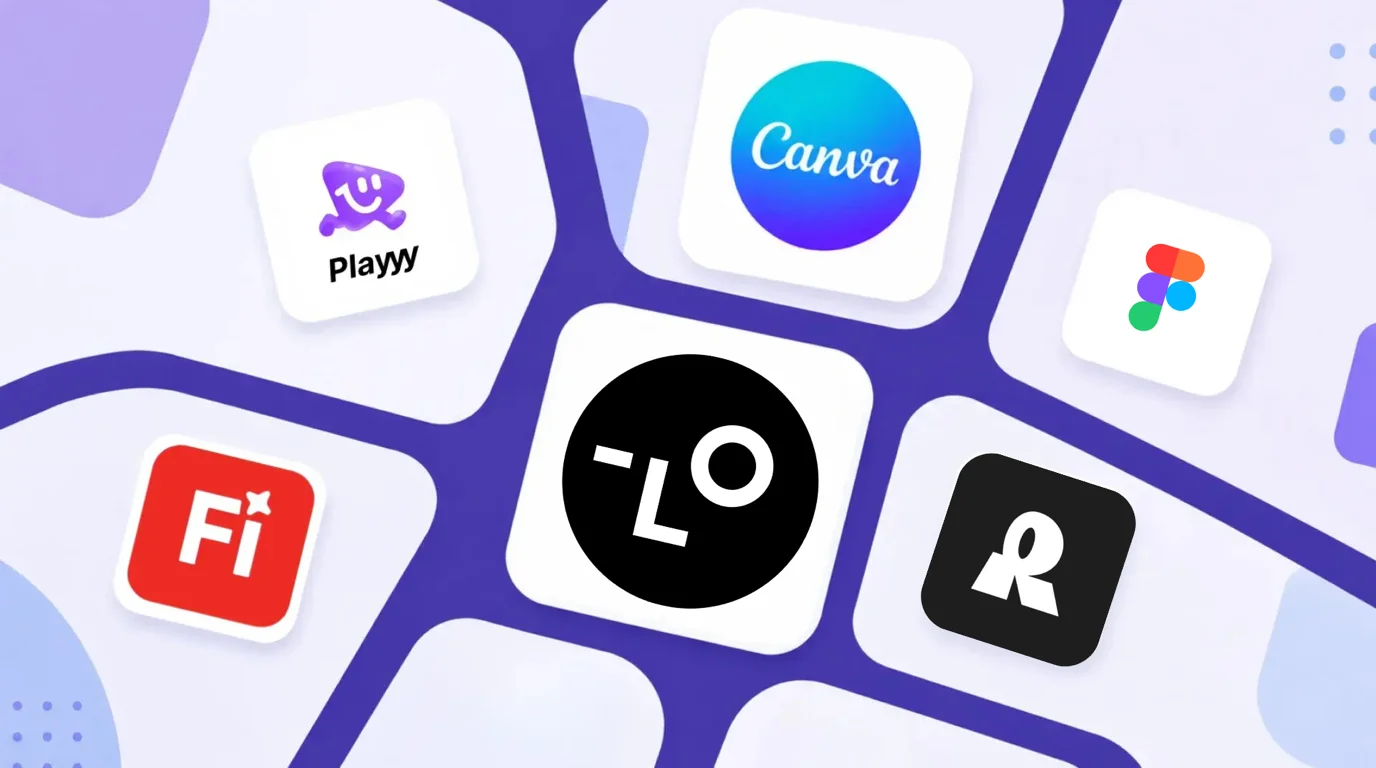
Lovart markets itself as the world's first AI design agent, and the distinction from a normal generator is real. You give it a brief rather than a prompt, and it plans a multi-step job — producing a poster, matching social variants and a set of marks on one canvas instead of a single image. When the brief matches what the agent expects, it's genuinely impressive.
The short answer. The best Lovart alternative depends on which part you were using. Choose Playyy for brand-consistent production you control asset by asset, Freepik AI if you liked the many-models-one-subscription model, Adobe Firefly when output must be legally cleared, Recraft for true vector output, and Ideogram when the design contains readable text.
How We Picked These Lovart Alternatives
Most "Lovart alternatives" lists are directory scrapes that rank whichever AI tool paid for placement, and several of the pages currently ranking are themselves AI design tools writing about their competitors.
Every tool here had to clear four bars. It must be a working product with public pricing as of August 2026 — no waitlists, no invite codes standing in for availability. It must grant commercial usage rights on a plan a solo designer can afford. It must replace a specific thing Lovart does rather than merely overlapping with it. And its usage model has to be legible enough that you can predict a monthly bill before committing.
That last criterion is the one that matters most here, because it's the most common reason people go looking. An agentic tool spends credits in bursts: one brief can trigger a dozen generations, and you find out what it cost afterwards. Tools that meter by opaque units, or reserve commercial licensing for enterprise contracts, didn't make the list regardless of output quality.
1. Playyy — Brand-Consistent Production You Control
Best for: Brands and small teams producing ongoing visual content that has to look like it came from the same place.
Playyy inverts Lovart's premise. Instead of handing a brief to an agent and accepting the set it returns, you generate an image and it lands on a canvas where images, text, subjects and backgrounds stay as separate, adjustable layers. You refine by prompt or by dragging, in one workspace, without re-running a brief to change one element.
For repeat production that control is the point. An agent is efficient when the output is close enough on the first pass and expensive when it isn't, because the fix is another full run. Keeping the output editable means the cost of a change is the change, not a regeneration. AI image generation, background removal and upscaling sit in the same place.
The brand kit is the other half. It stores your logo, colours and fonts and applies them across everything you produce, so a month of marketing creatives shares one visual system rather than reading as a series of separate experiments — which is exactly where per-brief agent output tends to drift.
Pricing: Free tier with 50 daily credits at 2K. Basic $22/month or $19/month billed annually — 100 daily credits plus 1,800 monthly credits and 4K output. Pro $58/month ($45 annually), Mega $115/month ($89 annually).
Limitation: It won't plan a campaign for you. If the appeal of Lovart is handing over a brief and getting a finished set back, that's the thing Playyy deliberately doesn't do.
2. Freepik AI — Many Models Under One Subscription
Best for: Teams who liked Lovart's breadth and want more models with a stock library behind them.
Freepik is the closest structural swap. It aggregates 30+ image and video models behind a single subscription and pairs them with a stock library of hundreds of millions of licensed assets — so when generation isn't the right answer, licensed stock is in the same place. It also folded in Magnific, one of the strongest AI upscalers available.
The trade-off is that you're choosing models rather than delegating. Freepik gives you the range a Lovart brief would draw on; it doesn't decide for you. Whether that's a downgrade or the entire point depends on how often the agent's choices matched yours.
Pricing: Free tier available. Premium+ around $33.75/month covering video, audio, upscaling, 30+ models and the full stock library.
Standout features: 30+ models in one place, 250M+ stock assets, Magnific upscaling.
3. Adobe Firefly — Commercially Safe Output
Best for: Agencies and regulated brands that need AI design cleared before it publishes.
Adobe states that Firefly is trained on licensed Adobe Stock and public-domain content and is not trained on customer data, and it offers contractual IP indemnification for select outputs to customers on qualifying enterprise plans. No other tool here offers an indemnification guarantee.
That matters more for a design agent's output than for a stray social image. Agents produce logos, marks and brand systems — assets you intend to use as identity — and identity is where provenance questions get expensive.
Pricing: Free plan with a limited monthly credit allowance. Included with Creative Cloud; standalone plans available.
Standout features: Licensed-only training data, enterprise indemnification, Photoshop integration.
4. Recraft — True Vector Output and Style Sets
Best for: Designers who need scalable output — logos, icons, marks — rather than raster images.
This is the gap most Lovart users hit first. Lovart returns raster output, so a brand mark arrives as pixels — and a logo that can't scale isn't finished work. Recraft generates genuine vector graphics rather than raster traced afterwards, which makes it the right tool for anything that has to survive from a favicon to a billboard.
Its style-set feature lets you define a visual style once and generate consistently inside it — the closest thing here to a brand system for illustration, and a more controllable version of what an agent does implicitly.
Pricing: Free plan with 50 daily credits. Basic $10/month (1,000 credits). Advanced $27/month (4,000 credits). Pro $48/month.
Standout features: Native vector generation, custom style sets, icon and logo output.
5. Ideogram — Readable Text Inside Designs
Best for: Anyone producing posters, packaging or ad creative where the words have to render correctly.
Design work contains type, and this is where generated output most reliably fails: diffusion models treat letterforms as texture rather than as symbols with fixed shapes, so a poster comes back with plausible-looking gibberish. An agent asked to produce a campaign poster inherits that problem.
Ideogram was built specifically to fix it and renders legible typography inside generated images more reliably than anything else here. It's narrower than Lovart in every other respect — treat it as the tool you reach for when the design contains words.
Pricing: Free tier available. Plus $15/month for 1,000 priority credits plus unlimited slow generations. Pro $42/month.
Standout features: Accurate in-image text rendering, typography control, unlimited slow generations on paid tiers.
6. Canva — Mature Brand Kit and Template Workspace
Best for: Teams producing everyday marketing collateral who want AI as one step, not the whole process.
Canva's Magic Studio puts generation inside the design workspace, and its brand kit, template and collaboration features are the most mature of anything on this list. Generated images drop into layouts with no export step.
Raw generation quality trails the specialists, but for a team shipping a steady stream of posts, decks and flyers, workflow speed usually matters more than the ceiling — and unlike Lovart, nothing arrives that you didn't ask for.
Pricing: Free tier with limited AI generation. Pro around $14.99/month.
Standout features: Generation inside templates, brand kit, team collaboration, no export step.
7. Figma — Professional Workflow With Handoff
Best for: Product and brand teams whose design work has to be reviewed, versioned and handed to engineers.
Figma is the outlier here, and it's the right answer for a specific person: someone who tried Lovart because they wanted speed and discovered the real constraint was collaboration. Agent output arrives as finished files with no version history, no comment threads and no component system — fine for a one-off, unworkable for a team that has to maintain what it makes.
It won't generate a campaign from a brief. It will let five people work on the result without emailing files around.
Pricing: Free Starter tier. Professional from $16/editor/month.
Standout features: Component systems, version history, commenting and review, developer handoff.
Lovart Alternatives Compared
| Tool | Best For | Free Tier | Starting Price | Vector | Brand Kit |
|---|---|---|---|---|---|
| Playyy | Brand-consistent production | ✅ 50 credits/day | $19/mo annually | ❌ | ✅ |
| Freepik AI | Many models, one bill | ✅ | ~$33.75/mo | ⚠️ | ⚠️ |
| Adobe Firefly | Commercially safe output | ✅ Limited | Included with CC | ✅ | ✅ |
| Recraft | Vectors, logos, icons | ✅ 50 credits/day | $10/mo | ✅ | ⚠️ Styles |
| Ideogram | Readable text in images | ✅ | $15/mo | ❌ | ❌ |
| Canva | Everyday marketing content | ⚠️ Limited | ~$14.99/mo | ⚠️ | ✅ |
| Figma | Team workflow and handoff | ✅ Starter | $16/editor/mo | ✅ | ✅ |
Pricing checked August 2026. AI tool pricing changes often — confirm current rates at checkout.
How to Choose in One Minute
- Brand visuals every week, controlled asset by asset. Playyy.
- Lovart's breadth without delegating the decisions. Freepik AI.
- Legal has to sign off. Adobe Firefly.
- The output is a logo or mark. Recraft.
- The design contains words. Ideogram.
- Everyday marketing collateral. Canva.
- More than one person maintains the work. Figma.
- You want a different broad AI suite. Our ImagineArt alternatives comparison covers that adjacent category.
Two Things to Check Before You Switch
How the credits behave. Ask whether unused credits roll over, and what a single finished deliverable actually costs. This matters more on agentic tools than conventional ones: one brief can trigger a dozen generations, so the per-asset cost is only visible after the fact.
According to Adobe's own generative credits documentation, credits on free plans expire one month after allocation and don't accumulate. Monthly expiry is now the industry norm rather than one vendor's quirk — so the real question isn't whether credits expire but whether you can predict how fast a month's allowance disappears.
Who owns the output. This is sharper for design agents than for image generators, because agents produce identity assets. The US Copyright Office holds that copyright protection requires human authorship, and its January 2025 report on AI copyrightability concluded that purely AI-generated output isn't protected. You can generate and sell a logo; you may not be able to stop a competitor reusing it. Editing generated output meaningfully — the kind of layered adjustment a canvas editor enables — strengthens a human-authorship claim in a way accepting an agent's first pass does not.
The pattern across all seven is the same: Lovart is a capable generalist agent, and each alternative beats it at one specific thing. Decide which thing you need. If it's producing on-brand visuals week after week rather than generating a campaign from scratch, a tool built around brand consistency will save you more hours than one built around delegation.

Daniel Brooks
I work with SaaS founders, indie makers and early-stage teams on positioning, launch assets, pitch visuals and founder-led content. I write for small teams making smart decisions with limited time and resources.
Frequently asked questions
Lovart has a free tier that grants a daily credit allowance which refreshes every day rather than a time-limited trial, and it doesn't require a card to start. Because credits reset daily instead of accumulating, the free tier suits evaluating the agent on small briefs rather than producing a campaign. Anything agentic — where the tool plans several steps and generates a full asset set — consumes credits quickly, so check the current allowance on Lovart's pricing page before planning work around it.