How a Wellness Brand Ships 10 Color Variants a Week
 Emily Carter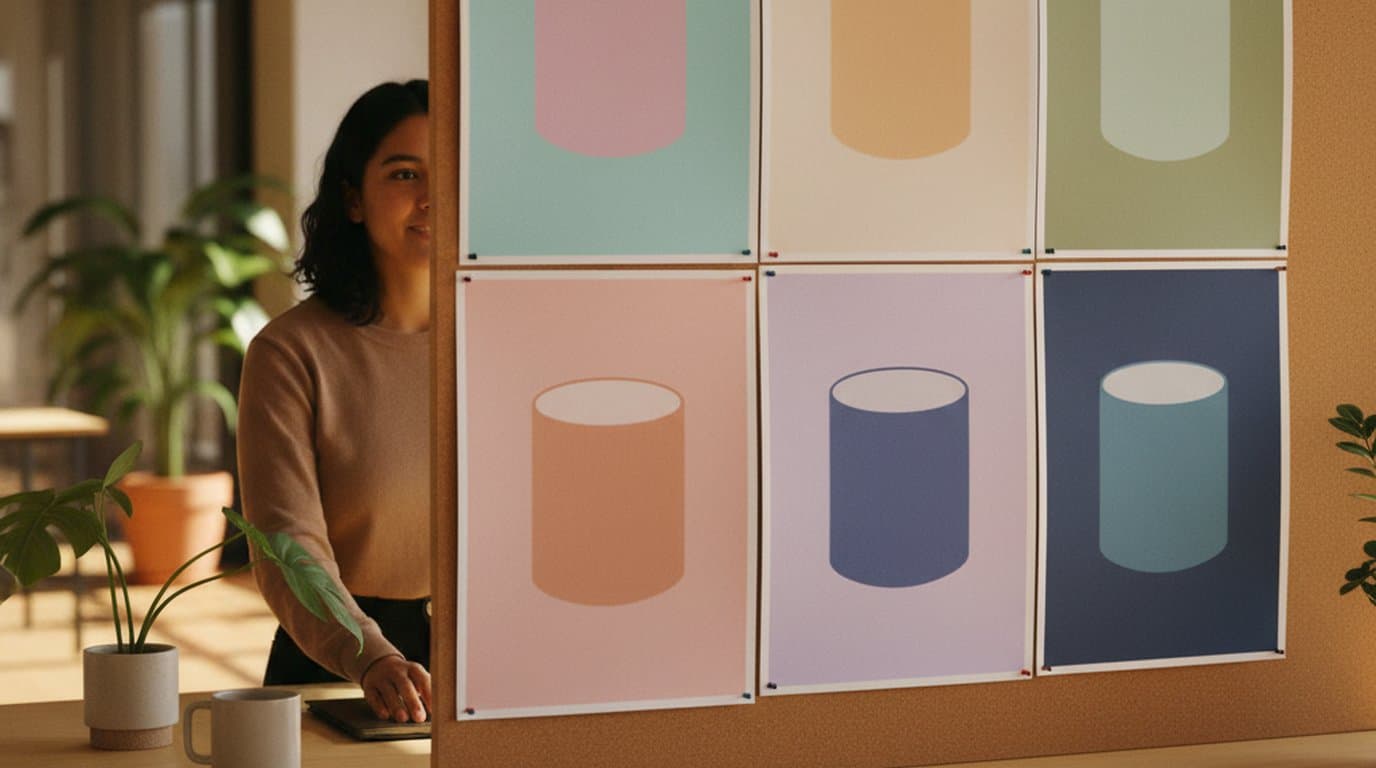
It is 7:42 a.m. on a Monday and Nina Okonkwo is already at her stand-up desk, a cold brew on one side and a corkboard of six printed product creatives on the other. By 11 a.m. she needs ten color variants of the same hero shot ready for the paid social queue — four for Meta feed, two for Stories, two for TikTok in-feed, two for Reels. A year ago this morning would have been a Slack thread with a freelance designer, a two-day wait, and a launch slipped to Wednesday. Today it is a single canvas open in a browser tab.
Nina is Growth Lead at a two-year-old DTC magnesium and electrolyte brand that has scaled from $40K to $310K in monthly Meta + TikTok spend over the last eighteen months. The catalog is small — six SKUs, all variations on the same matte-pastel sachet — and the creative challenge is the inverse of most DTC brands: not enough hero photography, far too much paid demand for fresh creative every week.
Recoloring a single product creative into ten color variants a week is the cheapest creative-fatigue defense the team has found. The math only worked once the recolor step stopped going through a designer.
The result. Nina replaced a 48-hour designer round-trip with a 30-minute Monday-morning sprint on Playyy's AI Image Editor, producing ten color variants of the brand's hero creative each week. Over six weeks, Meta and TikTok CPM fell and feed CTR improved against a like-for-like audience baseline.
Why the Old Recolor Workflow Broke
Nina inherited a recolor process that had three steps and three failure modes. Step one: brief a freelance designer over Slack with the source PSD and a Pantone reference. Step two: wait 24 to 48 hours for the first round. Step three: review, send revisions, wait again. By the time ten variants existed, the test window had moved on, the audience had seen the same hero shot four extra times, and the CPM had crept up.
The brand had tried Canva and a junior in-house designer cycling through Photoshop's Hue/Saturation layers. Both produced acceptable recolor work for a single image, but neither scaled to ten variants a week. Photoshop required a clean masked PSD that the original photographer hadn't delivered. Canva's color picker treated the product as a flat shape — fine for graphic backgrounds, weak on the sachet's matte-foil texture where light needed to wrap a curved surface believably.
The real cost wasn't the designer fee. It was the calendar drag. Every recolor sprint that ran late pushed the paid test window back, which pushed the optimization signal back, which compounded into a slower decision about which color palette deserved scaled spend.
According to Meta's own creative best-practice documentation, ad fatigue shows up as a measurable CTR decay after 3 to 5 days of unchanged creative against the same audience (Meta Business Help Center on creative fatigue). For a brand running multiple weekly audiences, that means new creative every week is not a stretch goal — it is the operating tempo. The old workflow simply could not keep up.
For brands rebuilding their visual cadence around weekly testing, see Social Media Image Sizes 2026 for the platform-spec backdrop.
How the AI Image Editor Changed the Math
Playyy already shipped an AI Image Generator, a Background Remover, and an Erase Object tool. Nina had used all three. What they did not solve was the after-generation problem: once the hero shot existed, every recolor still demanded a designer pass.
The launch of Playyy's AI Image Editor closed that gap. The editable canvas adds the layer model, masked selection, recolor controls, outpaint, inpaint, restyle, and text-edit operations that previously lived in Photoshop. For a recolor workflow specifically, the canvas treats the product as a real layer with light, shadow, and material — not a flat shape.
The first time Nina tested it, she duplicated the source product layer six times, recolored each duplicate to a different pastel — pink, teal, amber, olive, lavender, navy — and exported all six in under twenty minutes. The freelance designer's invoice for the equivalent work the prior month had been $480 and forty-six hours of wall-clock time.
Weekly creative refresh tends to outperform a biweekly cadence, because paid social delivery systems reward genuinely new creative with cheaper impressions. For a brand running 10+ variants per week, the recolor step has to drop from days to minutes for that cadence to be sustainable.
The Recolor Workflow in 30 Minutes
The current sprint Nina runs every Monday morning has six numbered steps.
- Open the master canvas. A single hero product shot, already masked and layered from the previous week, lives as a template. The product is on its own layer; the background sits behind it.
- Duplicate the product layer ten times. Each duplicate becomes the source for one color variant. The background stays shared so brand framing is constant.
- Apply recolor to each duplicate. Nina uses the editable canvas's recolor control with a color reference — a hex code from the week's palette brief, or a pulled swatch from a competitor creative she wants to test against. The recolor respects the matte-foil shading on the sachet because it operates on the layer, not a global hue shift.
- Inpaint cleanup where needed. For two or three variants per batch, a foil highlight reads off — usually on the navy or olive variants where contrast shifts most. A 30-second inpaint replace tightens the edge.
- Outpaint to platform aspect ratios. Feed creative exports at 1080×1080. Stories and Reels need 1080×1920. The canvas's outpaint extends the background vertically without re-shooting or duplicating the product.
- Export the queue. Ten variants, four aspect ratios where required, named to match the paid-social tracking sheet.
End to end: 28 to 34 minutes, depending on how much inpaint cleanup the batch needs.
Channel Mix and Sizing Notes
The brand splits weekly creative across four placements. Meta feed takes four variants at 1080×1080. Meta Stories takes two at 1080×1920. TikTok in-feed takes two at 1080×1920 with a safe-zone margin to keep the product clear of the caption stack. Reels takes two at 1080×1920, often the same source as Stories but with the product re-positioned to the lower third where the engagement icons live.
The outpaint step matters most for the vertical placements. The hero shot was photographed in a wide-frame studio at roughly 4:3, which leaves a vertical export cropped tight to the sachet. Rather than reshoot, the team uses the canvas to extend the background plausibly — same wood surface, same diffuse light direction. Nina treats outpaint output as a paid-social asset, not a brand hero asset; the standard is "convincing at thumb-scroll speed," not "publish to the homepage."
For a fuller breakdown of platform-specific sizing for paid creative, see Social Media Image Sizes 2026.
What Six Weeks of Weekly Recolor Sprints Produced
The first six weeks of the new workflow generated 62 distinct variants — slightly above the 10-per-week target, because two weeks ran a 12-variant batch to cover a launch window. Nina tracked three numbers against the prior eight weeks under the freelance-designer model.
CPM across Meta and TikTok fell, which Nina attributes mostly to the audience seeing genuinely new creative every Monday instead of a recycled palette. CTR on feed placements improved on a like-for-like comparison. The freelance designer line item went to zero for recolor work — the designer relationship now covers only net-new hero photography and brand-system work, which is where Nina thinks an outside designer actually earns the rate.
Creative production speed, rather than audience or platform, is the usual constraint on scaling paid social spend. The brand's experience tracks that: the bottleneck was never the ad platform or the audience — it was how fast the creative refresh could move.
What the Weekly Cadence Looks Like Now
Monday morning is still a recolor sprint, but the shape has changed. Nina starts at 7:30 a.m. with the palette brief from the prior week's performance data. By 8:15 a.m., ten variants are queued in the paid-social tool. By 9 a.m., the team's media buyer has the creative live across Meta and TikTok. Tuesday through Thursday are spend-and-learn days. Friday is a performance review and palette brief for the next week.
The week the brand launched a magnesium-glycine sleep blend, the same workflow shipped 14 variants across three product angles in a single morning. The freelance designer was briefed only for the net-new hero photography. The recolor work — the part that used to be a two-day wait — happened inside the same morning the brief was written.
For brands weighing this kind of workflow shift, the question isn't whether AI recolor matches a designer at a single image. For most paid social placements at thumb-scroll speed, it already does. The question is whether the cadence change — from biweekly to weekly creative refresh — is worth defending. For the brand, six weeks of cheaper impressions and better click-through answered that. The Monday-morning corkboard now holds ten posters by 11 a.m., not six by Wednesday.
For more on the broader shift away from per-edit designer round-trips, see Canva Alternatives and AI Photoshoot for Creators.

Emily Carter
I help marketing teams at early-stage SaaS companies and DTC brands produce more campaign assets without losing brand consistency. My focus is on practical workflows for growth marketers — from paid social testing to creative iteration.
Frequently asked questions
On the editable canvas inside Playyy's AI Image Editor, recolor edits target a selected layer or masked region — not the whole frame — so the product's shape, label geometry, and lighting stay intact while only the color values shift. For a matte sachet or a simple bottle, the result is publish-ready for paid social. For complex packaging with gradients or foil, expect a 5-minute cleanup pass with inpaint to tighten edges before exporting at ad-platform sizes.