Which AI Face Generator Should You Use?
 Minji Park
A persona illustration for a pitch deck. A placeholder customer in an app mockup. A profile picture that doesn't require booking a photographer. Three jobs, three different tools — and an AI face generator is the correct answer to only one of them. Picking the wrong one is why so many generated portraits end up unusable: the tool invented a person when the task needed the actual client's face, or preserved a likeness when the task needed a stranger.
Quick answer. An AI face generator creates a photorealistic human face that doesn't belong to a real person, from a text description or a reference image. Use one when you need a fictional person — personas, mockups, illustration. Use a portrait editor instead when you need your own face improved, and on-model generation when you need a person wearing your product.
Three Tools Share the Name — Which One You Need
The phrase covers three mechanisms with different outputs and different legal weight.
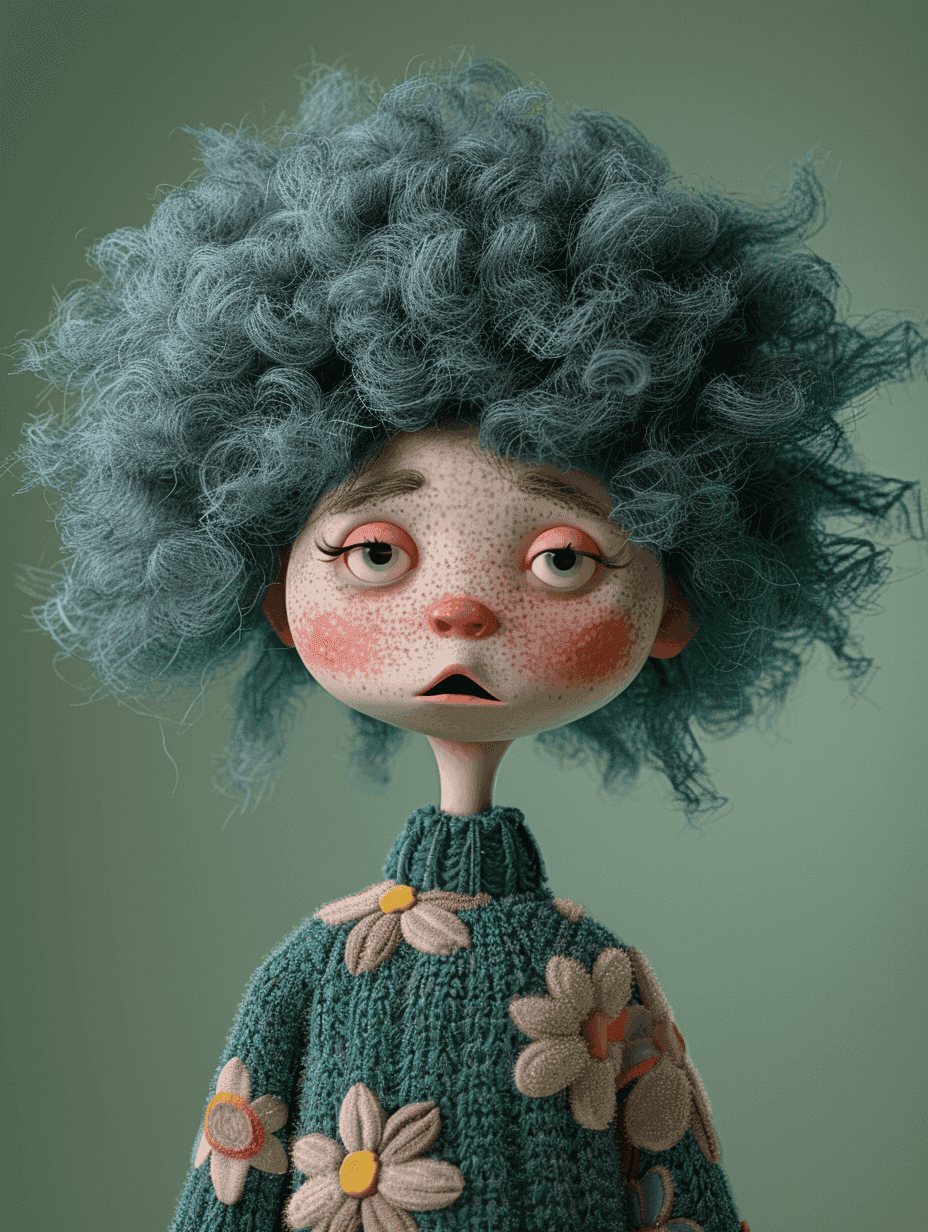
Synthetic face generation invents a person from a description or from noise. Nobody's likeness is involved, which is why stock libraries of generated faces exist. This is the right tool for personas, mockups, and illustration.
Portrait editing from your own photo keeps your identity and changes the conditions — lighting, background, outfit, crop. This is usually what "an AI image using my face" really means. It's a headshot workflow, not a face-invention workflow, and it sidesteps the disclosure questions that attach to synthetic people.
Face swapping places one person's face onto another person's image. It involves a third party's likeness by definition, and it is the category regulators, platforms, and courts are most active about. Treat consent as mandatory, not as best practice.
Conflating the first two is harmless confusion. Conflating either with the third is how people get into trouble.
Deep Dive: How to Make a Professional Profile Picture
How to Use an AI Face Generator Well
An AI face generator is only as good as the brief it gets. The difference between a usable portrait and an uncanny one is almost entirely in how specifically you describe the photograph, not the person.
- Describe the shot before the subject. "Head-and-shoulders portrait, 85mm lens, soft window light from camera left, shallow depth of field, neutral grey background" gets you a photograph. Starting with "beautiful woman" gets you the generic AI face everyone recognises.
- Give the person specifics, not adjectives. Age range, hair length and texture, skin tone, build, expression, wardrobe. Four concrete attributes beat ten flattering ones.
- Name one imperfection. Slightly uneven eyebrows, a small mole, hair not perfectly placed. Symmetry is the single strongest artificial tell, and asking for one asymmetry removes most of it.
- Generate a set, not a single image. Four variants at the same prompt, then pick — evaluating one output against nothing is how bad frames get shipped.
- Zoom to 100% on eyes, hairline, teeth, and ears before using it. This is the review step that separates a portrait from a curiosity. Playyy's free AI image generator keeps the result on an editable canvas so a bad ear can be fixed rather than re-rolled.
Step 1 is the one most people skip. A face generator is a camera simulator as much as a person simulator, and prompts that describe photography produce faces that look photographed.
Why AI Face Generator Output Reads as Fake
Four failures account for nearly every "something's off" reaction, and all four are fixable in review.
Light that doesn't agree with itself. Catchlights in the eyes tell you where the light was. When the left eye's highlight sits at ten o'clock and the right eye's at two o'clock, the brain flags the image before you consciously notice why. One light source, one consistent highlight position.
Symmetry. Real faces aren't symmetrical — one eyebrow sits higher, one side of the mouth moves more. Generated faces trend toward the average, and the average is subtly inhuman.
Edge dissolution in hair. Individual strands at the silhouette are the hardest thing in portrait rendering. Blurry or smeared hair edges against a background is the most common tell in otherwise good output.
Skin texture lost to processing. Pores and fine lines are what make skin read as skin. Aggressive upscaling or denoising sands them off and produces the plastic look. If you upscale a portrait, compare texture before and after rather than trusting the higher resolution.
Teeth as a single fused shape, mismatched earrings, and glasses whose arms don't line up with the ears are the next tier. None of these require regenerating the whole image — they're local fixes.
Where You Can Legally Use a Generated Face
Two separate questions: does the image need a label, and does anyone own the likeness.
On labelling, the EU rules are now live. Article 50 of the EU AI Act requires that providers ensure "outputs of the AI system are marked in a machine-readable format and detectable as artificially generated or manipulated," and that deployers of deepfake-generating systems "shall disclose that the content has been artificially generated or manipulated." The Act defines a deepfake as "AI-generated or manipulated image, audio or video content that resembles existing persons, objects, places, entities or events and would falsely appear to a person to be authentic or truthful," and defines a deployer as any person or organisation using an AI system other than for personal, non-professional activity. Those obligations entered into application on 2 August 2026; under the EU's AI Omnibus, generative systems already on the market before then have until 2 December 2026 to add machine-readable marking.
On likeness, the older law still applies. If a generated face closely resembles a real identifiable person, that person's rights don't disappear because a model produced the pixels. This is a practical risk when prompting with a celebrity's name or a real person's photo as reference — and a negligible one when generating from an ordinary description.
The third consideration is honesty rather than law: a synthetic person illustrating a concept is fine, and a synthetic person presented as a named customer giving a testimonial is a fabricated endorsement. The medium doesn't change that.
Free AI Face Generator Options, and What Free Costs
A free AI face generator comes in one of three shapes, and the trade-off is consistent across all of them.
No-signup instant generators produce a face in seconds with almost no control. Good for a placeholder, weak for anything that needs a specific person, and usually capped at low resolution.
Curated libraries of pre-generated faces offer consistent quality and clear licensing, but everyone else has the same faces, and the set won't contain the specific person your mockup needs.
Free tiers of full creative tools give you prompt control, editing, and usable resolution, in exchange for signing up and living with credit limits.
The comparison that matters isn't speed. It's export resolution and commercial terms. A generator that returns a 512-pixel face has produced something you cannot put in a deck at full width, and a licence that excludes advertising has produced something your campaign can't use. Check both before you build a workflow on a free tier.
When You Need a Person, Not a Face
Three adjacent jobs are better served by adjacent tools, and reaching for a face generator makes them harder.
A professional headshot of yourself needs your likeness preserved, which means portrait editing rather than generation — see the AI headshot workflow for the version that keeps you recognisable.
A profile picture with personality is often better as an illustrated or stylised treatment than as a photorealistic stranger; the AI PFP approach covers that.
A model wearing your product is a different problem entirely. Face generation won't keep a garment accurate, and product accuracy is the whole requirement for a listing image.
The Short Version
Decide which kind of AI face generator you need before comparing products: invent a person, edit your own face, or swap faces with consent. Prompt the photograph rather than the person. Review eyes, hair edges, skin texture, and teeth at 100% before anything ships. Label synthetic people where the EU rules apply, and keep provenance metadata through export. And when the actual job is a headshot or an on-model product shot, use the tool built for that instead — a face generator is the right answer to a narrower question than most people are asking.

Minji Park
I help indie creators, online educators and small product teams prepare launch visuals and social campaigns. My goal is to make launches feel polished and trustworthy — even when you are working without a designer.
Frequently asked questions
For synthetic faces of people who don't exist, the free options split into no-signup generators that produce quick results with little control, and full creative tools whose free tiers include face generation among everything else. The second group wins for commercial work because you get resolution, editing, and a licence you can read. Judge free tiers on export resolution and commercial terms rather than on how fast the first image appears.