How an Agency Rebranded 18 LinkedIn Profiles in One Week
 Sophie Whitmore
The agency had spent eight months on its rebrand. A new name positioning, a refined logo, and a carefully considered palette — warm navy and soft cream — that expressed the agency's shift from generalist PR shop to specialist communications consultancy. The brand guidelines were signed off. The website was in production. And then Rebecca Shaw, the agency's managing director, looked at the company's LinkedIn presence and realised the work was only half done.
Eighteen staff members. Eighteen LinkedIn banners still in the old brand colours. Eighteen profile pictures taken against backgrounds that ranged from acceptable to embarrassing. LinkedIn was the primary channel through which the agency's prospective clients, journalists, and talent encountered the agency's people — and right now, those people looked like they worked somewhere else.
The obvious answer was to bring in a designer. Rebecca made one call. The quote came back at £3,200 for the full rollout: a master banner template, individual versions for all 18 staff, and background removal for the headshots that needed it. Timeline: three weeks, accounting for rounds of amends and the time it would take to collect and process each person's photo.
Three weeks to finish a rebrand that had already taken eight months felt like the wrong answer.
For agencies and professional services firms, the LinkedIn profiles of your people are a distributed brand asset — and a rebrand that doesn't reach them is a rebrand that the market cannot see. The visual coherence of a team's public profiles is what signals to a potential client that this is an organisation that takes its own presentation seriously.
The result. Rebecca rebranded all 18 of the agency's LinkedIn profiles using Playyy's AI image generator, AI image editor, and Background Remover — completing the rollout in 3 days rather than 3 weeks, without the £3,200 design invoice.
The Problem With a 3-Week Designer Timeline
The freelance quote wasn't unreasonable. Creating 18 individually named banner variations, collecting headshots from 18 people who respond to internal requests on their own schedule, and processing each photo through rounds of review takes time when it all flows through a single designer.
But Rebecca understood something about the nature of that delay: most of it wasn't design work. It was coordination overhead. Chasing photos. Sending files. Waiting on amends. The actual creative time — deciding what the banner should look like — was a fraction of the three weeks.
The default LinkedIn banner is the same faint blue gradient as everyone else's; a custom one signals a profile someone actually maintains. For a communications agency that regularly pitches new business and recruits communications professionals, profile views matter. Every week that half the team's profiles showed the old brand was a week the rebrand wasn't visible to the people it was designed to impress.
The visual gap between a company's public brand and the profiles of its people creates an impression of organisational inconsistency that no amount of polished collateral can fully offset. For a professional services firm, where clients are choosing people as much as capabilities, that gap is a credibility cost.
Rebecca decided to handle it herself.
Building the Master Banner Template
The first step was generating a banner that Rebecca felt confident represented the new brand — not a rough approximation, but something she would have been happy to receive from a designer.
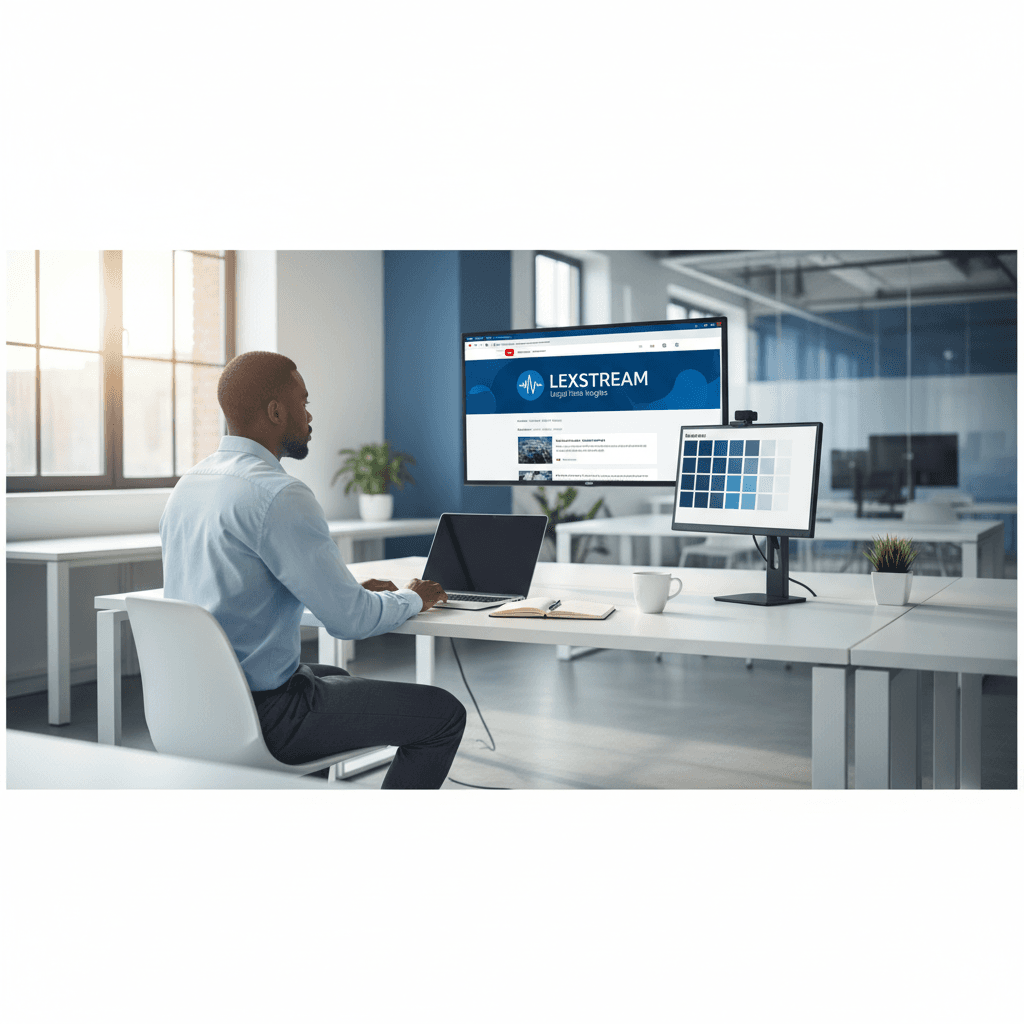
She used Playyy's AI image generator to produce a series of compositions from a detailed text prompt: warm navy background, cream geometric accents, the restrained professional quality that the new positioning required. Nothing that looked like a stock image or a marketing template. After a few iterations, she had a banner direction that felt unmistakably theirs.
From there, the AI image editor let her refine the composition — adjusting the balance of the navy and cream elements, tightening the spatial arrangement so the banner read cleanly at 1584 × 396 px. She added the agency wordmark and the founding year as the only text elements, positioned in the right half of the banner so they wouldn't be obscured by the profile photo overlay.
That became the master file.
In our experience with professional services rebrand projects, the time saved by getting the master right before distributing it is significant — amends at the template stage cost minutes, amends after 18 individually named versions have been produced cost hours.
Distributing the Work Without Creating More Work
With the master banner confirmed, Rebecca distributed it to all 18 staff with a single set of instructions: open the file in Playyy's canvas, add your name and job title in the designated zone, export as JPEG. No design experience required. No need to understand the brand guidelines in detail, because the design decisions were already made.
The canvas approach meant that each person could personalise their version without being able to accidentally alter the brand elements — the background, the colour treatment, the layout structure were all fixed in the master. The only variable was the name and title.
Twelve staff members completed their banners on the first day. The remaining six came in over the next two days, with brief messages to anyone who hadn't yet updated their profile by day three.
Headshots, Processed in Minutes Each
The background situation on the headshots ranged from adequate to actively distracting. Some staff had photos taken at a company event against a plain wall — fine, but not quite right. Others were cropped from group shots, or taken at home offices with visible bookshelves and trailing cables.
Rebecca used Playyy's Background Remover to process each headshot, isolating the subject cleanly and placing them against a warm cream background that matched the banner palette. The processing was fast enough that Rebecca could work through multiple headshots in a single session — upload, remove background, export, next.
For staff who wanted to handle their own headshot, the same workflow took less than five minutes once Rebecca had sent them the instructions. The result was a set of 18 profile pictures that matched the register and palette of the banners, without requiring a photography session or professional retouching.
What the Rollout Looked Like From Outside
By day three, all 18 staff profiles showed the same visual language: the warm navy and cream banner, the wordmark, and a clean headshot that looked like it belonged to the same organisation as the banner behind it.
A contact at a client agency noticed within a week. An unsolicited comment in a LinkedIn message: "Looks like you've had a refresh — the profiles are looking sharp." Which, given that the whole point of the rebrand was to signal a sharpened positioning, was exactly the right response.
The £3,200 that didn't go to the freelance designer went back into the agency's operating budget. The three weeks that didn't go to waiting for files went into work that mattered more.
For the complete workflow behind team LinkedIn profile creation and banner design, see LinkedIn Banner Design with AI.

Sophie Whitmore
I help lifestyle, wellness and education brands keep visual content consistent across Instagram, TikTok, LinkedIn and email campaigns. I specialise in content calendar planning and multi-platform visual production for small teams.
Frequently asked questions
Yes — and the approach is more reliable than distributing a designer's template, because every team member works from the same AI-generated master visual rather than a file that can be inadvertently altered. Generate a master banner in your brand colours using a text prompt, refine it with the AI editor, then share the base file with team members who personalise their name and title on the canvas. The brand elements — background, palette, layout — stay locked across all 18 or 80 or 200 versions.