Nano Banana Pro vs ChatGPT: Which Should You Use?
 Emily Carter
ChatGPT and Google's Nano Banana Pro are the two image models most worth comparing for marketing work in late 2026. ChatGPT now runs GPT Image 2.5 (shipped as ChatGPT Images 2.5 on September 8, 2026), and Google's Gemini app runs Nano Banana Pro, the Gemini 3 Pro Image model. Both make convincing product shots, ad creatives and social graphics. They differ in how they handle text, reference photos, resolution and editing, and those differences decide which one fits a given job.
The short version. Use GPT Image 2.5 when you're iterating on one image through conversation, editing a reference photo over several turns, or setting headline-heavy layouts. Use Nano Banana Pro when you need native 4K, many reference images blended into one scene, or a data-driven infographic grounded in Google Search. For anything high-stakes, run the same prompt on both.
Which One Should You Use? Quick Picks by Job
| The job | Lean toward | Why |
|---|---|---|
| Poster, flyer or ad with headline copy | GPT Image 2.5 | Text rendering was the headline upgrade of GPT Image 2; 2.5 keeps it and adds more reliable edits |
| Editing your own product photo over several rounds | GPT Image 2.5 | OpenAI reports better reference-subject preservation and multi-turn consistency |
| Large-format print or hero banners | Nano Banana Pro | Native 2K and 4K output |
| Composite scene from many product shots | Nano Banana Pro | Blends up to 14 reference images |
| Same people across a campaign set | Nano Banana Pro | Google says it keeps up to 5 people consistent |
| Infographic built on real-world facts | Nano Banana Pro | Can ground the image in Google Search |
| Multilingual or localized versions of a visual | Test both | Both companies highlight multilingual text |
| Pure photorealism for lifestyle ads | Test both | Both claim more natural lighting and texture; results vary by prompt |
The pattern: GPT Image 2.5 is built around a conversation that refines one image; Nano Banana Pro is built around composing a high-resolution image from many inputs and controls.
Side-by-Side: What Each Company Says the Model Does
The table below uses only what OpenAI and Google have published, not third-party benchmark scores, which vary a lot by test set and often compare older versions.
| GPT Image 2.5 (ChatGPT Images 2.5) | Nano Banana Pro (Gemini 3 Pro Image) | |
|---|---|---|
| Maker | OpenAI | |
| Released | September 8, 2026 | November 20, 2025 |
| Where it runs | ChatGPT (all plans), ChatGPT Work, Codex, OpenAI API | Gemini app, Google AI Studio, Vertex AI, Google Ads, Workspace, Flow, NotebookLM |
| Text in images | Major strength since GPT Image 2; multilingual | Legible text in multiple languages, plus localization |
| Reference images | Better subject preservation than Images 2.0 | Blends up to 14 images; keeps up to 5 people consistent |
| Editing | More reliable instruction-following across multiple turns | Localized edits: camera angle, focus, color grading, lighting |
| Resolution | Images 2.0 launched with output up to 2K | 2K and 4K |
| Speed | Up to 50% lower latency than Images 2.0 | No published latency figure |
| Extras | Sketch, templates, on-image comments, prompt sharing (in ChatGPT) | Google Search grounding for infographics |
| Free access | Free ChatGPT plan with a daily limit (no fixed number published) | Limited free quota in Gemini, then falls back to the original Nano Banana |
Sources: OpenAI's ChatGPT Images 2.5 announcement and Google's Nano Banana Pro launch post.
One gap worth knowing about. Nano Banana Pro launched in November 2025, and GPT Image 2.5 arrived almost ten months later. Many head-to-head tests online compare Nano Banana Pro with ChatGPT Images 2.0 or earlier, so their verdicts on editing and speed predate the 2.5 improvements. Check which ChatGPT version a comparison actually tested before relying on it.
Text Rendering: Both Are Good, Proofread Anyway
Readable text inside images used to be the giveaway of a weak image model. It's no longer the main differentiator between these two. OpenAI made text rendering the centerpiece of ChatGPT Images 2.0, and Google's launch post for Nano Banana Pro highlights more legible text across fonts, textures and languages.
As a rule of thumb, GPT Image 2.5 suits layouts where the copy is the design: posters, sale graphics, quote cards and carousel covers, refined turn by turn in chat ("make the headline bigger", "move the date under the title"). Nano Banana Pro suits text that sits inside a richer scene, such as signage, packaging mockups and translated versions of a visual.
Whichever model you use, three habits cut errors on both: put the exact words in quotation marks, keep headlines short, and proofread every output before it ships. Long paragraphs and very small type are still where spelling slips show up. The image prompting guide covers how to write text prompts that work on either model.
Editing a Reference Photo: Where GPT Image 2.5 Improved Most
For marketers, the most practical question is often not "which generates a nicer picture" but "which can edit my real product photo without changing the product". This is where GPT Image 2.5's update concentrated. OpenAI says the model preserves the subject of reference photos more reliably, keeps earlier changes consistent across repeated edits and follows editing instructions more reliably over multiple turns.
Citation capsule. OpenAI's announcement of ChatGPT Images 2.5 (September 8, 2026) reports up to 50% lower generation latency than Images 2.0, sharper detail and more natural lighting, better preservation of subjects from reference photos, and more reliable instruction-following across multiple editing turns. Those changes target the main weakness of chat-based image editing: details drifting each time you ask for one more change.
Nano Banana Pro approaches editing differently. Google emphasizes localized controls, letting you adjust camera angle, change focus, apply color grading or switch day to night, and composition from many inputs, with up to 14 reference images and up to 5 consistent people.
So the split is roughly this. To change one thing about one photo, several times, GPT Image 2.5's multi-turn consistency is the better fit. To build a new scene out of many existing assets, such as a lineup of products or a recurring cast of models, Nano Banana Pro's multi-image blending is the better fit.
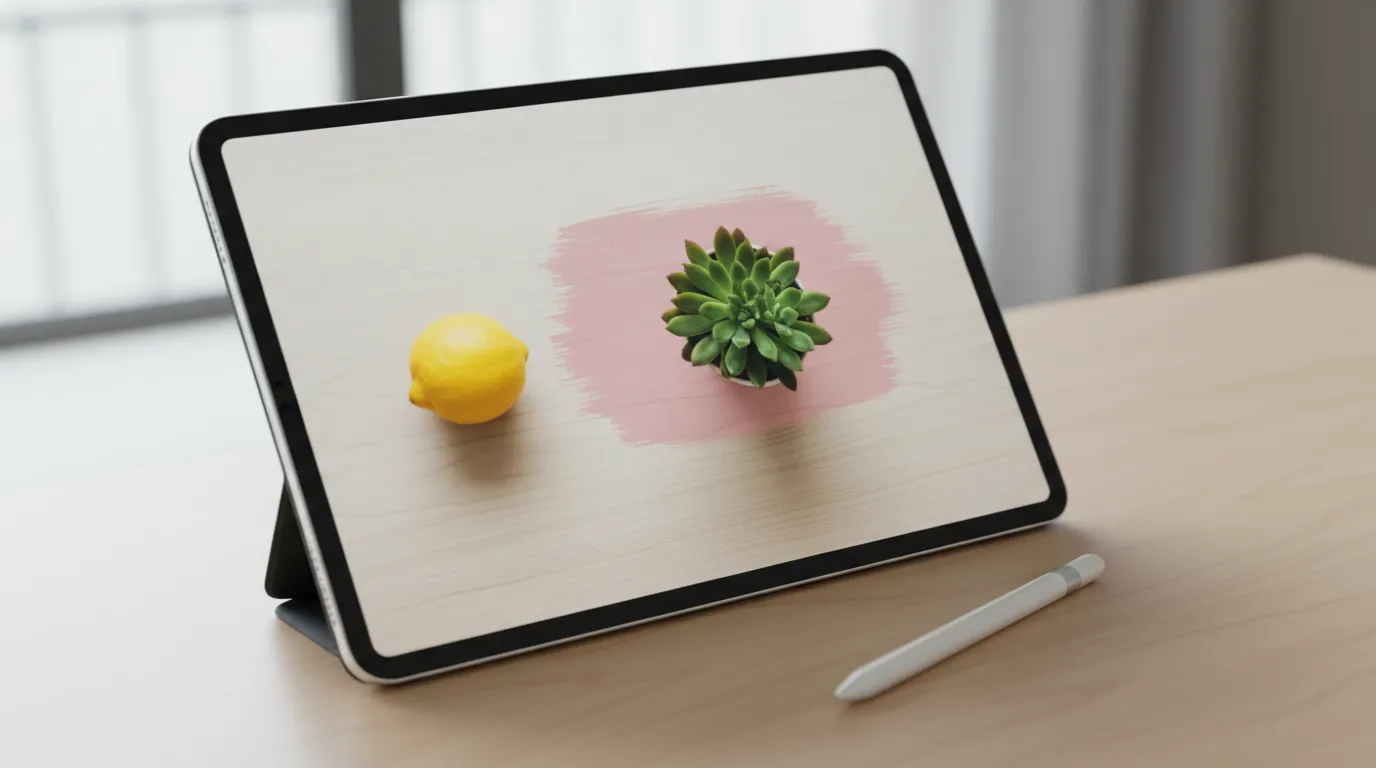
Both models still regenerate pixels when they edit. When a single region needs to change and nothing else can move, an editable canvas is more dependable than either chat. Playyy's click-to-edit tool and object eraser change one element and leave the rest of the image untouched.
Photorealism and Style: Test With Your Own Brand Look
Both companies claim gains in realism. OpenAI says GPT Image 2.5 adds sharper detail, more natural lighting and richer textures. Google highlights Nano Banana Pro's control over camera angle, focus, color grading and lighting. Neither claim tells you which model will match your brand's look.
Our recommendation is to stop reading verdicts and run a small test:
- Pick three prompts you actually use: a product hero shot, a lifestyle scene and a graphic with a headline.
- Run each prompt on both models at the same aspect ratio and resolution.
- Judge the outputs on what your channel needs: product accuracy, skin and fabric texture, how the text holds up, and how much fixing each image needs before it can ship.
Three prompts on two models gives you six images, which is usually enough to see a consistent preference for your category. Fashion, food and beauty brands often land on different answers, which is exactly why a borrowed benchmark is a weak guide. For a fair brand test, give both models the same brand inputs: in Playyy you paste your website URL and it builds a brand kit with your brand colors, fonts, voice and tone, and logo, then uses it to draft on-brand designs on either model, so you're comparing the models rather than how well each prompt described your palette. Once a model wins, the same test doubles as the start of a variant library for paid social and marketing creatives.
Speed and Cost: What You Can and Can't Compare
OpenAI says GPT Image 2.5 cuts generation latency by up to 50% compared with Images 2.0. Google hasn't published a latency figure for Nano Banana Pro. Real speed depends on the app, your plan, the resolution requested and server load, so any blanket "X is faster" claim should be treated as one person's test.
On access, both have a free tier with limits. ChatGPT's free plan includes Images 2.5 with a daily limit OpenAI doesn't state as a fixed number. Google's free Gemini users get a limited Nano Banana Pro quota, after which generation falls back to the original Nano Banana model; paid Google AI plans raise the quota. At launch, Google also added a visible Gemini sparkle watermark to images from free and AI Pro accounts, removed only on Ultra, on top of the invisible SynthID watermark it embeds in all its generated images. Check the current terms before using free-tier output in ads.
In Playyy, both models run on the same credits. There's a free plan with daily bonus credits, and paid plans start at Basic, $18 a month ($15 a month billed annually) for 1,800 credits, with Pro at $48 and Mega at $98 a month. As of October 2026, the first month of a monthly plan is half price ($9 for Basic), then the regular price applies.
How to Test Both Models on the Same Prompt
Testing usually means two tabs, two accounts and two sets of downloads. A faster route is a tool that offers both models in one menu. In Playyy, the GPT Image 2.5 generator uses GPT Image 2.5 by default, and Nano Banana Pro and Nano Banana Lite sit in the same model menu. Keep the prompt, aspect ratio and resolution the same, switch the model and generate again.
Either result lands on the same editable canvas, so you can crop it to a social preset, adjust brightness and color, remove the background, expand the frame or upscale it whichever model produced it. If you'd rather start from a general brief than a model choice, the AI image generator uses the same model menu.
For prompts tuned to Google's model, the Gemini AI photo prompts guide covers a formula and templates written with Nano Banana in mind. For a bigger pool of test prompts, Playyy's Prompt Gallery has 1,000+ ready-made GPT Image and Nano Banana prompts you can run on both models unchanged.
The Verdict
There's no single winner in the Nano Banana Pro vs ChatGPT matchup, and articles that declare one are usually testing a different version or a different job. The clearest split from what both companies have published:
- Choose GPT Image 2.5 for text-led layouts and for editing one image through several rounds of feedback.
- Choose Nano Banana Pro for native 4K, multi-image composites, consistent casts and Search-grounded infographics.
- Test both for photorealism and brand style, where your own prompts are the only benchmark that counts.
The cheapest way to decide is to run the same prompt through both models in Playyy's GPT Image 2.5 generator and keep the image that needs the least fixing.

Emily Carter
I help marketing teams at early-stage SaaS companies and DTC brands produce more campaign assets without losing brand consistency. My focus is on practical workflows for growth marketers — from paid social testing to creative iteration.
Frequently asked questions
Neither wins every job. GPT Image 2 (and its September 2026 successor, GPT Image 2.5) is the stronger pick when an image needs readable headlines and layout, and when you want to refine one image over several chat turns. Nano Banana Pro is the stronger pick when you need native 4K output, many reference images blended into one scene, or facts pulled from Google Search into an infographic. For a campaign that matters, run the same prompt on both and choose the output.