How a One-Person Team Kept 3 Platforms Visually Consistent
 Sophie Whitmore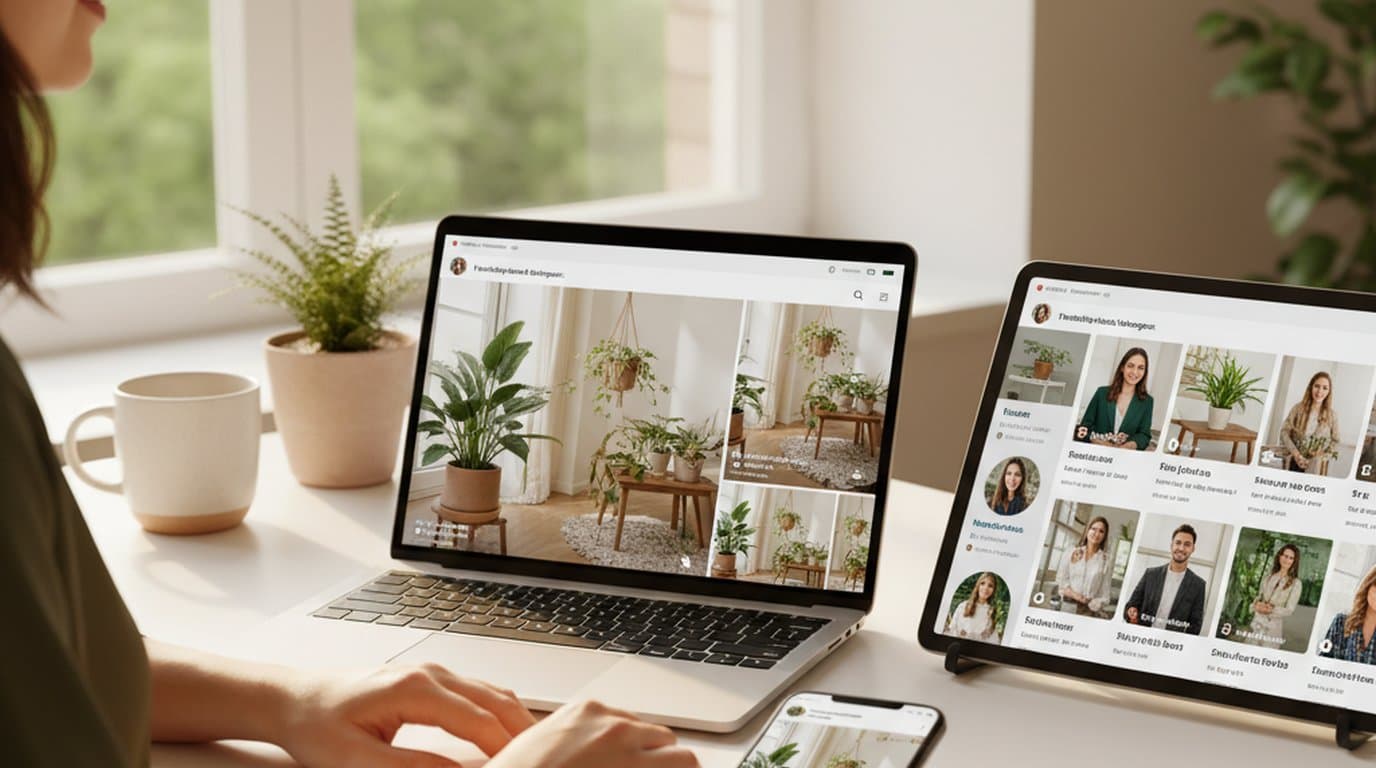
Chloe Bennett manages social media for a lifestyle brand known for a very specific visual world: soft botanical tones, unhurried domestic scenes, the aesthetic language of a considered everyday life. She does this alone, across Instagram, TikTok, and LinkedIn.
The volume was manageable. The consistency wasn't. Every week, Chloe was building each platform's content from its own starting point — and the visual decisions made for Instagram didn't reliably transfer to TikTok's vertical format or LinkedIn's more professional framing. The brand was drifting in ways that were hard to articulate but easy to see when you put the three channels side by side.
The problem wasn't output volume — it was production architecture. When each platform starts independently, visual drift is built into the process. A single-source workflow removes it at the structural level rather than trying to fix it with more careful brand policing.
The result. Chloe eliminated visual drift across the brand's Instagram, TikTok, and LinkedIn channels by switching to a single-anchor-image workflow using Playyy. Weekly content production dropped from three fragmented sessions to one focused session, and all three platforms now read as a unified brand to new visitors discovering the brand for the first time.
The Hidden Cost of Per-Platform Production
Single-person content teams absorb an enormous amount of time that never shows up as "content production" on any calendar. It shows up as reformatting, re-composing, and re-deciding — making the same creative choices three times, once for each platform, because each platform starts from a blank canvas.
Managing three or more platforms means a large share of the working week goes to adaptation and reformatting rather than creative strategy or audience engagement. For a one-person team, that overhead is the difference between a sustainable content pace and a constant scramble.
The second cost is harder to measure: independent production compounds inconsistency over time. When each platform's Instagram post template or TikTok visual starts from its own brief, the small creative divergences multiply. After three months, the Instagram grid, TikTok feed, and LinkedIn profile read like three different brands that share a color palette. This is the core challenge of social media branding for single-person content teams: drift is structural, not a failure of attention.
Chloe had documented this drift herself by screenshotting a month of posts across all three platforms and placing them in a grid. She could see it clearly. She just hadn't found a workflow that fixed it at the root.
One Anchor Image, Three Platform Treatments
Brand consistency across social platforms has a measurable commercial return. Studies of consumer behavior consistently find that audiences who encounter a brand on multiple channels and recognize the same visual language are meaningfully more likely to follow on additional platforms, trust the brand's claims, and convert to purchase — compared with audiences who see the same brand presented differently across channels. For lifestyle brands whose product is essentially an aesthetic promise, that visual recognition is the primary trust mechanism.
The workflow shift was a production architecture change, not a brand guidelines update.
Instead of starting each platform's content independently, Chloe now starts every content week with a single anchor image. She uses Playyy's AI image generator to produce a wide, well-composed image that captures that week's visual theme — a botanical arrangement in morning light, a flat-lay of seasonal objects, the specific texture and tone that the brand's audience recognizes as the brand. The anchor is generated at a format-neutral aspect ratio, designed to extend rather than crop.
From that anchor, Image Expander produces the platform variants. Instagram feed posts at 1:1. TikTok and Instagram Stories at 9:16. LinkedIn content images at 1.91:1. The AI fills the extended areas by reading the scene's spatial logic — extending the botanical elements naturally in both directions, maintaining the light source consistency, keeping the color temperature that defines the brand's visual identity.
In our experience with lifestyle brands, this kind of coherent scene extension is what distinguishes the single-source approach from simple resizing. The expanded versions don't show the source image's edges. They read as if each format was composed independently — which is the visual standard the lifestyle category demands.
Edit Elements handles the final platform-specific adjustments: text placement for TikTok's caption-safe zones, contrast calibration for LinkedIn's more corporate rendering environment, and any brand element overlays that vary by platform.
Visual Consistency at Speed
Audiences that recognise a brand across platforms are more likely to trust it and to follow it in more than one place. For a lifestyle brand whose entire value proposition is a coherent aesthetic vision, visual consistency isn't a production goal — it's a brand asset.
The practical outcome was straightforward: Chloe's weekly content production now takes one focused session rather than three fragmented ones. The anchor image decision is made once. The platform adaptations are mechanical, not creative.
More significantly, the three channels now read as one brand. A new follower who discovers the brand on LinkedIn and then finds the Instagram account recognizes the same visual world immediately. The brand's aesthetic carries across contexts without Chloe having to manually enforce it each week.
The per-platform rebuild cycle is gone — not because Chloe got more efficient at it, but because she stopped doing it.
For a full overview of how this single-source workflow applies to campaign production, see Social Media Visuals That Work on Every Platform.

Sophie Whitmore
I help lifestyle, wellness and education brands keep visual content consistent across Instagram, TikTok, LinkedIn and email campaigns. I specialise in content calendar planning and multi-platform visual production for small teams.
Frequently asked questions
Instagram feed post: 1080 × 1080 px (1:1) or 1080 × 1350 px (4:5 portrait). TikTok and Instagram Stories: 1080 × 1920 px (9:16). LinkedIn post image: 1200 × 627 px (1.91:1). LinkedIn personal banner: 1584 × 396 px. YouTube banner: 2560 × 1440 px. Image Expander adapts a single source image to all of these ratios by extending the scene rather than cropping it.