How to Make an Influencer Media Kit, With a Template
 Minji Park
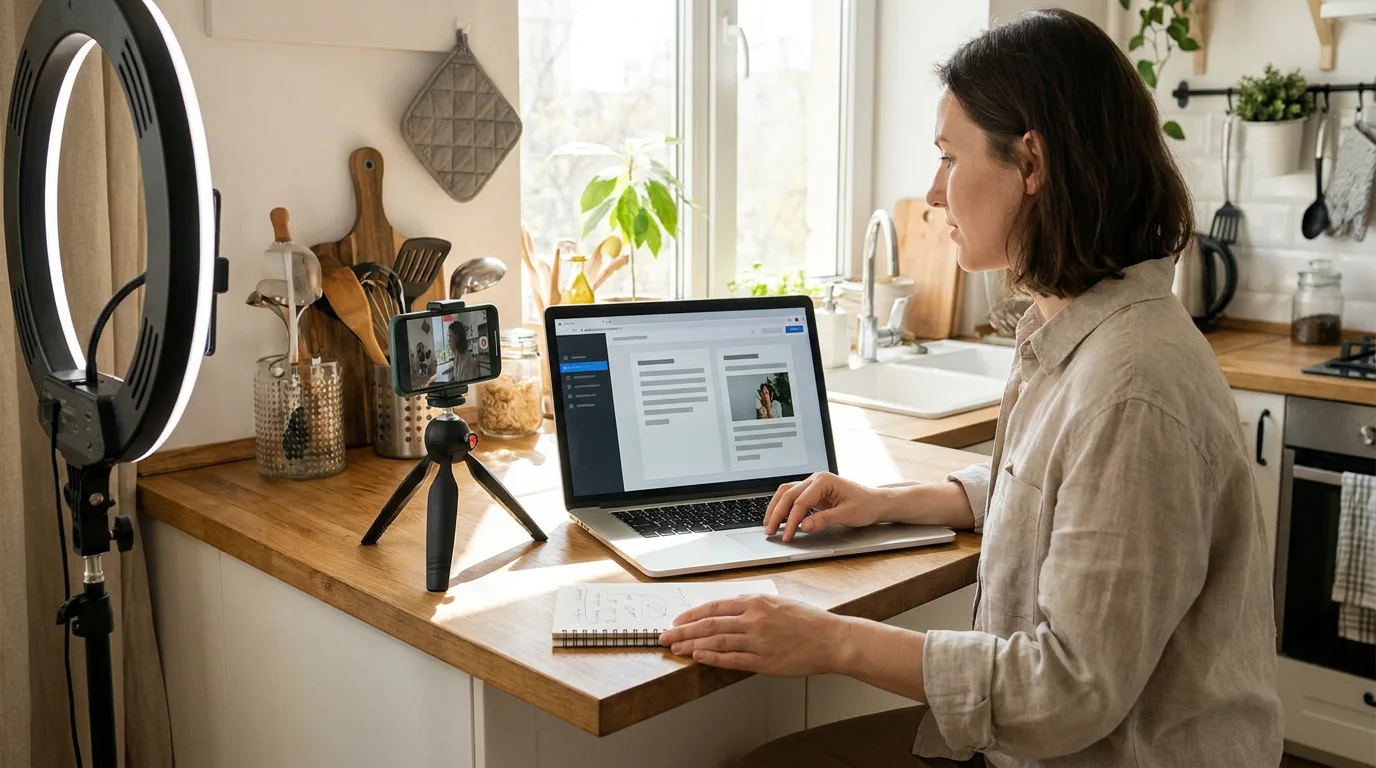
An influencer media kit is the document a creator sends a brand to get a paid partnership: who you are, who watches you, what you've done for other brands and what you charge. Brand managers and agencies compare dozens of creators for a single campaign, so the kit that answers their questions in under a minute gets the reply. Below are the pages to include, how to present your numbers, how to build a rate card, a media kit template you can copy and a filled-in influencer media kit example.
Quick answer. To make an influencer media kit, build a 2- to 4-page PDF with: a photo, name, niche and short bio; follower counts, average views and engagement rate per platform with the date range; audience age, gender and top countries; past partnerships with results; a rate card listing each deliverable and price; and your email or booking link.
What an influencer media kit is
A media kit is a short sales document for your channel. A brand uses it to answer three questions: does this creator's audience match our customer, does their content get seen, and what will it cost? Everything in the kit should help answer one of those.
It differs from a few similar documents:
- Rate card. A single price list. It usually lives inside the media kit as its last page.
- Pitch email. The message that introduces you. It links or attaches the media kit.
- Portfolio. A gallery of your work. The media kit includes a few examples, chosen for the brand's category.
Think of the media kit as a creator's version of a one-pager: a short document that gives a busy reader enough to say yes to a call.
What to include: the four pages
Most strong media kits fit on four pages, each answering one question.
Page 1: Who you are. A recent photo of you in your content setting, your name, a one-line niche ("weeknight baking and seasonal home cooking"), a 2- to 3-sentence bio that describes your content and audience, and your handles on each platform.
Page 2: Who sees it. Follower counts per platform, average views per post type, engagement rate, and audience demographics: gender split, top age ranges and top countries or cities. Add the date range the numbers come from.
Page 3: Proof. Brands you've worked with, two or three campaign results with real numbers, and a few content examples relevant to the brand you're pitching. A short quote from a brand partner helps, if you have a real one.
Page 4: Rates and next step. Your rate card, packages, usage rights terms, turnaround time and contact details.
How to write your numbers
The audience page is where brands spend the most time, and where small details build trust.
- Use platform analytics, not estimates. Pull numbers from Instagram Insights, TikTok Analytics and YouTube Studio, and keep the screenshots in case a brand asks.
- Give a date range. "Last 90 days (Aug–Oct 2026)" tells a brand the numbers are fresh.
- Report averages, plus your best post separately. An average of recent posts is what a brand can expect. A viral outlier belongs in the proof section, labeled as such.
- Show engagement rate with its formula. Engagement rate is usually (likes + comments + saves + shares) ÷ followers × 100 for a post, averaged across recent posts. Some brands prefer engagement divided by reach; state which one you used.
- Match the brand's market. If the brand sells only in the US, lead with your US audience share.
Results from past campaigns are the strongest numbers in the kit: views, link clicks, code redemptions, saves. A line like "1,400 link clicks in 7 days" tells a brand more than a follower count does.
The kit should also show you handle sponsored content properly. The US Federal Trade Commission's Disclosures 101 for Social Media Influencers says creators should disclose any financial, employment, personal or family relationship with a brand, place the disclosure with the endorsement itself and make it hard to miss. Stating your disclosure practice in the kit reassures brands that the partnership will stay compliant.
The rate card section
A rate card template is a simple two-column table: the deliverable on the left, the price on the right. Make each line specific enough that every price has exactly one reading.
| Line | What to state |
|---|---|
| Deliverable | Platform and format, with length: "Instagram Reel, up to 60 seconds" |
| Price | One number per deliverable, in one currency |
| Bundles | Two or three deliverables together at a combined price |
| Usage rights | What it costs for the brand to run your content as an ad, and for how long |
| Exclusivity | The premium for agreeing to skip competing brands for a set period |
| Terms | Revisions included, turnaround from an approved brief, payment terms |
How to set the numbers: start from your average views per format and the time each deliverable takes you to plan, shoot and edit, then compare with what similar creators in your niche quote. YouTube integrations and Reels usually cost more than Stories because they take longer to make and stay up longer. Price usage rights separately, since an ad running your face for three months is a different product from an organic post.
Keep the rate card on its own page at the end. You can then send the kit with prices to a brand that asked for them, or without that page when you'd rather start with a call and quote per campaign.
A media kit template you can copy
This media kit template is a four-page layout in portrait Letter or A4, the format brands are used to opening as a PDF attachment.

Layout rules that make the template work:
- One idea per page, in the order a brand asks: who, audience, proof, price.
- Big numbers, small labels. Stats should read from across the room: "48.2K" in large type, "Instagram followers" small underneath.
- Your own visual style. Use the colors, fonts and photo style of your feed, so the kit feels like an extension of your channel.
- Two to four pages. If you work on one main platform, pages 1 and 2 can merge.
Influencer media kit example
Here is the template filled in for a fictional food creator. The name, handles, brands and every number below are invented for illustration, so treat the prices as a format example rather than a benchmark.

What this example gets right:
- The niche line is specific. "Weeknight baking and seasonal home cooking" tells a flour brand and a cookware brand immediately that they fit.
- Every stat has a label and a date range, and the six stat tiles cover reach (followers), attention (views) and response (engagement).
- Results are campaign-specific. Views, link clicks and code redemptions are the numbers a brand's marketing team reports upward.
- The rate card states the terms: what each price covers, revisions, turnaround and the disclosure practice.
- The last thing on the page is a next step: an email and a booking link.
How to make a media kit in 6 steps
- Export your analytics. Pull the last 90 days from each platform and note averages per format.
- Write the bio. Three sentences: what you make, who it's for, what makes it different.
- Gather proof. List past collaborations, their results and two or three content examples per category you pitch.
- Set your rates. Build the rate card with bundles and usage rights.
- Design the pages. Follow the four-page template in your feed's colors and fonts, using one strong photo of you.
- Export a PDF and a link. Save a PDF under 10 MB named with your name and the month, and keep a web version linked from your bio.
Before sending, check the kit against your live profile. Brands do, and matching numbers build trust from the first email.
How to make an influencer media kit with Playyy
Playyy is an AI design agent that writes and lays out documents, including media kits, on the same canvas as your social graphics. In the AI document generator, paste your bio, analytics and past results and ask for a four-page influencer media kit with a rate card; Playyy drafts the pages and lays out your stats as large, labeled figures. Then edit by chat: "make the audience page lead with US numbers", "add a bundle line for Reel plus TikTok", "shorten the bio to two sentences".
The brand kit keeps the PDF consistent with your channel. Add your logo, colors and fonts, or paste your website URL so Playyy reads them, and every page uses them. Upload your own photos for the cover and content examples, then export the finished kit as a PDF. When the numbers change next month, open the existing PDF with Playyy's PDF editor, update the stats and partnership lines, and export a fresh version.
Conclusion
A media kit gets replies when it answers a brand's three questions quickly: does your audience match, does your content get seen, and what does it cost. Keep it to four pages, use dated numbers straight from your analytics, lead your proof with campaign results, and put a clear rate card and contact on the last page. Update it before every pitch so it always matches your live profile.

Minji Park
I help indie creators, online educators and small product teams prepare launch visuals and social campaigns. My goal is to make launches feel polished and trustworthy — even when you are working without a designer.
Frequently asked questions
An influencer media kit should include a short bio with a photo and niche, follower counts per platform, average views and engagement rate, audience demographics (age, gender, top countries), past brand partnerships with results, content examples, a rate card or packages, and contact details. Add the date range your numbers cover so brands know they're current.